The Weekly Edge: HugeGraph Goes Big, 2 Graph Releases, a Ticking Time Bomb & More
If you’re reading this, you survived this week’s Holiday Space Jam and now it’s time to treat yo self to a brand-new edition of the Weekly Edge.
This regular blog series/newsletter sums up everything happening in the world of graph technology – databases, analytics, query languages, and more – all curated by the team at gdotv and with an added dash of Bryce’s niche humour. (Laugh at your own risk.)
Here are this week’s headlines:
- News of Unusual Size: Apache HugeGraph gets a big boost from the ASF
- Wake up, babe: Two new graph database releases just dropped
- Meet Semiont: Get a headstart on cold start knowledge graph creation
- OWL, Growl, SLOP: A new open source reasoning engine for OWL 2 RL
- Mysterious ticking noise: The troubles and solutions of using an Object Graph Mapper
// It’s time to level up your graph game: Query, explore, edit, and visualize your connected data with the gdotv graph IDE. Try out the free dev tier or upgrade to a 1-month, no-fuss free trial.
Let’s dive in.
[News:] HugeGraph Gets Upgraded to Top-Level Project at Apache Software Foundation
Huge news from the Apache Software Foundation (ASF) this week: Apache HugeGraph has graduated from the Apache Incubator and has become a Top-Level Project (TLP).
HugeGraph is a full-stack graph database system providing complete graph data processing capabilities from storage and real-time querying to offline graph analytics, supporting both Gremlin and Cypher query languages. According to the official press release, HugeGraph is backed by an open source “vendor-neutral, diverse community co-developed by enterprises and academia” with a large number of Chinese-speaking community members (中文网站).
Also of note: Apache HugeGraph is ASF’s first top-level graph project. Congrats to the HugeGraph team and community!
[Releases:] ArcadeDB & Memgraph Both Push Big Updates This Week
Graph database releases are picking up these days, so much so that your correspondent has had to start summarizing them as a whole rather than devoting individual sections to each – a signal of a strong and growing ecosystem. This week witnessed two LPG vendors publish releases: Memgraph and ArcadeDB.
Memgraph 3.8 released on 12 February is a big one for anyone running graphs in production. The 3.8 release includes support for atomic GraphRAG, a single-store vector index for lower TCO, parallel runtime for multi-threaded query execution, and concurrent WRITES on supernodes for higher throughput ingestion. Get started with Memgraph here and learn how to query, explore, and visualize your graph data with a Memgraph IDE from gdotv.
ArcadeDB 26.2.1 just dropped on 16 February and it’s a massive release with significant advancements across the platform. The 26.2.1 release focuses on hardening the native openCypher engine with official TCK compliance, introducing the Bolt protocol for Neo4j driver compatibility, a new plugin architecture, a powerful backup scheduler, a new SQL parser (ANTLR), and major performance optimizations. Dive into ArcadeDB here and try out gdotv as your own personal ArcadeDB IDE for debugging, profiling, and exploring your graph database.
//
[Watch:] Meet Semiont: An Annotated Semantic Layer for Building Knowledge Graphs
If you’re new to knowledge graphs you’re keenly aware of one its primary challenges: the cold start of the graph creation itself. Semiont – a new semantic layer for agentic AI from the AI Alliance – addresses this challenge head on.
In this week’s watch, Alexy Khrabrov, the founder of AI By the Bay events and an AI Community Architect at Neo4j interviews Semiont creator Adam Pingel, now an engineer at IBM Research and the head of the Knowledge Working Group at the AI Alliance.
Together, they discuss the motivation, design choices, and inner workings of Semiont, including a live demo by Adam to showcase its capabilities. Semiont is still in active alpha development and welcomes new open source contributors and participants.
[Repo:] Growl: An OWL 2 RL Reasoner
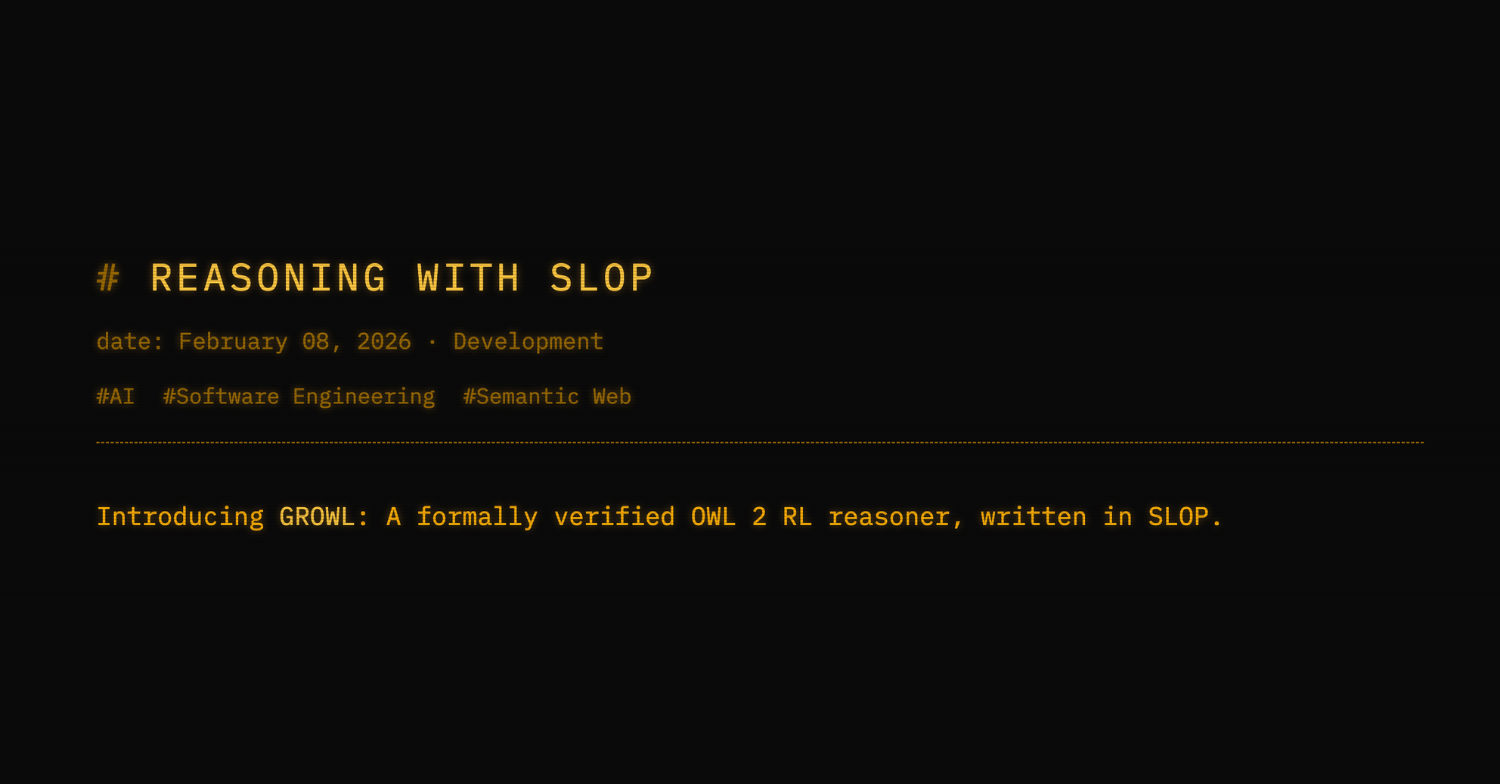
This week’s repo goes out to all the folks using Web Ontology Language Profiles, Second Edition – a.k.a. OWL 2 Profiles – particularly OWL 2 RL (Rule Language). You know who you are. 😘
Growl implements the OWL 2 RL profile inference rules with Z3-verified contracts on every inference function. Written in SLOP, it compiles to efficient C code while using SMT solving to prove properties about the inference logic. Growl is being developed by James Adam as the reasoning engine for Trivyn, a knowledge graph platform.
That either made a whole lot of sense to you or made no sense at all, and in the case of the latter, James Adam wrote a great explainer article on Growl, SLOP, and more.
[Read:] The (Very Slowly) Ticking Time-Bomb in Your Graph Persistence Stack
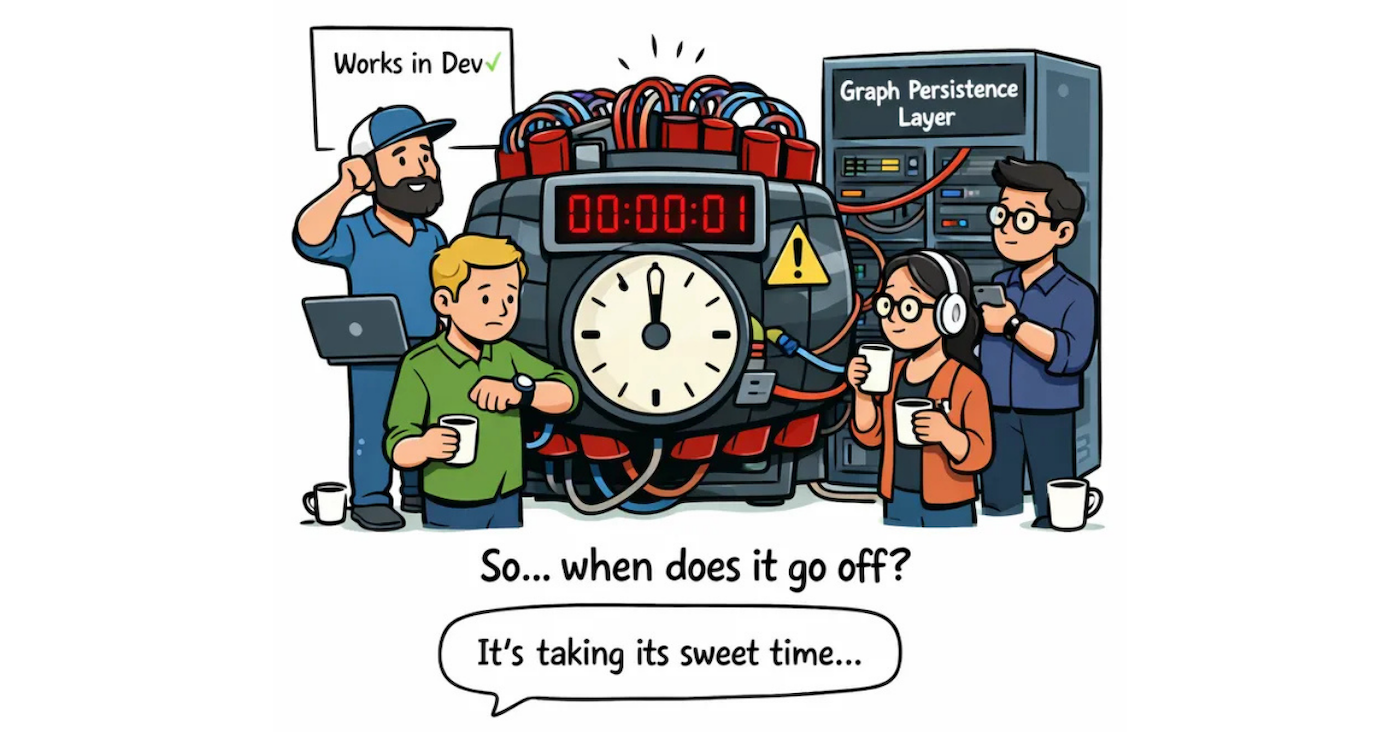
Making the leap from relational to graph databases is always fraught with dangers, even when you’re going slow and being careful. In this week’s read, my long-time regional graph neighbour Jasper Blues from Embabel (of Rod Johnson fame) tells a tale of warning and of woe:
You spin up a graph database, sketch your domain, and everything feels right. Then you reach for an Object Graph Mapper (OGM), because that’s what you do. You did it with Hibernate, you did it with JPA, you’ll do it again. Muscle memory.
And for a while, it works. Then it doesn’t.
Jasper walks you through the specific problems familiar to anyone who’s lived with an OGM long enough, how relational-era ORM patterns quietly sabotage graph-powered apps, and what you should use instead. Worth a read.
P.S. Don’t miss our Graph Chat interview with Weimo Liu, CEO of PuppyGraph from earlier this week! 🐶
P.P.S. Big congrats to the cognee team on their $7.5M seed round to build memory for AI agents. Build a knowledge graph and explore cognee with gdotv in this developer walkthrough. 🧠
P.P.P.S. Got an item to nominate for the next edition of the Weekly Edge? Hit us up at weeklyedge@gdotv.com. ✍🏽

![gdotv Adds Multi-Graph Connections & Automatic Data Models [v3.74.142 Release Notes]](https://gdotv.com/wp-content/uploads/2026/08/multi-graph-connections-automatic-data-models-gdotv-v3-74-142-release-notes-banner.webp "gdotv Adds Multi-Graph Connections & Automatic Data Models [v3.74.142 Release Notes]")