The Weekly Edge: Knowledge Graphs at Netflix & Bloomberg, Graphs on Postgres, & Make Your Music SPARQL [9 January 2026]
![The Weekly Edge: Knowledge Graphs at Netflix & Bloomberg, Graphs on Postgres, & Make Your Music SPARQL [9 January 2026]](https://gdotv.com/wp-content/uploads/2026/01/graphs-postgres-janusgraph-cassandra-sparql-weekly-edge-9-january-2026.png "The Weekly Edge: Knowledge Graphs at Netflix & Bloomberg, Graphs on Postgres, & Make Your Music SPARQL [9 January 2026]")
Happy New Year from the team at the Weekly Edge! Your favourite graph tech news tl;dr is back for its first edition of the year.
If you’re new to the Weekly Edge, this regular blog series sums up everything happening in the world of graph technology – databases, analytics, query languages, and more – all curated by the team at G.V() and with an added dash of Bryce’s terrible humor.
This week’s picks feature a lot more long- or longer-form content to keep you occupied during these dark winter nights (or for those of you living in the upside-down, here’s your summer reading list):
- In the rearview mirror: Andy Pavlo reviews the past year in databases
- Netflix’s quest for the Holy Grail: Model once, represent everywhere
- Graphs on Postgres: A developer walkthrough using Apache AGE
- To graph is human: Tara Raafat shares her approach to knowledge graphs
- One graph, two faces: Distributed graph data on JanusGraph & Azure Apache Cassandra
- Sprinkle some SPARQL on that playlist: A dev take on finding better music
Now, let’s get reading.
[Long Read:] Databases in 2025: A Year in Review
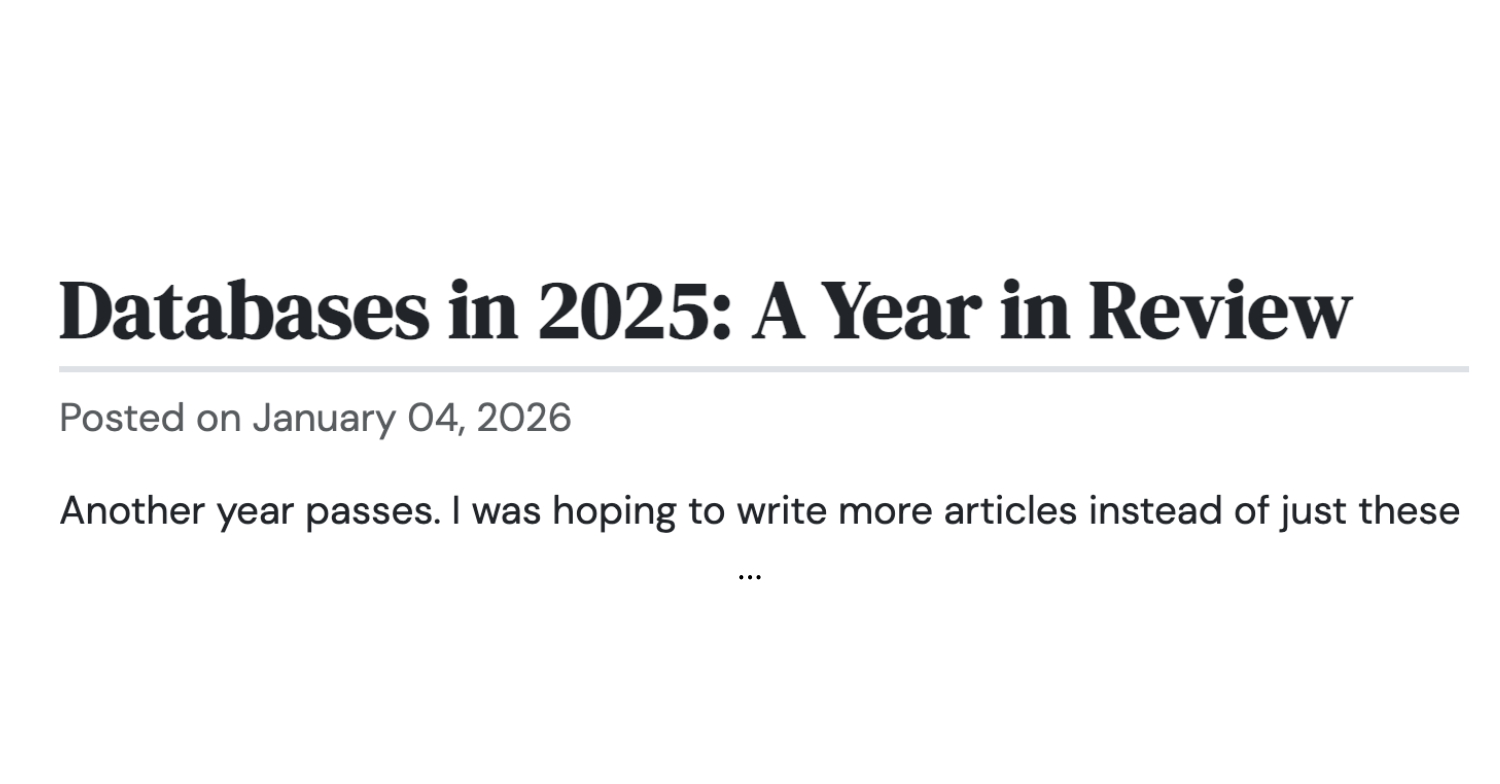
Tbh, “Long Read” might have been an understatement. This 2025 database retrospective by Andy Pavlo – an Associate Professor with Indefinite Tenure of Databaseology in the Computer Science Department at Carnegie Mellon University – covers everything that happened in backend tech in 2025, and I mean everything: acquisitions, releases, mergers, funding rounds, MCP hype, legal feuds, file format battles, name changes, deaths, and a crazy-mad review of “database OG” Larry Ellison.
While Andy’s lengthy year-in-review gives lots of attention to Postgres, it still covers plenty of other NoSQL and graph database news as well. If you’re looking for a graph-specific 2025 retrospective, check out the Yearly Edge I wrote up last December.
[Watch:] Model Once, Represent Everywhere: Behind the Scenes of the Netflix Unified Data Architecture
Some say it’s a legend, others say it’s a myth: the quest for modeling data once and then representing it everywhere. Does such a fabled unified data architecture even exist? Could it? It’s a question as old as Ontology itself. Who then would be better to guide us through such murky waters than the Ms. Frizzle of Graphs, Ashleigh Faith herself? To the bus, kids!
In this week’s watch, Ashleigh interviews Alex Hutter from Netflix about his team’s recent attempt at a Unified Data Architecture (UDA) for the media streaming giant. Turns out the Netflix team is using some concepts from the world of ontologies and knowledge graphs in their approach. You can bet Ashleigh Faith gets to the bottom of Netflix’s magical quest with a hefty dose of data science.
In case you missed it, Ashleigh Faith also recently published her review of G.V() last month. Check it out!
[Long Read:] PostgreSQL as a Graph Database: Who Grabbed a Beer Together?
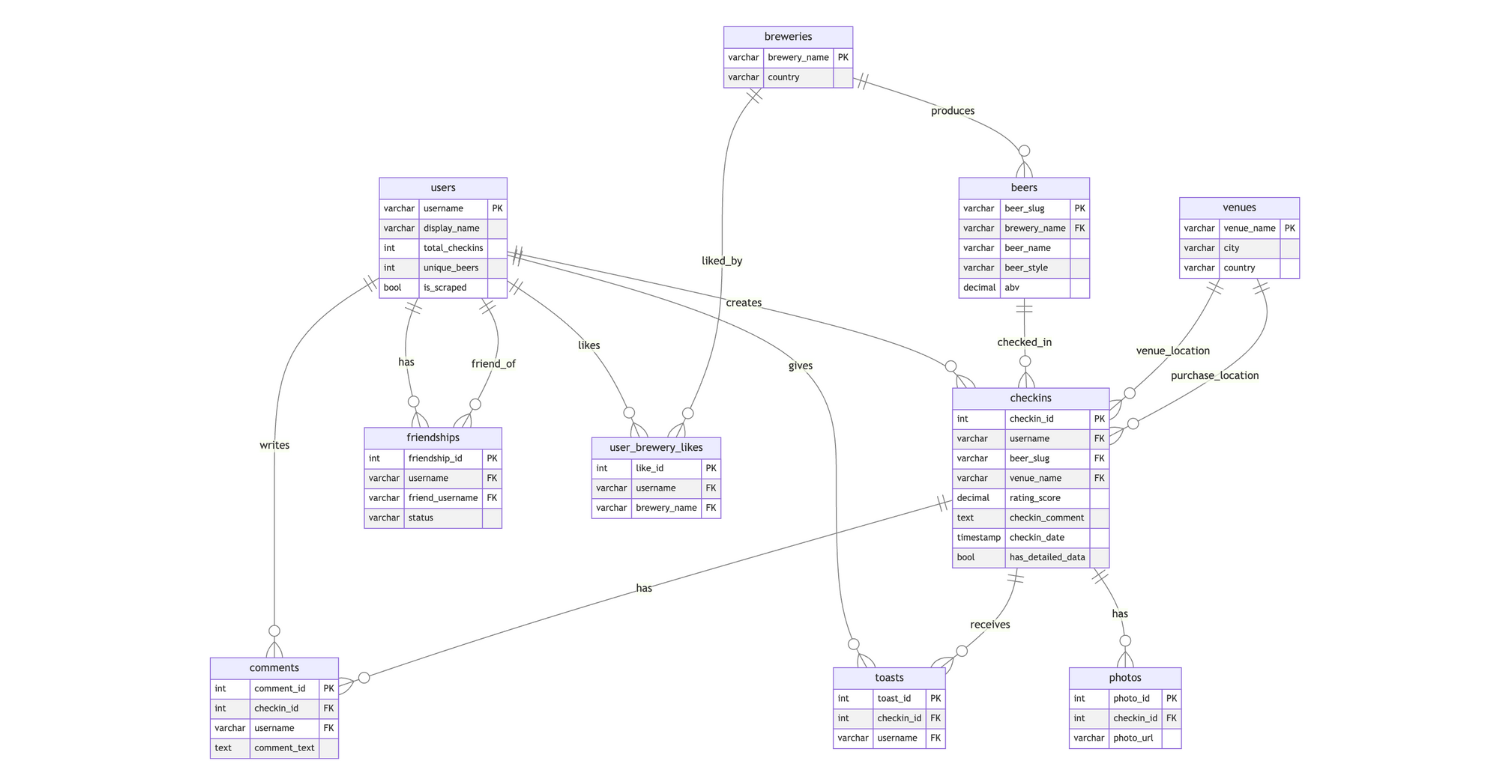
When it comes to modeling complex data relationships, graph databases keep growing in popularity, but what if you could leverage graph capabilities within the familiar PostgreSQL environment you already know and love?
In this week’s second long read, Taras Kloba explores how you can use Apache AGE to use Postgres as a graph database. For the technical walkthrough, Taras uses a fun use case: analyzing social network connections in the craft beer community using data from Untappd. If you’re new to the world of graphs, this is a great way to tap into your familiarity with Postgres and get graphing.
Fun fact: You can now use G.V() to explore and analyze graph data in Postgres via Apache AGE.
[Watch/Listen:] Tara Raafat: Human-Centered Knowledge Graph & Metadata Leadership
If you’ve never heard of Dr. Tara Raafat, then you must be new to knowledge graphs. Tara is the Head of Metadata and Knowledge Graph Strategy at Bloomberg, and in this week’s listen, she sits down with Larry Swanson at Knowledge Graph Insights to talk about her winning approach to building knowledge graphs and semantic tech.
In brief: People matter. Tara shares that one of the keys to the success of her knowledge graph projects is her focus on people. That means engaging the right stakeholders, building the right kinds of teams, and mapping more than just node-to-node relationships but human-to-human relationships as well. Have a watch / listen wherever you get podcasts.
[Short(er) Read:] Distributed Graph Databases with JanusGraph & Azure Apache Cassandra
It’s not often that the graph tech spotlight lands on JanusGraph, an open source graph database that uses Cassandra as its storage backend, persisting vertices, edges, and properties in distributed tables. Today, JanusGraph gets its fifteen minutes of fame.
In this week’s read (which is “short” only because the others were so loooong), Srikanth Sridhar from Microsoft shows you how to combine JanusGraph with Azure Managed Instance for Apache Cassandra to create a scalable, secure, and flexible foundation for building graph-powered applications. Srikanth walks you through ideal use cases for using a Cassandra-backed graph (mostly around distributed storage) and how to get started with some basic Gremlin query language features.
From there, you can use JanusGraph with G.V() for graph visualization, query writing, data model tracking, and more.
[Fun Read:] AI-Generated Music Isn’t Doing It for Me (+ Some SPARQL)
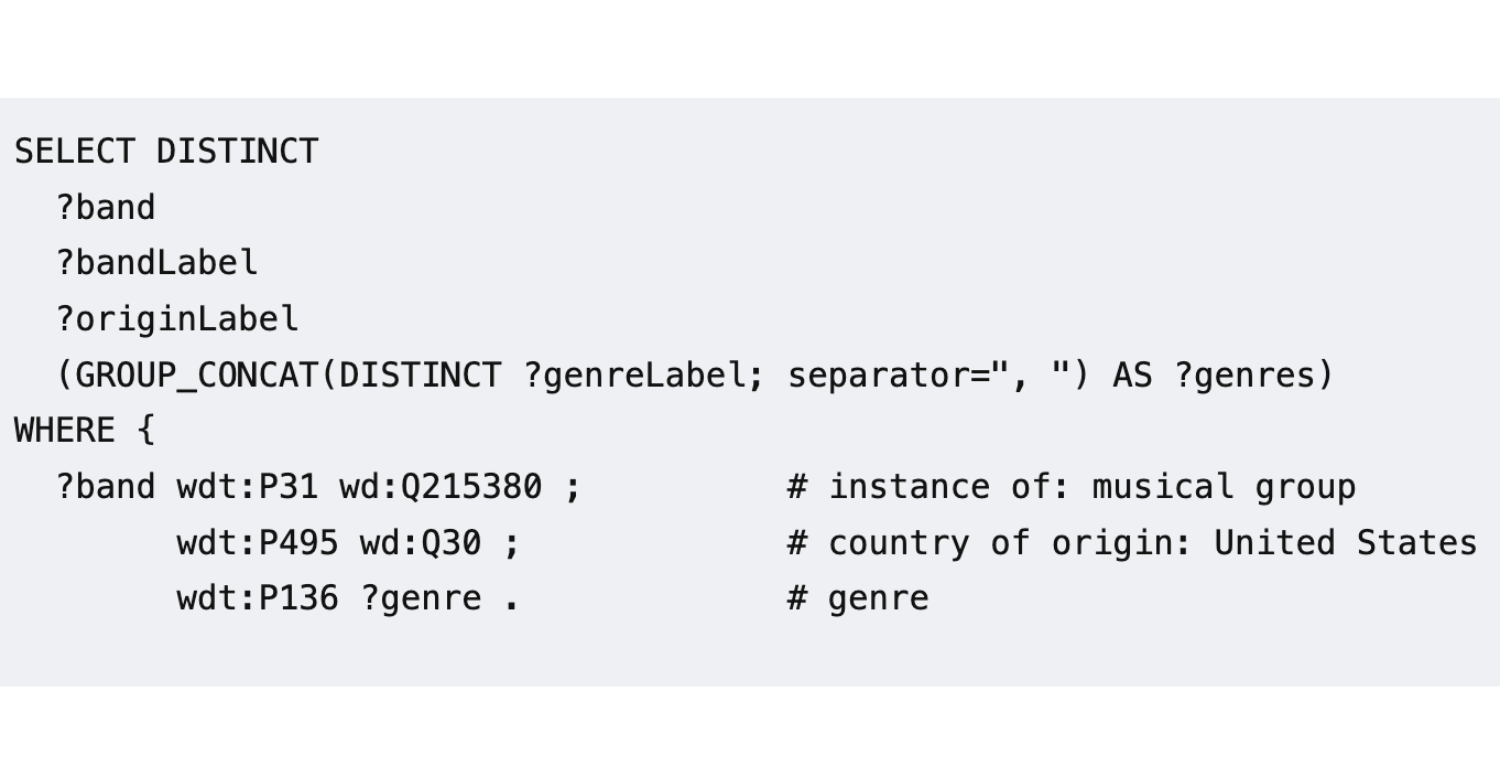
Until this moment, it’s been a somewhat-controversial but unwritten rule at G.V() that we are pro-human. AI is fine or whatever, but humans matter. So you can imagine how wonderfully surprised I was to stumble upon the personal developer blog of our very own Geoff Storbeck.
Turns out, AI-generated music isn’t doing it for him, so he did what anyone else would do to rise above the slop of AI-generated music inundating YouTube these days: Start writing SPARQL queries. Diving into the world of RDF, Geoff of course encountered talks by Tara Raafat (see above) and Marc Lieber who guided him on his quest to query Wikidata for some sweet tunes.
P.S. G.V() is going IRL! Join us at a meetup in Glasgow or at the Final Edition of Data Day Texas – both happening this month.
Got something you want to nominate for inclusion in a future edition of the Weekly Edge? Ping us on on X | Bluesky | LinkedIn or email weeklyedge@gdotv.com.

![gdotv Adds Multi-Graph Connections & Automatic Data Models [v3.74.142 Release Notes]](https://gdotv.com/wp-content/uploads/2026/08/multi-graph-connections-automatic-data-models-gdotv-v3-74-142-release-notes-banner.webp "gdotv Adds Multi-Graph Connections & Automatic Data Models [v3.74.142 Release Notes]")