

Endeavour Harnesses gdotv to Map & Manage
Their Sustainable Infrastructure
Company: Endeavour LLC
Year founded: 2020
Headquarters: Connecticut, USA
Industry: Sustainable Infrastructure, Data Center Management
Tasked with monitoring complex data center infrastructure, the Endeavour team found it difficult to visualize their graph data model in Azure Cosmos DB – let alone communicate that context with other stakeholders. Using gdotv, the Endeavour team could more efficiently update their data center digital twin, trace complex customer usage, and share graph visualizations with partners and customers.
Gregor Vilkner, Ph.D.
“Graphs are the foundation for much of what we do. All our data exists in a context, whether that’s how one rack of servers is related to another, or how one snapshot in time is connected to the next hour later. gdotv makes it easy to communicate those connections and contexts to others.”
The Company
Endeavour is a sustainable infrastructure company that coordinates a portfolio of subsidiaries at the intersection of energy, water, data, and transport. One of their subsidiaries, Edged, delivers low-carbon, waterless data centers by integrating the technical specialities of other Endeavour companies, including batteries, cooling, sustainable energy, and more. One division in particular – EdgedIQ – supports Edged data centers and other Endeavour companies with the necessary data architecture to manage their infrastructure portfolio.
Graph Use Case(s): Knowledge Graph, Digital Twin, Master Data Management
Graph Technology: Azure Cosmos DB graph database
gdotv customer since February 2023
The Challenge
Back in 2020, the EdgedIQ team faced an enormous task: build an intelligence platform to help more effectively manage Endeavour’s infrastructure portfolio and data centers.
As a first step, the EdgedIQ team would need to create a digital twin of Edged’s entire data center infrastructure. Gregor Vilkner, Ph.D., Director of Asset Intelligence for EdgedIQ, identified that graph technology would be key to mapping this digital twin.
“The construction industry has been struggling with connecting the dots between different phases of data center development,” said Vilkner. “During design, architects and engineers use precise, sophisticated 3D models, but then during construction, a completely different team builds the actual infrastructure and often doesn’t track parts, serial numbers, or other information – or does so in a haphazard manner. Once the data center is built, every team has its own platforms and applications for tracking their particular tasks. What we needed was a more effective interoperability layer.”
At the same time, both Edged customers and operations teams needed real-time updates on data center usage. However, no one had a holistic view of the data since tribal knowledge was often locked away in PDFs, construction drawings, and other data silos.
Another knot to untangle was billing. Within co-located data centers, billing is based on a number of factors, including energy usage, square footage, location, time, and lease details. Many customers also have multiple overlapping business entities between both European and North American data centers, in addition to the same customer often having multiple instances within the same data center, each with different usage amounts.
“Graphs solved those connection problems really well,” said Vilkner. “Business entities mapped to graphs are very intuitive.”
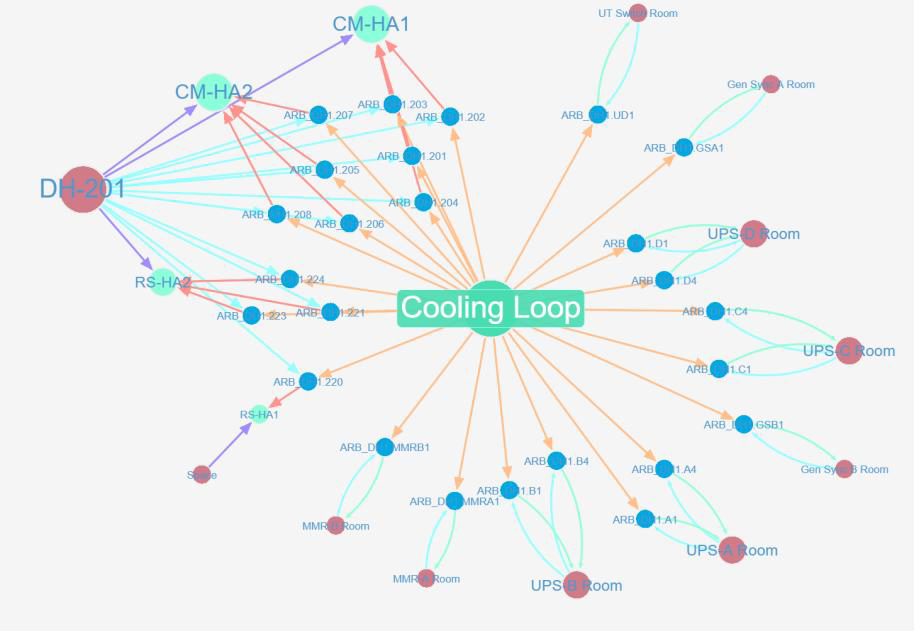
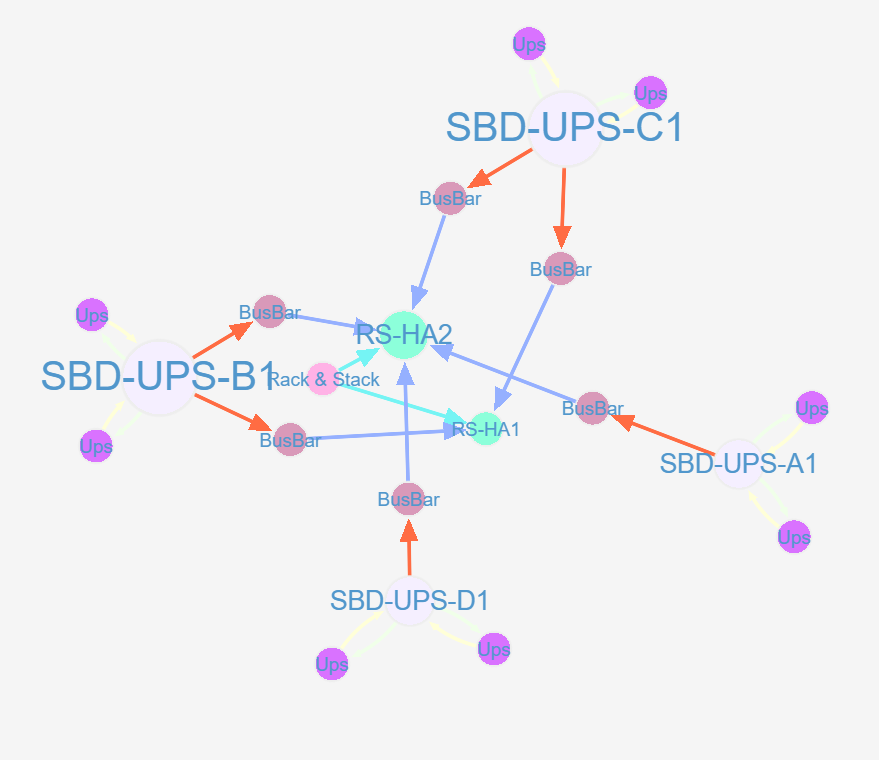
In time, the EdgedIQ team mapped every critical piece of mechanical and electrical gear across the Edged portfolio down to the rack. They created this map using a graph model stored in an Azure Cosmos DB graph database. Every node, relationship, and property in their graph aligns with multiple functions and use cases, including:
- A digital twin for tracking and modeling their data center infrastructure
- A knowledge graph for connected data intelligence
- A security & cybersecurity graph for managing access to various entities
- A master data management (MDM) platform for a holistic view of critical gear
“Graphs are the foundation for much of what we do on the EdgedIQ team,” said Vilkner. “We work within an ecosystem of other companies and a knowledge graph helps coordinate across all those stakeholders.”
Jonathan Rodriguez, Senior Director at EdgedIQ, noted that another major factor in choosing graph technology was its flexibility.
“In our industry, agility is required,” said Rodriguez. “Factors like energy usage per rack aren’t static, and the data model must always evolve and pivot as the data center grows to fill the capacity and as IT technology advances. With spreadsheets, you’ve only got two dimensions. With a graph, you have n dimensions to scale out in any direction. If you need to model something at a higher level of detail or in a different direction, that’s easy to do.”
But as the EdgedIQ’s data model grew in both size and complexity, it became harder and harder to track and visualize using existing tools.
“We were trying to keep it all in our heads,” said Rodriguez. “With Cosmos DB, you can only see so many layers away from a starting point, and there was no easy way to tweak or adjust data on the fly.”
With limited tracking and graph visualization options in Cosmos DB – and knowing the difficulty of building their own tooling options – the EdgedIQ team knew they needed to find another solution.
The Solution
The EdgedIQ team was contemplating whether to build their own graph database tooling when a developer on their team stumbled upon gdotv.
“It’s a fantastic visual tool,” said Rodriguez.
As a graph database IDE, gdotv gave the EdgedIQ team an interface to develop, query, explore, and visualize their graph data.
“Up to that point, we hadn’t found anything like gdotv,” said Rodriguez. “It’s almost like SQL Server Management Studio for a graph database.”

The Results
With gdotv, the EdgedIQ team was able to more effectively deliver on their mandate to build and maintain an intelligence platform for Edged’s data centers.
The most immediate consequence of using gdotv was that the team avoided the high upfront cost of building their own graph database IDE. Instead, the EdgedIQ team could focus on delivering higher-priority projects.
Another quick payoff of using gdotv was developer productivity. The EdgedIQ development team uses gdotv daily for tasks such as running or testing ad hoc queries, tracking the data model, or visualizing parts of the graph.
In addition, gdotv reduces the barrier to entry for new team members to learn the data schema of the model and query the digital twin with autocomplete and smart suggestions based on the EdgedIQ data model.
“Once we teach an intern a query, they can use gdotv easily,” said Rodriguez. “It’s quick to learn and easy to get started.”
The EdgedIQ team uses gdotv to trace where an energy source comes from – and which customer uses it for how long – is now much simpler with graph visualization in gdotv.
When mapping the difference between a construction blueprint and the reality of the data center, the EdgedIQ team can export that information as JSON, CSV, or a Kuzu file and then drag and drop that subgraph of data into gdotv for easy analysis. It’s a perfect interoperability layer.
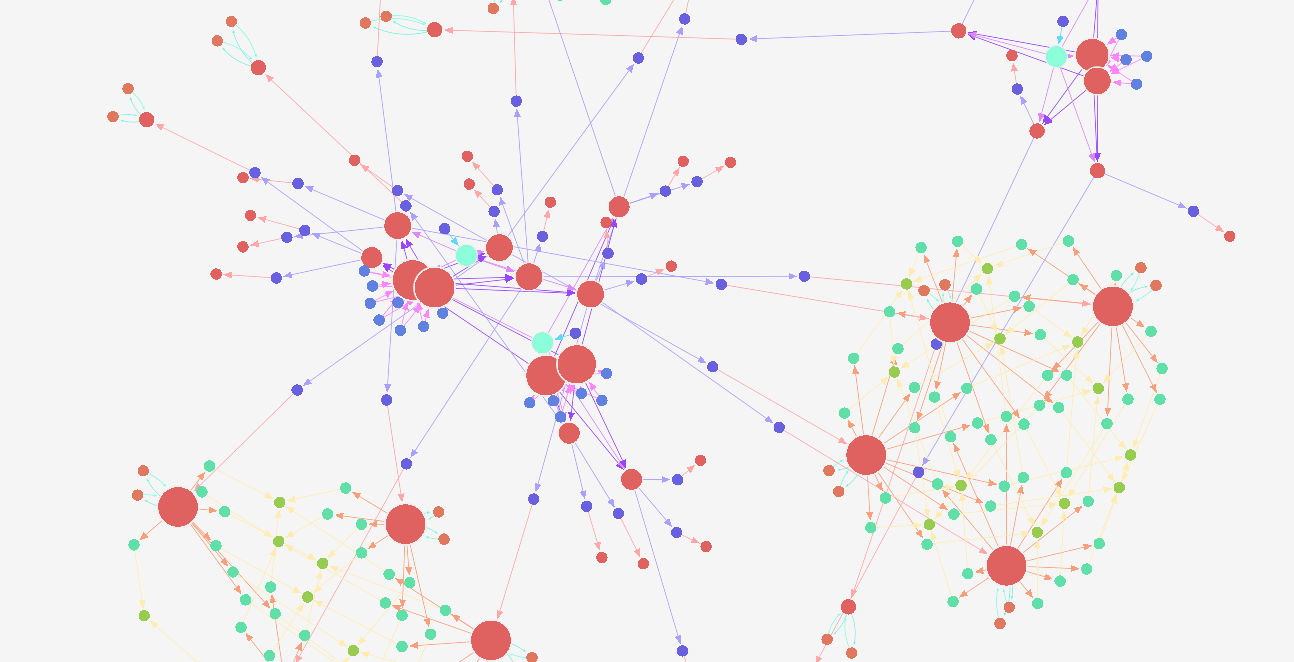
Finally, the EdgedIQ team finds gdotv to be an effective communication tool whether externally with customers or internally with other Endeavour subsidiaries. Graph visualization serves as a powerful demo tool for getting buy-in and communicating value.
“All our data exists in a context, whether that’s how one rack of servers is related to another, or how one snapshot in time is connected to the next hour later,” said Vilkner. “But how do you hand that context off to a customer?”
The industry norm has always been to export data as static PDFs or spreadsheets that fail to capture data context. But the EdgedIQ team wanted to solve this problem with smarter data delivery. Now, they send the customer a graph dataset and have them explore it using gdotv.
In the future, the EdgedIQ team plans to build a foundational graph data layer for Endeavour. They’re also hoping to use a knowledge graph for supply chain management between divisions and partner companies. Both projects would use gdotv to visualize and explore the data.
Vilkner noted that while their main graph use case might feel pedestrian, he couldn’t imagine modeling it any other way.
“What we do is not rocket science (or even data science), but modeling context as a graph feels very intuitive,” said Vilkner. “gdotv makes it easy to communicate those connections and contexts to others.”
Built to Help Your Graph Developers Succeed
gdotv is a cost-effective solution to make database development and management on Azure Cosmos DB easily accessible.
Give gdotv a try and test out this graph database client and IDE for Azure Cosmos DB. You’ll be up and running in just a few minutes.
Transform the way you work with graph databases: Download and trial gdotv for up to a month – for free – today.