
What We Took Home from the Final Edition of Data Day Texas
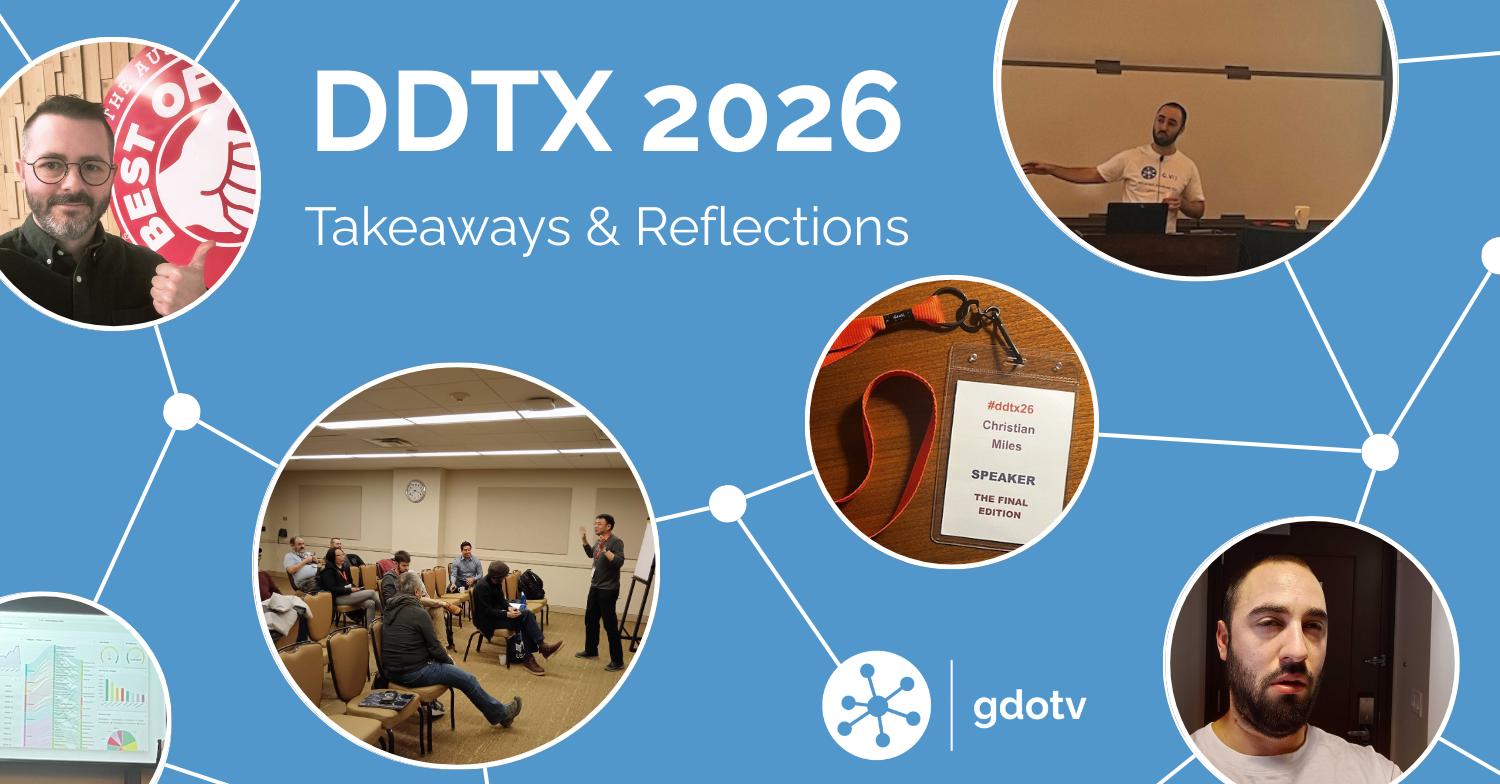
Data Day Texas wrapped its final edition late last month.
For over a decade, DDTX has been Austin’s go-to data practitioner conference: honest, technical, zero fluff. Lynn Bender built something rare, and the fact that people flew in from Australia, Norway, and London for a weekend in freezing rain says everything about what it meant.
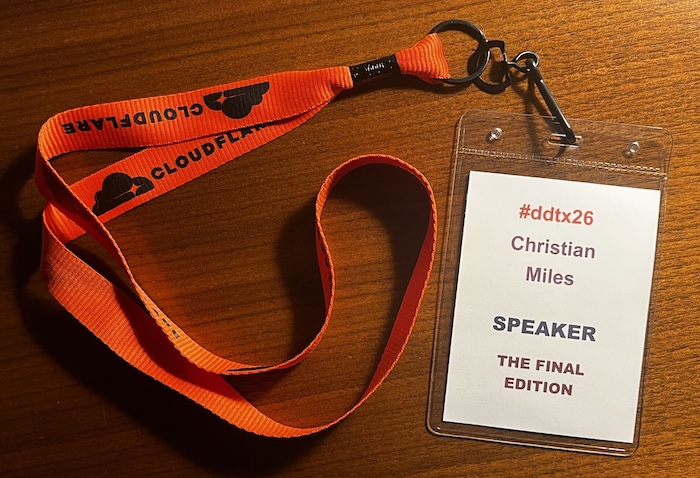
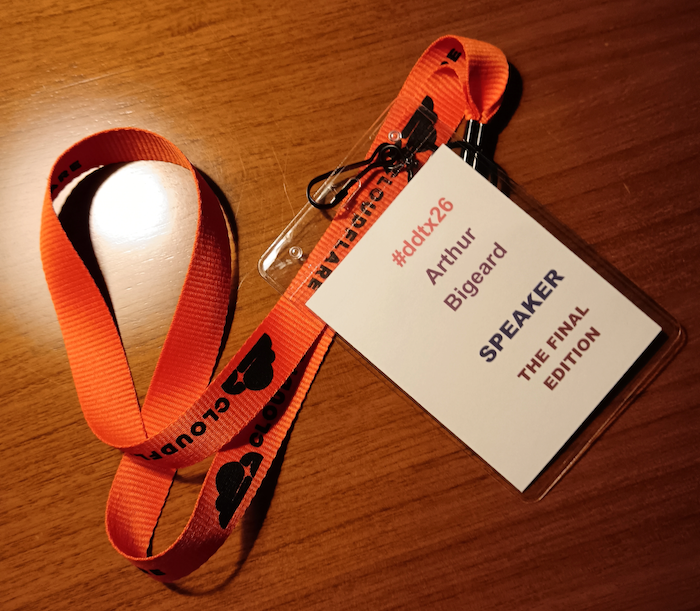
We, Christian Miles and Arthur Bigeard from the gdotv team, were there presenting, listening, and talking to everyone we could. Here’s what stuck.
The Librarian in the Room
The talk that generated the most hallway conversation was Jenna Jordan’s session on the reference interview – a structured technique librarians use to figure out what someone genuinely needs when they walk up to the desk with a question.
The core idea: a stakeholder’s first request almost never matches their real information need. A librarian’s trained response is to slow down, listen without judgment, ask open-ended questions, and iteratively restate the problem until both sides agree on what’s actually being asked. Library science formalized this process over a century ago. Jenna’s argument is that data teams should adopt it – the translation from business need to data request belongs with the people who understand the data systems, and there’s already a proven framework for doing it well.
Cross-disciplinary thinking like this was a recurring theme. The talks that drew from outside traditional data engineering consistently had sharper edges than the purely technical ones.
Databases Are Becoming APIs
Patrick McFadin from IBM touched on this idea directly during his opening keynote, and it resurfaced throughout the day. Talks from Sanjeev Mohan (Principal at SanjMo), Arthur (CEO & Founder of gdotv), and multiple other sessions echoed the observation: users increasingly treat the database as an API.
The deliberate selection from a sprawling ecosystem of engines is giving way to a focus on the interface – how you query, how you explore, how you get answers.
Everyone’s Vibe-Coding
The idea that everyone is (or has been) vibe-coding was the ambient reality at Data Day Texas.
An extraordinary number of attendees had built something with AI-assisted coding: rebuilding internal tools, questioning expensive SaaS subscriptions, and prototyping at a pace that would have been unthinkable two years ago. The MotherDuck team talked about using DuckDB for their own financial analysis in place of heavier commercial solutions.
Lena Hall‘s talk on agentic coding formalized what many were already experiencing: the engineer’s job is migrating toward architecture decisions, edge cases, constraints, and requirements – the things AI handles poorly – while routine implementation gets delegated.
The flip side is that people are developing better instincts for where that line is. A year ago the energy was “try AI on everything.” Now it’s more calibrated. That’s progress.
The Semantic Layer Debate
Paul Blankley gave a deliberately provocative talk arguing that traditional BI-oriented semantic layers are holding us back, and that we should let LLMs handle more of the translation from question to query on the fly. The audience pushed back.
Juan Sequeda and others made the case that the answer is to make semantic layers more expressive, not to abandon determinism in favor of hoping the model gets it right.
The real takeaway is that both sides agree the current state is insufficient. Business intelligence semantic layers capture a narrow slice of business context. What organizations actually need is something closer to a full domain model – facts, dimensions, constraints, rules, relationships – that serves AI use cases as well as dashboards. Snowflake’s new Open Semantic Interchange spec, released the same week, is one signal that the industry is moving this direction.
Context Beats Models
Sanjeev Mohan’s talk reinforced a point the industry is slowly converging on: the model is important, but context is the differentiator.
His other key call was to govern outputs, not just inputs – shifting focus toward continuous monitoring and guardrails on the AI response side. As input-side tooling (RAG, semantic layers, knowledge graphs) matures, expect the output-side tooling to become its own category.
Governance Is One Thing
Winfried Etzel made a point that deserves more airtime: AI governance, data governance, IT governance, risk governance, and corporate governance are typically run as separate efforts with separate frameworks. That fragmentation reproduces the same silos governance is supposed to break down.
The implementation details will differ across each domain, but the overarching principles should be aligned. Most organizations haven’t started that alignment work.
The Graph Community Keeps Growing (& Adapting)
Despite the weather, a number of graph community members either spoke or attended Data Day Texas: Juan Sequeda, Clair Sullivan, Weimo Liu, and Adriano Vlad-Starrabba among many others.
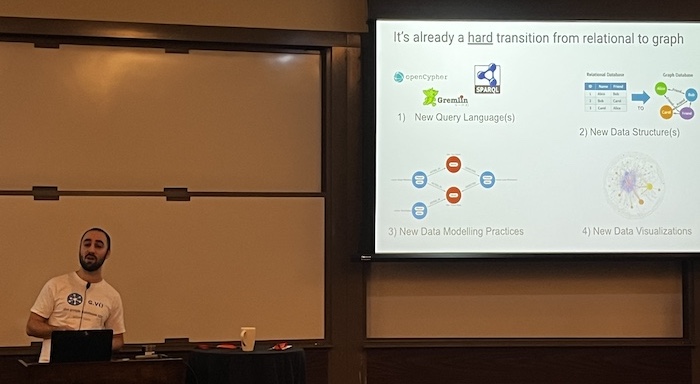
I (Christian Miles) gave a talk on the role of data visualization in a post-LLM world. I explored the question of what role remains for visual representation in a world where users can simply ask questions of their data in natural language. I posited that graph visualization in particular would remain a foundational model for understanding connected data and a connected world.
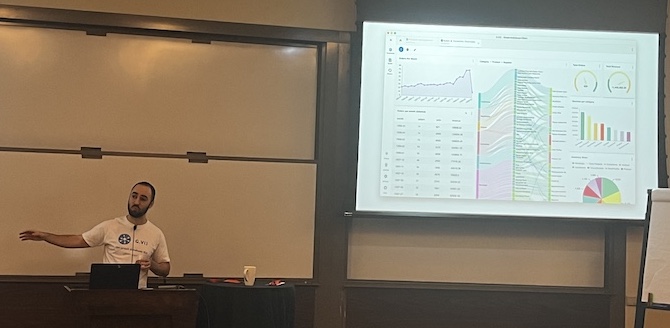
Arthur also gave a presentation on the graph database user experience with a particular lens on the history of how he first created gdotv. Relational databases have a mature ecosystem of tools – IDEs, data modeling, ETL, BI, query language, etc. – but graph databases pale in comparison. Arthur spoke on how graph database vendors can overcome this barrier to adoption. He also previewed a few of gdotv’s forthcoming BI dashboard capabilities.
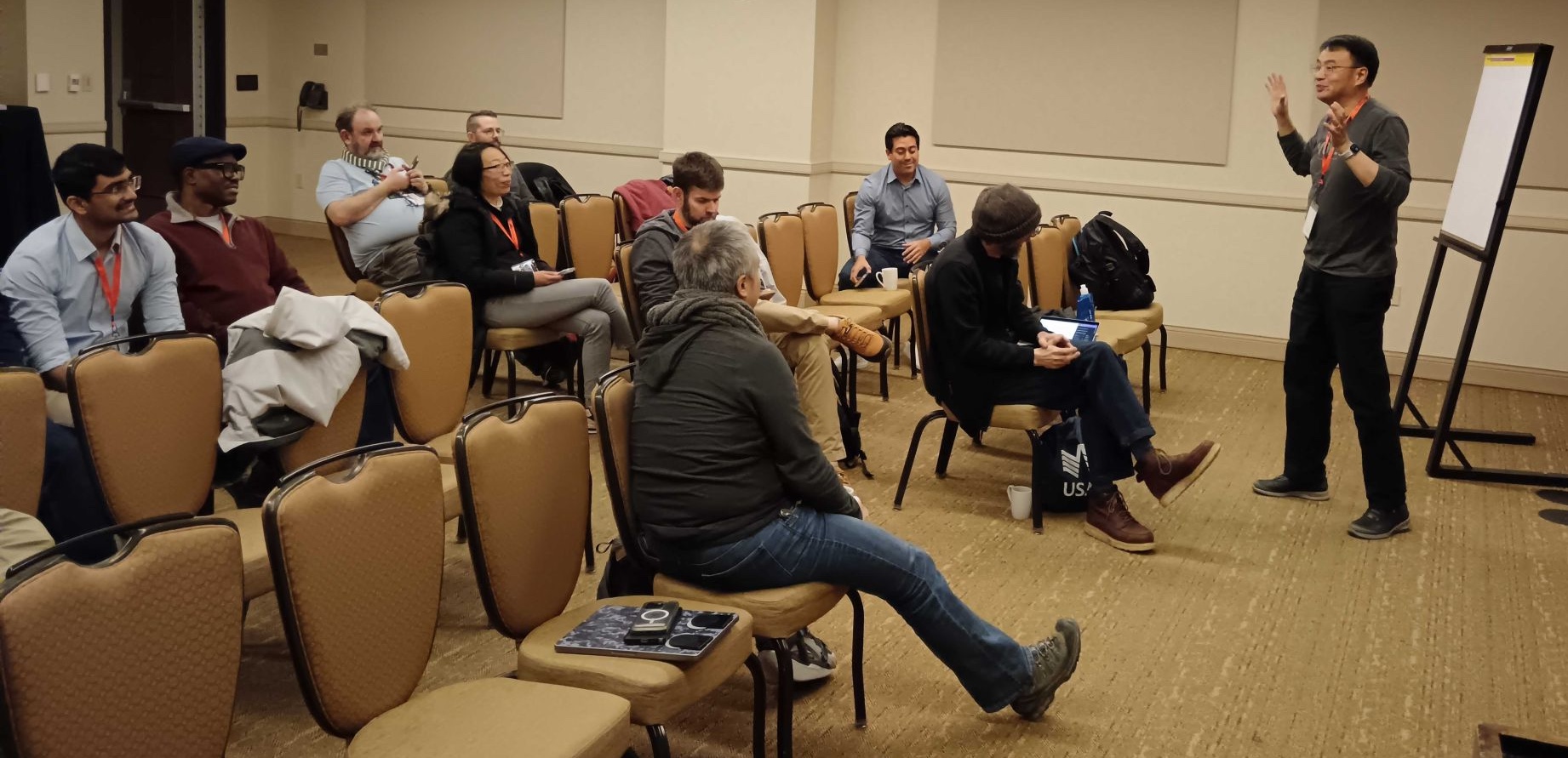
On Sunday of the conference, Arthur also hosted a discussion session on communicating the value of graph data to your boss and stakeholders (especially in comparison to relational databases). It was a lively discussion with welcome inputs from Jay (JieBing) Yu, Shane Gibson, and Jason A. Grafft who brought in their wisdom with no filters on the state of our industry.
Three Years from Now
The town hall session spent nearly two hours on one question: “Where do we see ourselves in three years?”
The spectrum ran from genuine fear to cautious optimism. The people treating this as another adaptation – and this profession has never sat still for long – are the ones building the most interesting things right now.
Last Call
Thanks again to Lynn Bender for sustaining the Data Day Texas community for over a decade. The venue might be closed, but the conversations haven’t stopped.
–Christian & Arthur
Working with connected data?
Try the only IDE built for graph db developers and data scientists to help you query, explore, and visualize graph data.

![Evaluating Codebase-Oriented RAG through Knowledge Graph Analysis [Part 2]](https://gdotv.com/wp-content/uploads/2026/03/knowledge-graph-analysis-codebase-oriented-rag-part-2.jpg "Evaluating Codebase-Oriented RAG through Knowledge Graph Analysis [Part 2]")