The Weekly Edge: Hydra Goes Translingual, Graph Data Science for Rust, Knowledge Graph Mother Lode, & More [23 January 2026]
![The Weekly Edge: Hydra Goes Translingual, Graph Data Science for Rust, Knowledge Graph Mother Lode, & More [23 January 2026]](https://gdotv.com/wp-content/uploads/2026/01/knowledge-graphs-cosmos-db-hydra-graph-programming-language-weekly-edge-23-january-2026.png "The Weekly Edge: Hydra Goes Translingual, Graph Data Science for Rust, Knowledge Graph Mother Lode, & More [23 January 2026]")
Don’t touch that dial! It’s now time for the regular broadcast of the Weekly Edge! 📻
For those just tuning in, the Weekly Edge is like the coolest radio station on the internet that plays the perfect mix of graph tech hits, deep cuts, and new releases that you can’t get out of your head – all DJed by the team at G.V(). 🎧 🎶
This week’s track list has something for everyone:
- Demo track: Hydra now speaks in tongues (multiple)
- Marching song: Submit your proposal to Cosmos DB Conf today
- Geeky duet: Amy Hodler and Max Latey talk graphs vs. enterprise architects
- Epic ballad: A new catalog of every knowledge graph resource ever
- Slapping new single: A graph data science library for Rust
- Workout beat: Beef up your KG creds in 2026 with a new cert
I’m your DJ, Bryce Merkl Sasaki, and you’re listening to 109.3 FM, the Weekly Edge. Here’s your first song:
[Demo:] Hydra Goes Translingual
Graph primordial being Joshua Shinavier just dropped some big Hydra news earlier this week as a teaser for Data Day Texas (happening tomorrow!), where he’ll have a longer presentation.
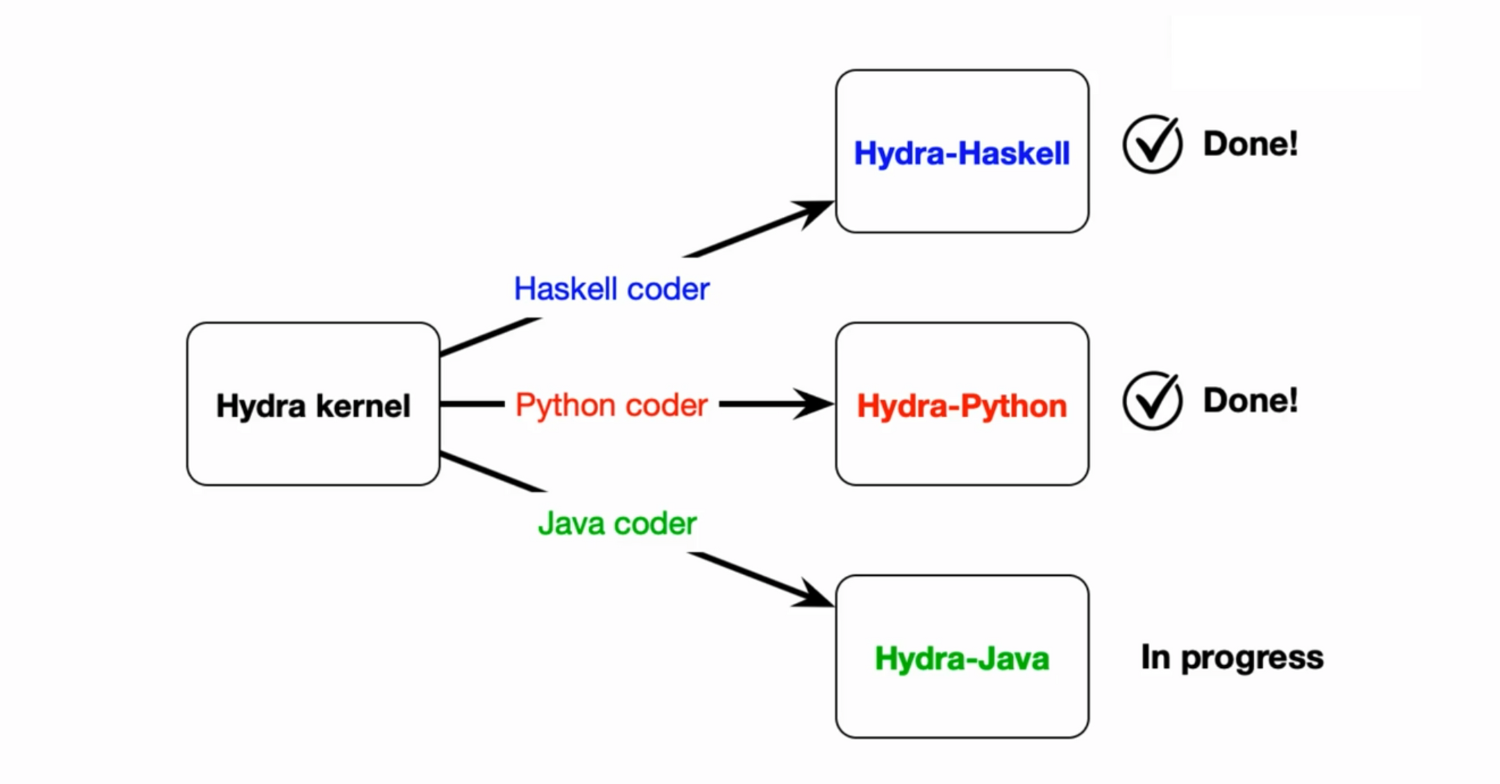
The news: Haskell and Python implementations of the Hydra graph programming language are now semantically equivalent, as confirmed by a rigorous test suite.
Hydra is a new functional graph programming language with a couple of unique features:
- It’s based on an equivalence between typed lambda calculus (slides) and labeled hypergraphs, which makes it well suited for combining graphs with computation.
- It’s designed to translate program code, including its own kernel, into other programming languages.
That means that you can write a Hydra application in Haskell and run it in Python (as he shows in the demo video), or vice versa. Java support is in progress, and other targets will follow.
New to Hydra? Check out the Hydra repo on GitHub, watch Josh’s previous demo video, join the LambdaGraph Discord server, or take a deep dive into Amber Lennox’s first look at the Hydra project.
[Opportunity:] Submit Your Proposal to the Azure Cosmos DB Conference
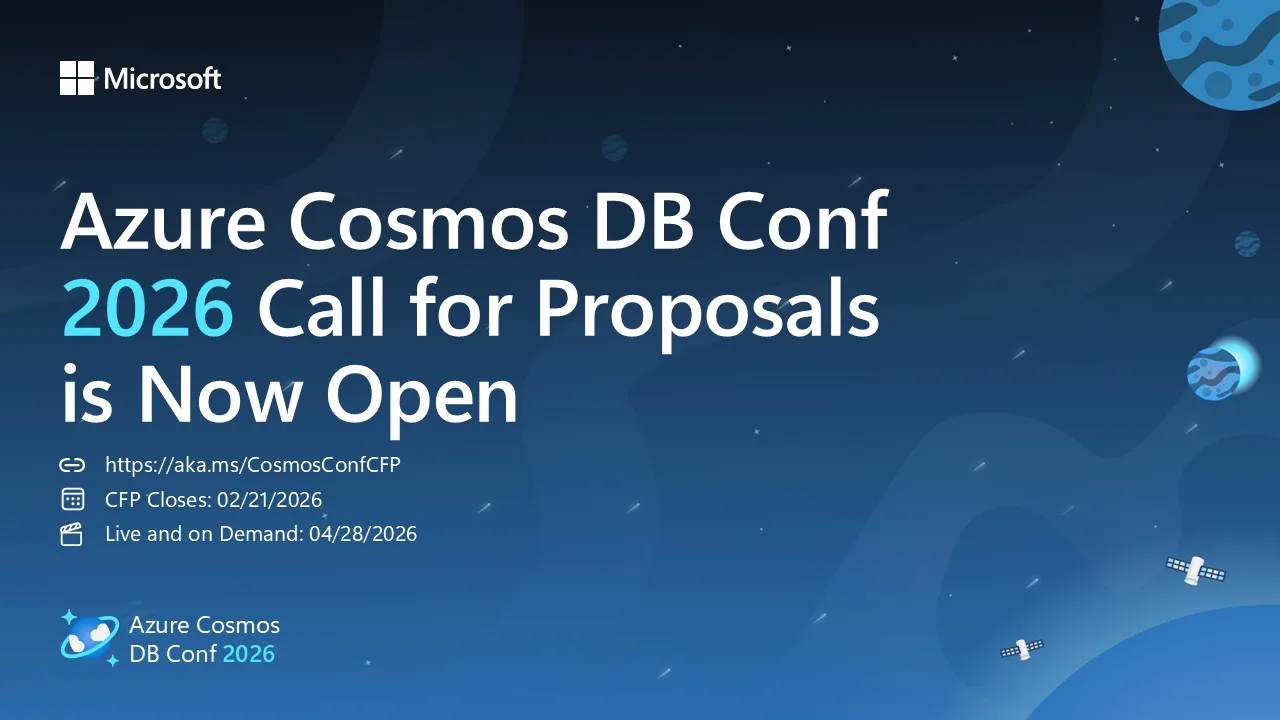
If you’ve got a story to tell about building something graphy with Cosmos DB, here’s your chance to share it with your fellow developers and architects at the online Azure Cosmos DB Conf 2026 happening this April.
The conference Call for Proposals is now open – so why not submit something? Giving a talk not only helps your fellow engineers solve similar problems but also boosts your visibility and ratchets up your career in 2026. The conference organizers are looking for 25-minute, demo-driven technical talks based on real problems with real solutions involving Azure Cosmos DB, so submit your proposal before the 21 February deadline.
Still need more info? Catch a recap of Azure Cosmos DB Conf 2025 while you procrastinate. Seriously though, you should submit something.
[Watch:] The End of Graph Friction with Max Latey
For years, enterprise architects viewed graph databases with a mix of curiosity and dread. Between specialist silos, complex ETL pipelines, and infrastructure friction, many chose to stay in the safety of relational tables. Can we blame them?
In this week’s watch, Amy Hodler (the Mon Mothma of the Graph Republic, also of GraphGeeks) interviews Max Latey, the Obi-Wan Kenobi of Graphs and also the CEO & Founder of Pinboard Consulting.
Together, they discuss the shift in how organizations are adopting graph technology, including the popularity of GraphRAG, the ease of using a graph query engine like PuppyGraph on relational data, and the challenge of graph data modelling. Max also discusses his “side-by-side” data modelling method and how SQL:2023 and GQL are both making graph technology more accessible to data teams.
[Treasure Trove:] A Catalog of Knowledge Graph Resources
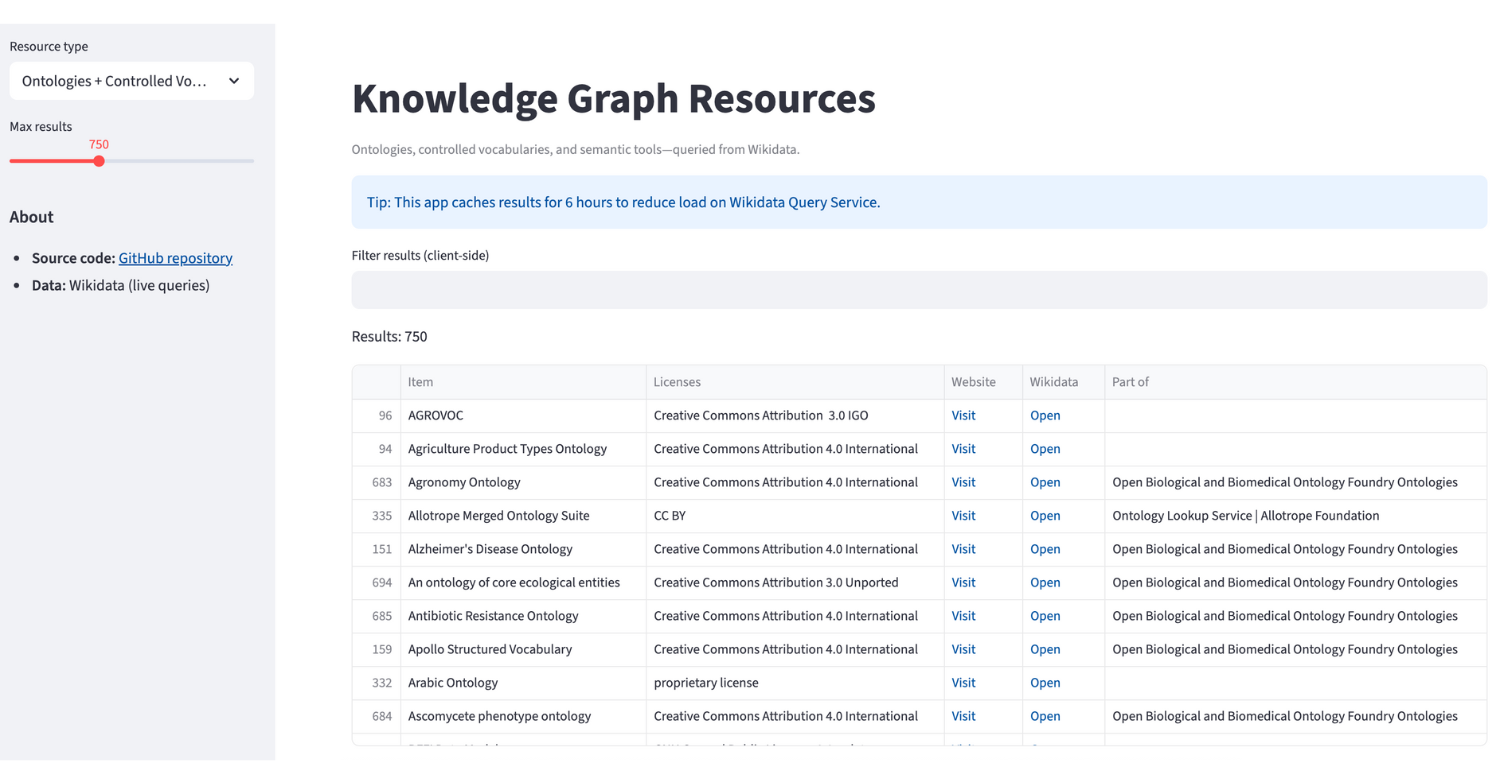
Imagine stumbling upon a mysterious library of all the world’s knowledge and the sign out front just said, “library.” That’s the same vibe as this repo / app.
Hacker and legend Steve Hedden pulled together this “lightweight” catalog for discovering knowledge graph resources powered by live queries to Wikidata that includes:
- Ontologies and controlled vocabularies
- Semantic / knowledge graph software and platforms
- Clickable links to Wikidata pages and official websites
- Client-side filtering and ranking
This Streamlit app lets you explore KG-related resources documented in Wikidata and includes both open and proprietary resources. It’s designed for human-friendly discovery – no SPARQL knowledge required. In keeping with our hypothetical intro, the app is just called “Knowledge Graph Resources.” Understatement of the year.
[Repo:] Graphina: A Graph Data Science Library for Rust
Graphina is a graph data science library for Rust. It provides common data structures and graph algorithms for analyzing real-world networks, such as social, transportation, and biological networks. It also helps power Onager – graph analytics on DuckDB – which we featured last week.
Compared to other Rust graph libraries, Graphina aims to provide a more high-level API and a wide range of ready-to-use algorithms for network analysis and graph mining tasks. Graphina aims to be as feature-rich as NetworkX but with the speed and performance benefits of Rust. And if you’re a Pythonista, the PyGraphina Python library allows users to use Graphina in Python.
As Graphina uses Rust, naturally it will do well on Hacker News.
[Course:] The Knowledge Graph Certificate Program

Looking to beef up your knowledge graph cred in the new year? You might consider the Knowledge Graph Certificate Program (KGCP).
The KGCP gives you an in-depth exploration of knowledge graph technology within a guided 10-week cohort, culminating in a professional development certificate. The program offers two learning tracks:
- Explorer: Ideal for those new to knowledge graphs who need to become conversant in the technology or understand it from a broad perspective (so, the non-technical track).
- Builder: Designed for technical professionals seeking hands-on skills in building knowledge graphs, integrating data, creating schemas, ontologies, and taxonomies, and querying the results for AI and application development (so, like the super-technical track).
I used to work with the program manager, so I highly recommend this program to either sharpen your KG skills or just to prove to your boss that you know what you’re talking about (or both). Fill out the interest form here to get started.
P.S. The latest release of G.V() is now out in the wild with support for ontologies, extra auth support, and a rizzed up viz of your data model. Check it out!
Got something you want to nominate for inclusion in a future edition of the Weekly Edge? Ping us on on X | Bluesky | LinkedIn or email weeklyedge@gdotv.com.