The Weekly Edge: Graphs Fighting Climate Change, Graph Con @ Seattle, NeuG’s New Algorithms, & More
Happy Thursday!
We’re back at it, once again keeping you updated on the latest graph news. This week is one to connect with others on this humble little planet we call Earth, whether it’s the humanitarian risks of climate change, meeting other graph fans at GraphCon, or checking out the cool, open-source projects people are working on.
Headlines this week:
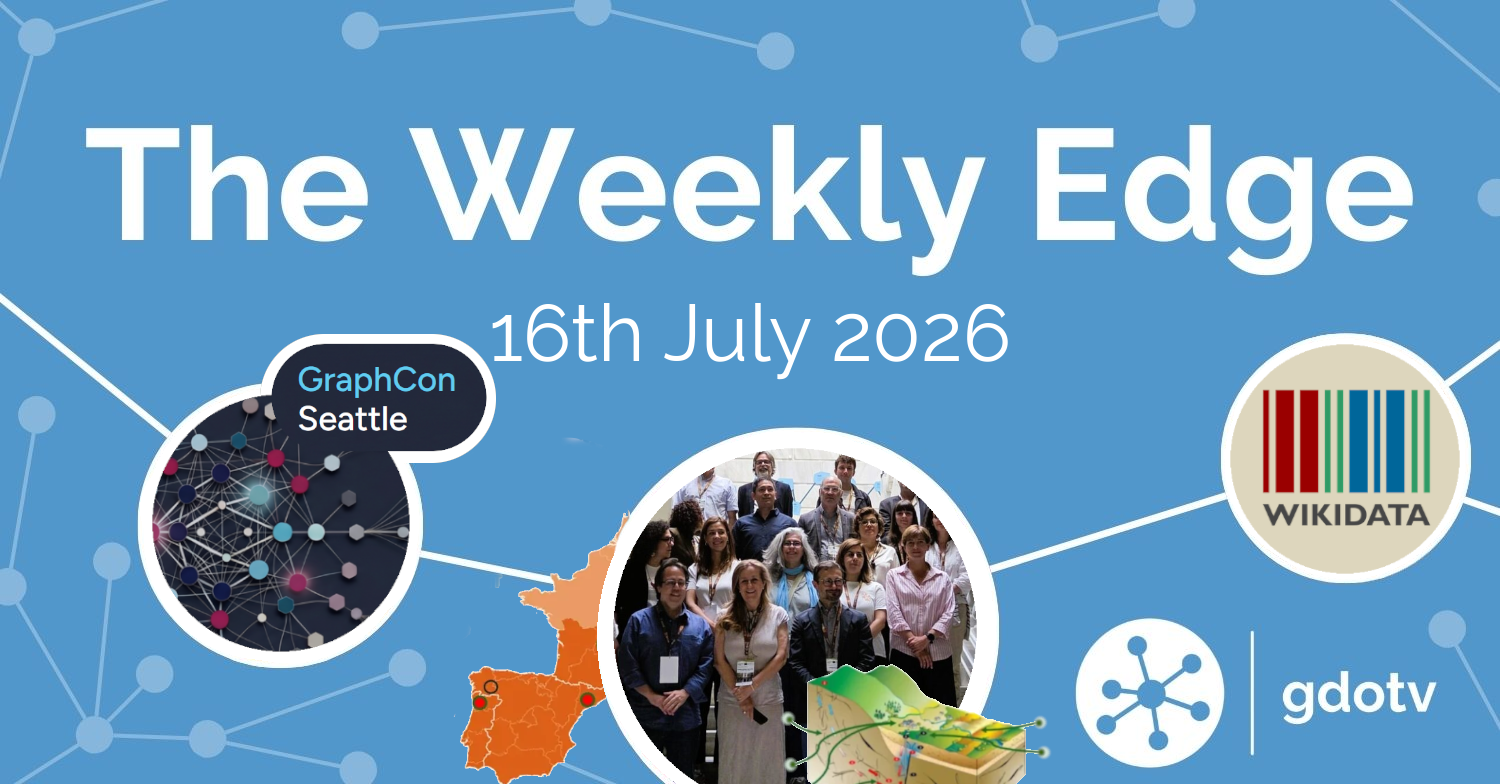
- Graphing where it matters: An EU-funded team is using TypeDB graphs to power climate change decisions.
- Making sense of things: The Open Knowledge Graphs project makes it easier to understand the complicated knot of Wikidata.
- Broadening the Scope: GraphScope project NeuG has added a whole host of graph algorithms.
- Graphing for agents: NebulaGraph adds new features targeted at LLM agents.
- Get your tickets! GraphCon 2026 is almost upon us!
If you’re new here, the Weekly Edge is your weekly tl;dr of graph technology news curated by the team at gdotv, giving you all the reads, repos, vids, and walkthroughs worth exploring from the past seven-ish days (or so).
/*
 * It’s time to level up your graph game:
 * Query, explore, edit, and visualize your connected data with the gdotv graph IDE
 * Try out the free dev tier or upgrade to a 1-month, no-fuss free trial.
 */
/*
*/
[News]: Graphs Guide Climate Policy
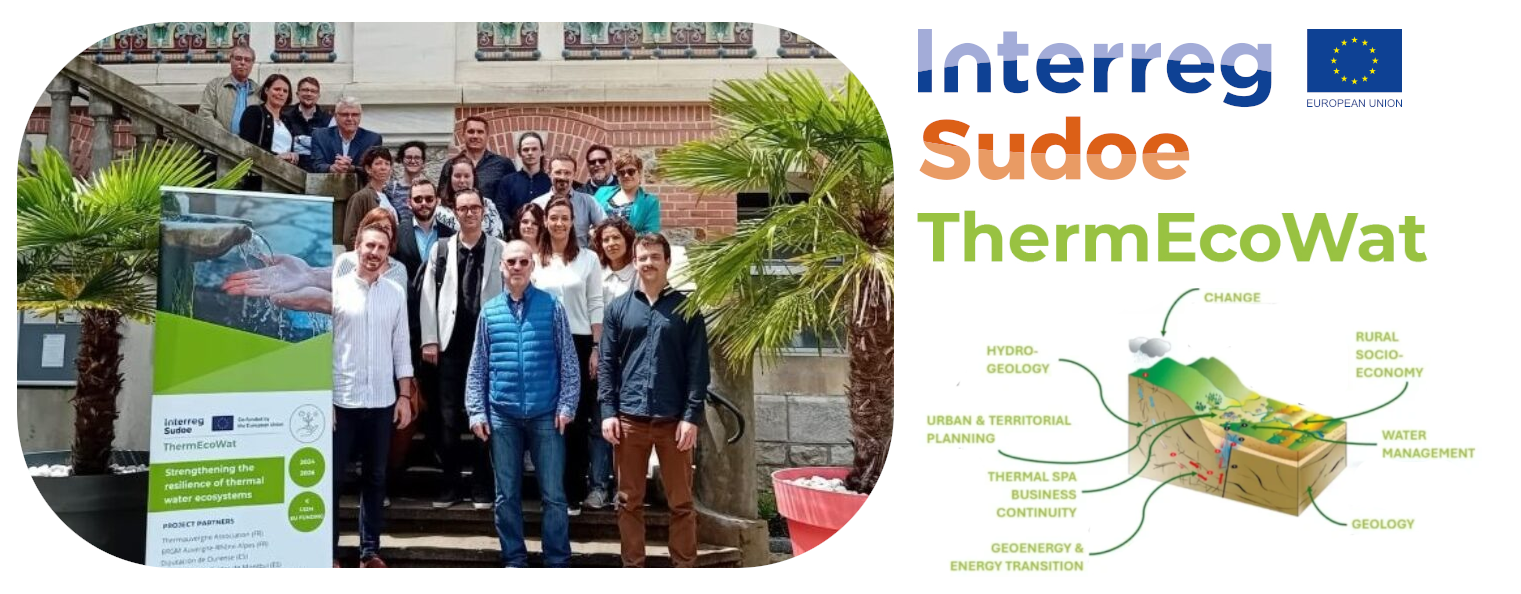
This summer has seen Europe hit by crushing, record-breaking heat waves. If you live here, chances are it’s been hard to ignore. We can wax lyrical all day about all the hypothetical applications of hypothetical knowledge graphs solving hypothetical problems, but practical examples of graphs playing a critical role in real life decision making is always going to be when graphs have the most meaningful chance to show their quality.
The ThermEcoWat (TEW) Project is a project with EU funding that has been studying the material effects of climate change in southwest Europe, and the team used a TypeDB knowledge graph to help model their decision making. Their goal was to better translate known risks to thermal resources, water systems, and infrastructure systems into meaningful decision making strategies for those working in operational and administrative roles, particularly within the south west of Europe.
For this they founded the TEW Knowledge Graph (TEW KG) that semantically links scientific results to the most relevant operational information. The knowledge graph itself doesn’t seem to be publicly available as far as I can tell, but it gets a shout out in a recent update. This source from TypeDB attributes the TEW KG directly to the French public institution Bureau de Recherches Géologiques et Minières (BRGM), who are partners in the TEW project.
As the name might suggest, a TypeDB knowledge graph is a noSQL database with a type system. It has open-source and cloud-based proprietary forms, and is favoured for its strong typing, polymorphic model and native, in-built logic reasoning. Let’s hope it does the graph community proud in this case!
[Catalog]: Browse Wikidata Resources with the Open Knowledge Graphs Project
We often like to share new and interesting knowledge graphs via the Weekly Edge. This week we’re looking at a project that isn’t a knowledge graph in itself, but rather a service to help you interface with one of the largest knowledge graphs around, for any domain or interest you like. This is the Open Knowledge Graphs project.
Compiled primarily by Steve Hedden, this is a catalog that sources all kinds of ontology and semantic tools from Wikidata. From Cell Ontology to the Unified Astronomy Thesaurus, this project indiscriminately gathers together a number of Wikidata resources, (be they vocabularies, taxonomies or semantic software) across multiple domains into one place where they can be categorised, or browsed with search functionality.
Wikidata itself is an auxiliary knowledge graph to Wikipedia, launched in 2012 to add additional structure to Wikipedia, especially across languages and linked articles. You can query Wikidata yourself in SPARQL via the Wikidata Query Service hosted on Blazegraph. They even have a tutorial!
As the Open Knowledge Graphs project itself admits, Wikidata coverage itself is often still only partial, so the completeness or usefulness of any individual resource may vary. Nonetheless, the catalog could be useful to those looking to get a foothold navigating Wikidata.
[Release]: NeuG Introduces Graph Algorithms
A new version of NeuG is here, and it brings with it a Graph Data Science (GDS) extension.
What’s NeuG? Shockingly, it’s a graph database. But not just any graph database. In this case, it’s an embedded database for hybrid transactional and analytical processing (HTAP) workloads. It claims to follow a similar design philosophy to DuckDB, but for graphs rather than relational data.
It’s made by GraphScope, a broader graph computing platform for large graph processing produced by the Alibaba Group. NeuG is the lightweight version of the same GraphScope technology. Both GraphScope itself and NeuG are open source projects you can view on GitHub.
In this case, the new NeuG GDS extension promises a number of new analytic tools that aim to firmly establish NeuG as a robust graph analytics tool, rather than simply a database. GDS prepackages a number of familiar graph algorithms into a single package:
- Weakly connected components (WCC)
- Breadth first search (BFS)
- Single source shortest path (SSSP)
- PageRank
- Louvain Leiden
- Community detection with label propagation (CDLP)
- Local clustering coefficient (LCC)
- K-Core
These are all well-established graph algorithms that nonetheless are not always straightforward to implement on a graph database that doesn’t natively support them. NeuG’s move to incorporate them will be a strong selling point in this embeddable database’s favour.
[Release]: NebulaGraph Adapts Data Modelling for LLMs
A recent announcement from NebulaGraph: regarding NebulaGraph Enterprise v5.3. “Graph-Native Intelligence for the Ontology-Driven AI Era”
As we’ve discussed in a number of recent Weekly Edges, a number of graph databases and vendors are increasingly pivoting to “AI-first” marketing. The pitch is straightforward: well-structured knowledge graphs might present information in a way large language models can navigate more quickly and efficiently than their relational cousins, so there’s an incentive for graph databases to present themselves as primarily LLM layers, rather than more traditional data stores.
The optimal methods, contexts and applications for such LLM layers are still very much open problems, but some see the fundamental question as one of how to implement graph analysis tools (e.g. algorithms, ontologies and data modeling) in a way LLMs can navitage easily via their own natural language modelling.
In this case, NebulaGraph Enterprise v5.3 promises a number of quality-of-life graph engine updates (including a number of graph algorithms, similar to NeuG, above), but in this case the emphasis is strongly oriented around the capabilities these will offer to LLM-agents rather than individual users.
[Event]: Get Ready For GraphCon!
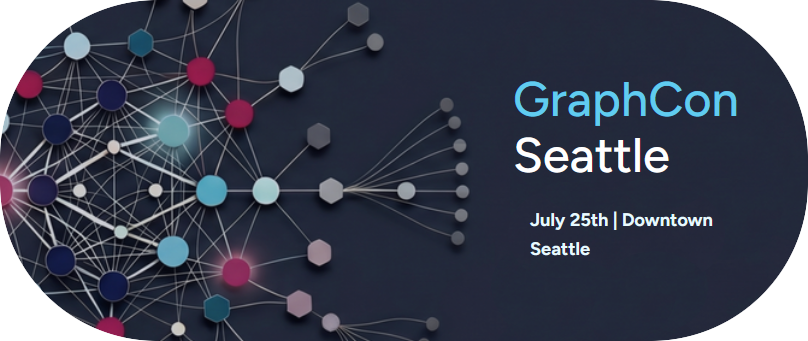
Super exciting news! GraphCon is almost here!
If you’re not already aware, GraphCon is a one day event organized by GraphGeeks, and it’s a central spot for graph engineers, graph scientists and just graph fans to congregate and talk about everything graph! This year it’s happening in Seattle on July 25th.
As GraphGeeks founder Amy Hodler discussed in a recent LinkedIn post, the schedule is packed and features a number of friends of hers, and ours here at gdotv as well. Though no one from our team will make it this time (try to forgive us, Seattle is really, really far from Scotland) we’re so excited to hear how it goes, and your stories.
Have you got your tickets yet? If not, you can try your luck here, but no promises!
P.S. I was totally right last week, LadybugDB v.18.2 is here already and v.19 is in prerelease. Someone catch that bug!
P.P.S. In this week’s Graph Pulse, we checked in with James Hendler, co-author of the original Semantic Web article, and Professor at the Rensselaer Polytechnic Institute to discuss the semantic web’s 25th anniversary and newfound popularity. We were honoured to talk with such a legend in the industry, check it out!
P.P.P.S. Got an item to nominate for the next edition of the Weekly Edge? Hit me up at weeklyedge@gdotv.com or hit reply! ✍🏽