
Krisp Utilizes gdotv to Track & Traverse Complex Sharing Relationships within Their AI Meeting Assistant
Company: Krisp Technologies Inc.
Year founded: 2017
Headquarters: Berkeley, U.S.
Industry: Audio Processing, Communications, Software
While building a document-sharing feature, the Krisp team faced the challenge of storing and tracking complex, nested relationships within a traditional database model. Using gdotv, the Krisp team built a hybrid solution using a graph database to efficiently store and visualize relationship data with confidence.

Melik Karapetyan
“gdotv significantly improved our overall developer experience when building an application using a graph database. We needed a tool not only for troubleshooting and debugging Gremlin queries, but also for easy data visualization. The fact that we had gdotv gave us much more confidence to build and ship our application in production and to ensure that it would be maintainable over the long term.”
The Company
Krisp is a voice AI company that improves real-time audio communication. Since 2017, Krisp products have helped users, meeting attendees, and customer call centers increase the quality of their conversations through real-time noise cancellation, accent conversion, voice translation, transcription, and more. To date, Krisp has processed over 4 trillion minutes of voice conversations improving the productivity and efficiency of hundreds of thousands of agents and customer experience (CX) professionals.
Graph Use Case(s): Content Management, Identity & Access Management
gdotv customer since February 2025
The Challenge
In early 2023, the Krisp engineering team began developing their new AI Meeting Assistant product. Part of the product includes a note-taking application with the ability to share documents and folders among co-workers and colleagues.
In the app, users can share and cross-link documents – which also inherit sharing privileges from parent folders – making the access relationships for each file exponentially complex. The Krisp team faced the challenge of how to store the data for these arbitrary-depth, nested relationships so that the app could retrieve the entire hierarchical tree of sharing relationships in an efficient way.
At first, the Krisp team stored all of the documents’ data inside traditional key-value based stores. But as the product evolved and grew, it became more and more difficult for the Krisp team to improve the efficiency of emerging data-access patterns.
Fortunately, Melik Karapetyan, Senior Director of Engineering at Krisp, knew that graph databases are an ideal tool for access management challenges.
“This is where graph databases come in very handy,” said Karapetyan. “In a graph database, this kind of relationship traversal is a standard query, and it performs really well even if you don’t know the depth of the nested relationships. That was our deciding factor to go with a graph database and not anything else.”
With most of their data still in a key-value store, the Krisp team adopted a hybrid approach: Each document’s relationship data is stored in graph database – which is optimized for efficiently computing relationship structures – with pointers to each document’s content data stored in a key-value store – which performs well even under a heavy volume of concurrent writes and changes. In short, each database excels at its own particular strength.
The hybrid data architecture also gives the Krisp product team much more flexibility on what they can build. The hybrid approach allows them to change a given product’s direction without requiring the architectural rework, the refactoring of existing databases, or the migrations common with relational database systems.
“It’s really easy to reason in the graph model, because it maps very closely to how we think as human beings,” said Karapetyan. “Our team can do recursive graph traversals using the Gremlin query language much more efficiently instead of trying to do them in a traditional relational database system.”
Of course, working with graph databases also presented its own challenges. Right away, Karapetyan and the Krisp team started looking for a compatible IDE for working with their database.
“Having an IDE was essential for us when starting development with a graph database,” said Karapetyan. “We needed a tool not only for troubleshooting and debugging Gremlin queries, but also for easy data visualization and other developer use cases.”
The Solution
Before finding gdotv, Karapetyan had actually vibe-coded a basic graph database client to meet their immediate needs while the team worked on the product proof of concept. But as the PoC phase wrapped up, Karapetyan knew the Krisp team would need something more robust.
“Once we transitioned to more production-ready environments, it was critical to find a more durable solution,” said Karapetyan. “As the project grew, I knew our vibe-coded database client would need a lot of maintenance and development, which we wanted to avoid. At the end of the day, we are building a product, not an IDE, so that couldn’t be our main focus.”
Eventually, the Krisp team found gdotv and tried it out. When it worked well, they purchased licenses for the team.
“We found gdotv a better option than our in-house tool because it provided both the connectivity query engine as well as the ability to render data in a way which is readable and easy to explore,” said Karapetyan.
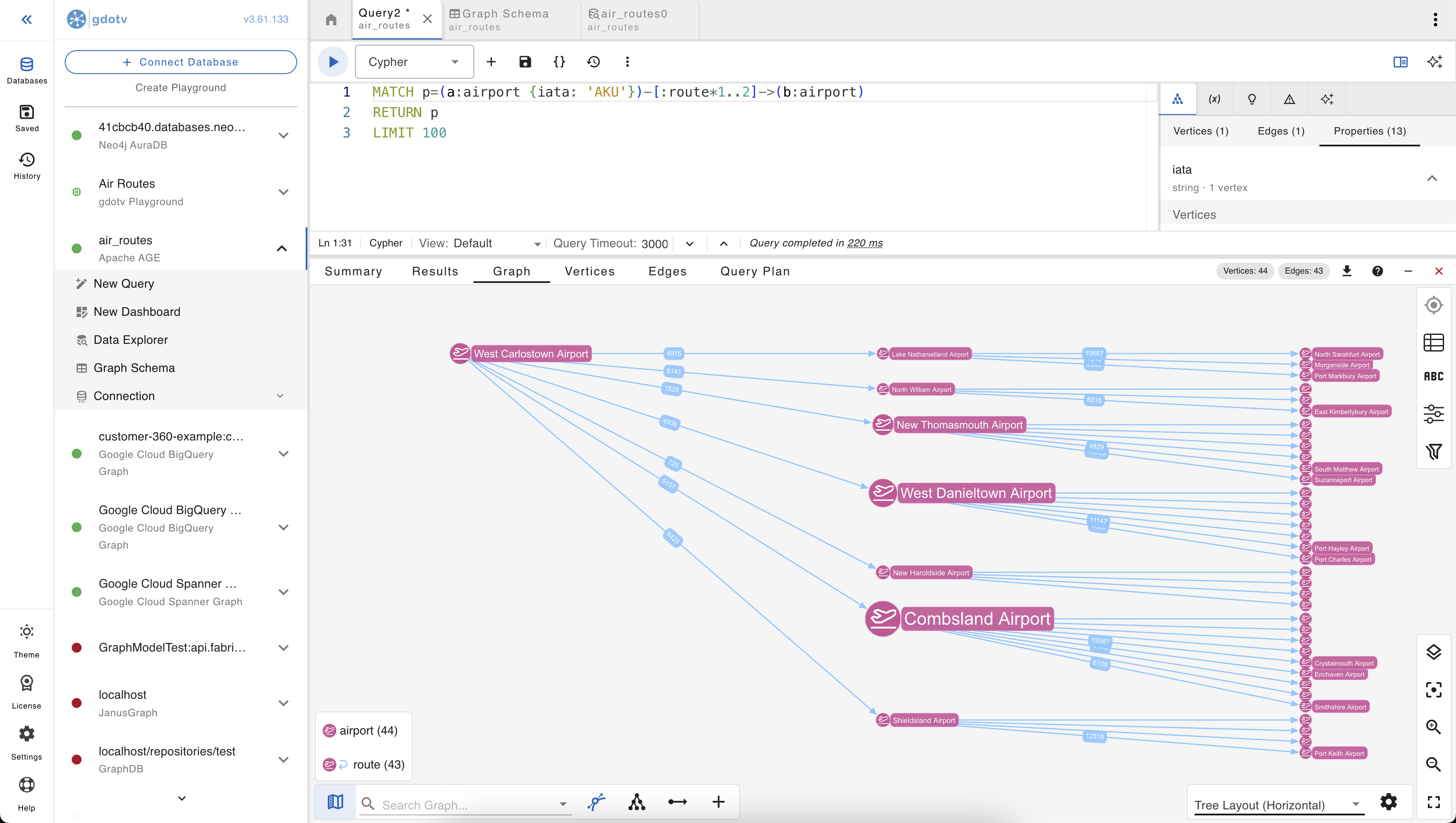
In particular, the Krisp team appreciated and needed gdotv’s graph visualization capabilities, and being able to apply and visualize custom labels based on node properties helped them understand their data much more effectively.

The Results
After using gdotv, one of the first benefits Karapetyan noticed was an improved developer experience across the team.
“gdotv significantly improved our overall developer experience when building an application using a graph database,” said Karapetyan. “Even though graph databases have existed for a long time, graph database tooling is still not as advanced compared to what developers have for working with relational databases. This is one of the areas where gdotv significantly improved our developer experience.”
Beyond the benefits of day-to-day tooling, the biggest value that gdotv delivers for the Krisp team is help in troubleshooting issues with their graph database.
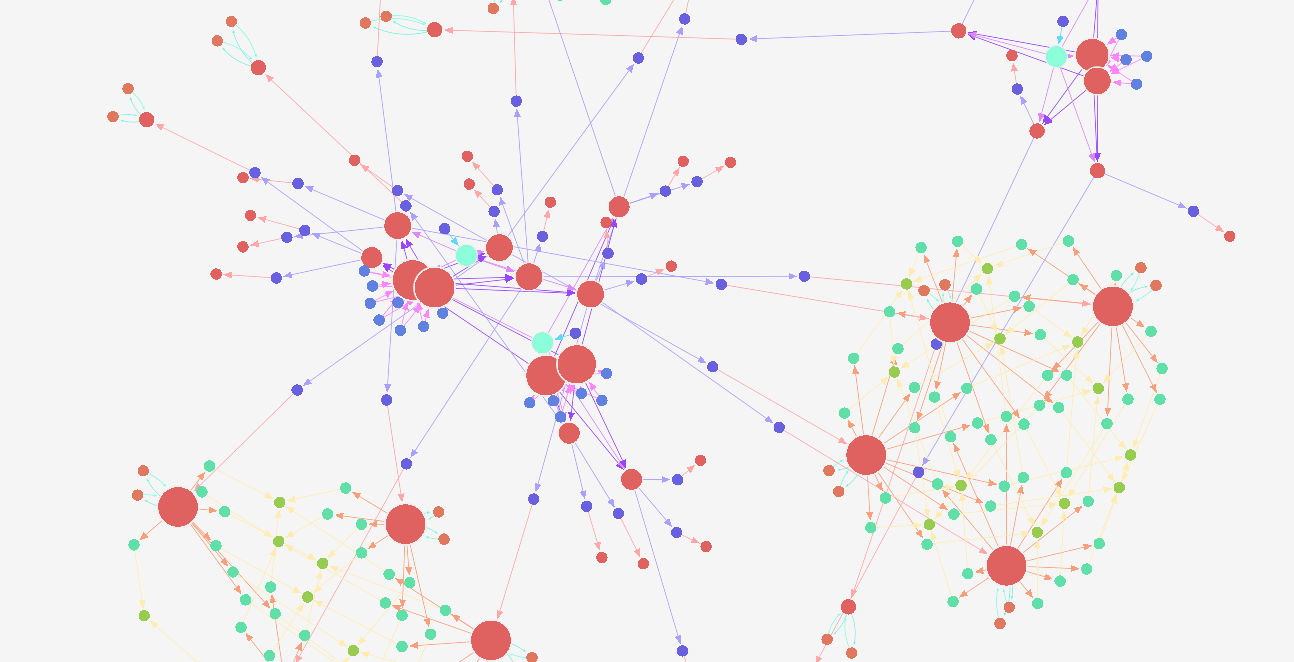
“Sometimes there might be anomalies in the graph or there might be unintentional supernodes,” said Karapetyan. “Using gdotv to query and visualize this kind of graph data is especially helpful.”
One incident in particular highlights how valuable gdotv has been to the Krisp team. In early 2026, there was a P1 issue with Krisp’s graph database. The team used gdotv to access their graph data and then to find and quickly diagnose the issue so they could fix it immediately.
“When you have performance issues or similar challenges, it’s essential to be able to access your data so you can review and troubleshoot,” said Karapetyan. “For our database, that means gdotv, so it was super critical for us to have gdotv during that incident.”
Another key use case of gdotv has been Krisp’s ability to validate the product functionality, allowing them to check whether the user experience on the front-end of the application matches what’s happening on the graph in the backend.
“Right now, validating product functionality is our most important use case of gdotv,” said Karapetyan.
The Krisp team also finds gdotv particularly helpful when it comes to writing and debugging Gremlin queries. With gdotv, a Krisp developer can write a Gremlin query, test it in an isolated Gremlin query console, and then visualize the resulting data to see if the graph behaved as expected.
“Could we have built our app without gdotv? Absolutely,” said Karapetyan, “But to do that, we would have had to build an IDE ourselves or just use the Gremlin console and try to parse the Java arrays and maps which are pretty difficult to interpret and visualize. Really, having a data visualization tool is a must-have in these cases.”
Finally, gdotv was a major factor in helping the Krisp team ship their new AI Meeting Assistant into production.
“The fact that we had gdotv gave us much more confidence to build and ship our application in production and to ensure that it would be maintainable over the long term,” said Karapetyan. “Going into production without proper tooling to view and observe our data – not to mention troubleshooting issues – would have just been unacceptable.”
In the future, the Krisp team plans to continue using gdotv alongside their graph database.
“Right now, our graph database is core to the product because all of the relationships are stored there,” said Karapetyan. “Every new feature we build will somehow use our graph, whether directly or indirectly – and gdotv will be right there to help us build it.”
Built to Help Your Graph Developers Succeed
gdotv is a cost-effective solution to make database development and management on AWS Neptune easily accessible.
Give gdotv a try and test out this graph database client and IDE for Amazon Neptune graph database. You’ll be up and running in just a few minutes.
Transform the way you work with graph databases: Download and trial gdotv for up to 3 weeks, for free – today.