The Weekly Edge: Graph DB Rankings, openCypher Compliance, the Ultimate Pokémon Graph, & More
There are weeks working in the graph tech space that I have to take a step back and wonder at how much it’s grown – in size, in diversity, in richness, in connections. When I first bumped into graph databases 11 years ago, not many of my colleagues could have imagined it would (or could) look like it does today.
As you can see in this edition’s headlines, it’s been one of those weeks of wonder:
- Mapping the territory: GDB-Engines just dropped a full-feature comparison of the industry’s ~94 different graph technologies
- Do all your graph databases speak the same dialect of Cypher? Here’s how to tell
- Neo4j as a macroscope on medieval Korean history: Dr. Javier Cha dives deep into the graph digital humanities
- Try before you buy: Use this repo from ArcadeDB to explore the top graph database use cases with sample data
- Gotta Catch ’Em All: Frolic through this beautiful, interactive graph visualization of all 1100+ Pokémon species to date
If you’re new to the Weekly Edge, this regular blog series is your tl;dr of all the news, reads, releases, and repos worth exploring in the graph technology space, all pulled together by the team at gdotv.
// It’s time to level up your graph game: Query, explore, edit, and visualize your connected data with the gdotv graph IDE. Try it out with a 1-month, no-fuss free trial.
Now, let’s take a closer look at this week’s graph technology news.
[News:] Meet GDB-Engines: An Open Source Comparison of ~94 Graph Databases
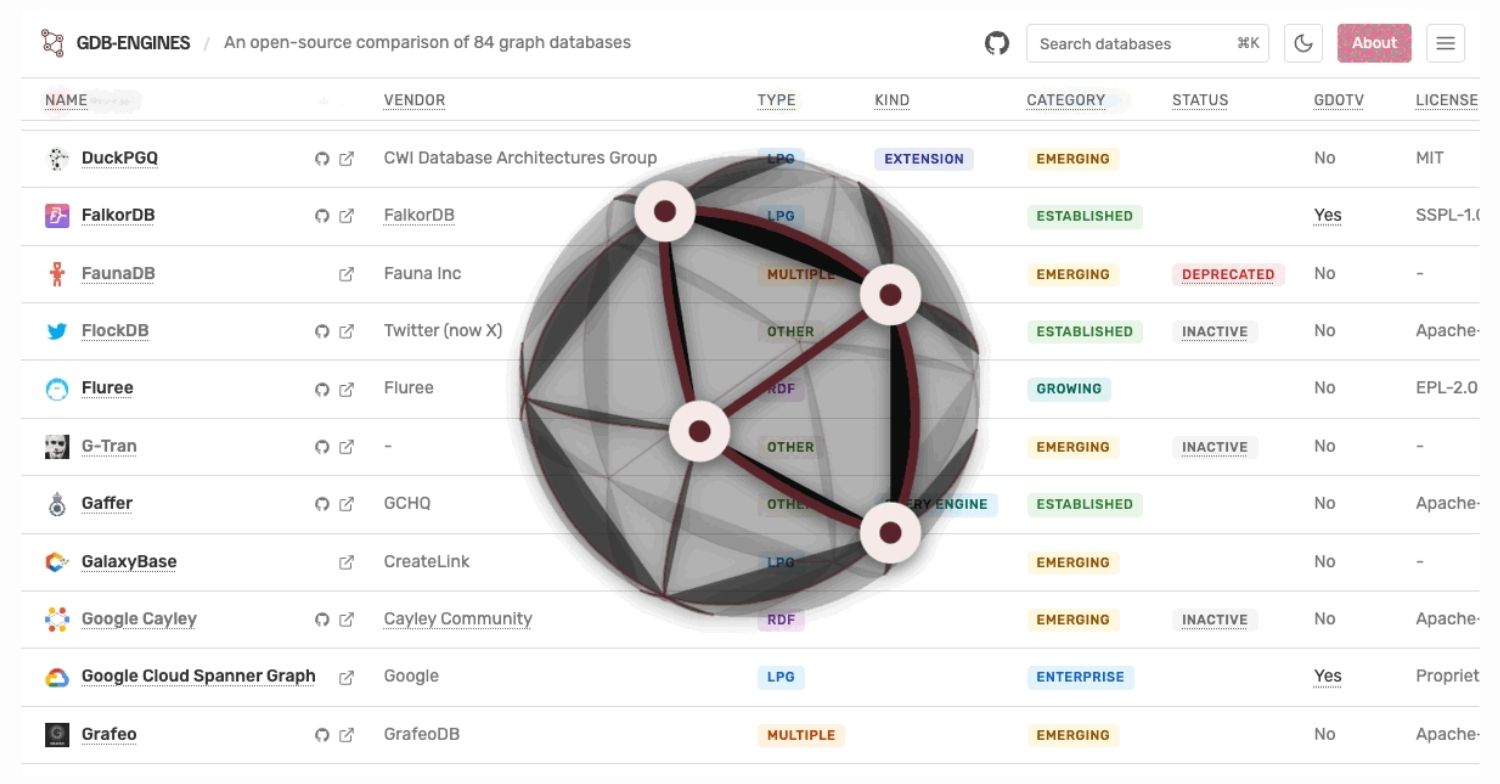
Earlier this week, my colleague Christian Miles published GDB-Engines: a site dedicated to listing every single graph technology that has ever been released – including graph databases, RDF triplestores, graph query engines, graph extensions, embedded libraries, and more!(!!!)
This graph Library of Alexandria has it all:
- An open source MIT license to reference and remix at will
- It’s open for pull requests, so tell Christian if he missed your favourite tool
- There’s a simple API for programmatic access
- The listings cover database model, query language support, licensing model, and 43+ other feature scores thanks to previous industry research
As you’d expect, the announcement created a bit of a stir, but Christian noted that GDB-Engines is not perfect and there are many more technologies to add or update in the full listing (which also includes inactive projects). So, please send in corrections and feedback, and he’ll keep the site up to date with the most recent information. In the meantime, it’s worth celebrating the work the industry has done to make such a listing even possible. 👏👏👏
[Release:] openCypher 9 Spec: How Does Your Graph DB Measure Up?
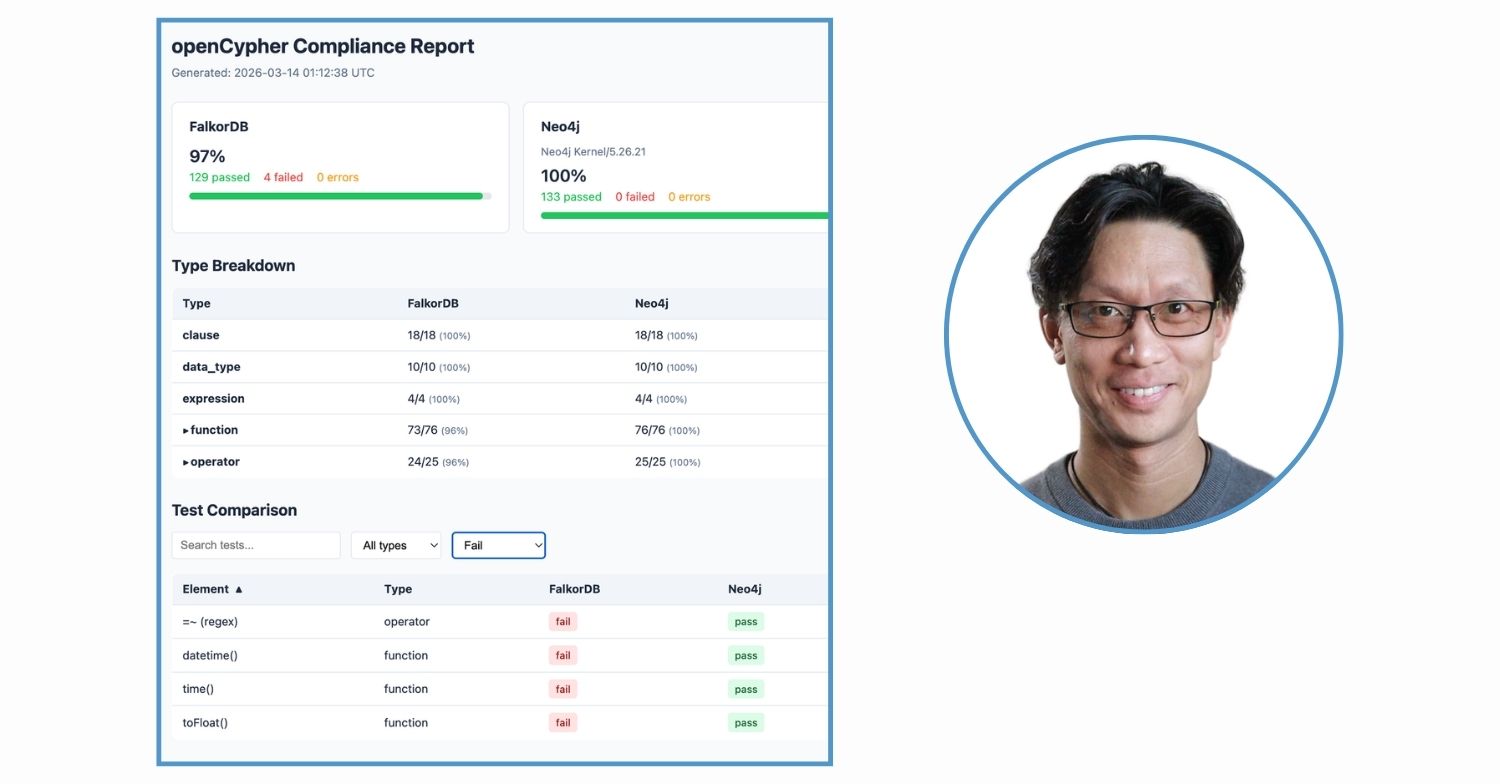
Once upon a time, Jason Koo got tired of accidentally coming across Cypher functions and clauses that worked in one graph database and not another. Even as a wide variety of graph vendors say they support Cypher or openCypher, not every query will work (or work the same) across each graph technology.
In the face of this challenge, Jason built a package to scan Cypher queries before you port them between different graph databases. At the time of writing, the package measures compliance against the openCypher 9 specification across four graph database vendors:
- ArcadeDB
- FalkorDB
- Memgraph
- Neo4j
Access the package from GitHub, pypi, or pip install opencypher-compliance
And if you’re looking to learn more about the Cypher query language in general, Jason’s Byte-Sized Cypher video series is worth checking out!
For a similar compliance tool for the ISO standard Graph Query Language (GQL), check out GraphGlot, which I covered a few weeks ago.
//
[Paper:] The Historian’s (Graph) Macroscope: Data Reuse & Medieval Korean Records in Neo4j
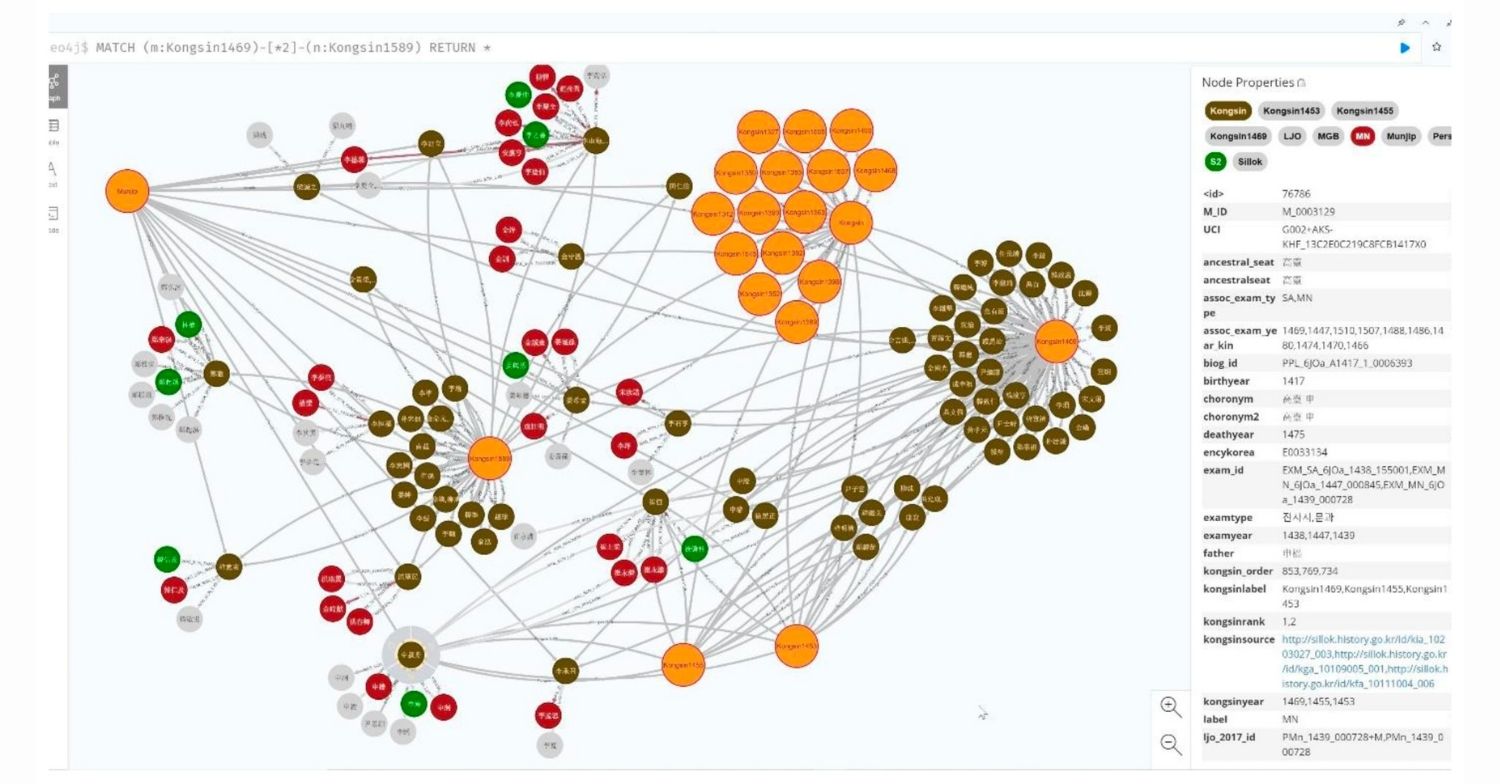
This week’s read isn’t a 4-minute skim. Rather, “Fine-Tuning the Historian’s Macroscope: Data Reuse and Medieval Korean Biographical Records in Neo4j” is like a punishing workout at the gym, but for your brain. You’ll be stronger for having read it.
In the article, Dr. Javier Cha at the University of Hong Kong explores the development and application of a historian’s macroscope, a computational framework that enables multiscalar exploration of digitized historical sources. He then applies that to his field of interest: medieval Korean history and biographical records.
It doesn’t matter if your most in-depth experience with Korean culture was watching KPop Demon Hunters with your nieces. This is a graph story with a digital humanities dataset to serve as an example. Our only beef? Those graph visualizations would have looked a lot better in gdotv. 😏
[Repo:] Try Out the Top 9 Graph Database Use Cases
Psst! Are you new here? That’s okay! Everyone has to start with graph databases somewhere, and the graph community is always open to newcomers.
For example, the ArcadeDB team recently published this repo for getting started with the nine most common use cases of graph technology, including:
- Customer 360
- Fraud detection
- GraphRAG
- Identity & Access Management (IdAM)
- Knowledge graphs
- Real-time analytics
- Recommendation engines
- Social network analysis
- Supply chain management
This collection of self-contained projects demonstrates how to get started with the ArcadeDB graph database (and other data models also supported by ArcadeDB). Each use case lives in its own directory with a Docker Compose file, SQL schema/data files, and runnable demos via both curl and a Java program. What more are you waiting for?
[For Fun:] The Pokémon Tree of Life as a Graph Visualization
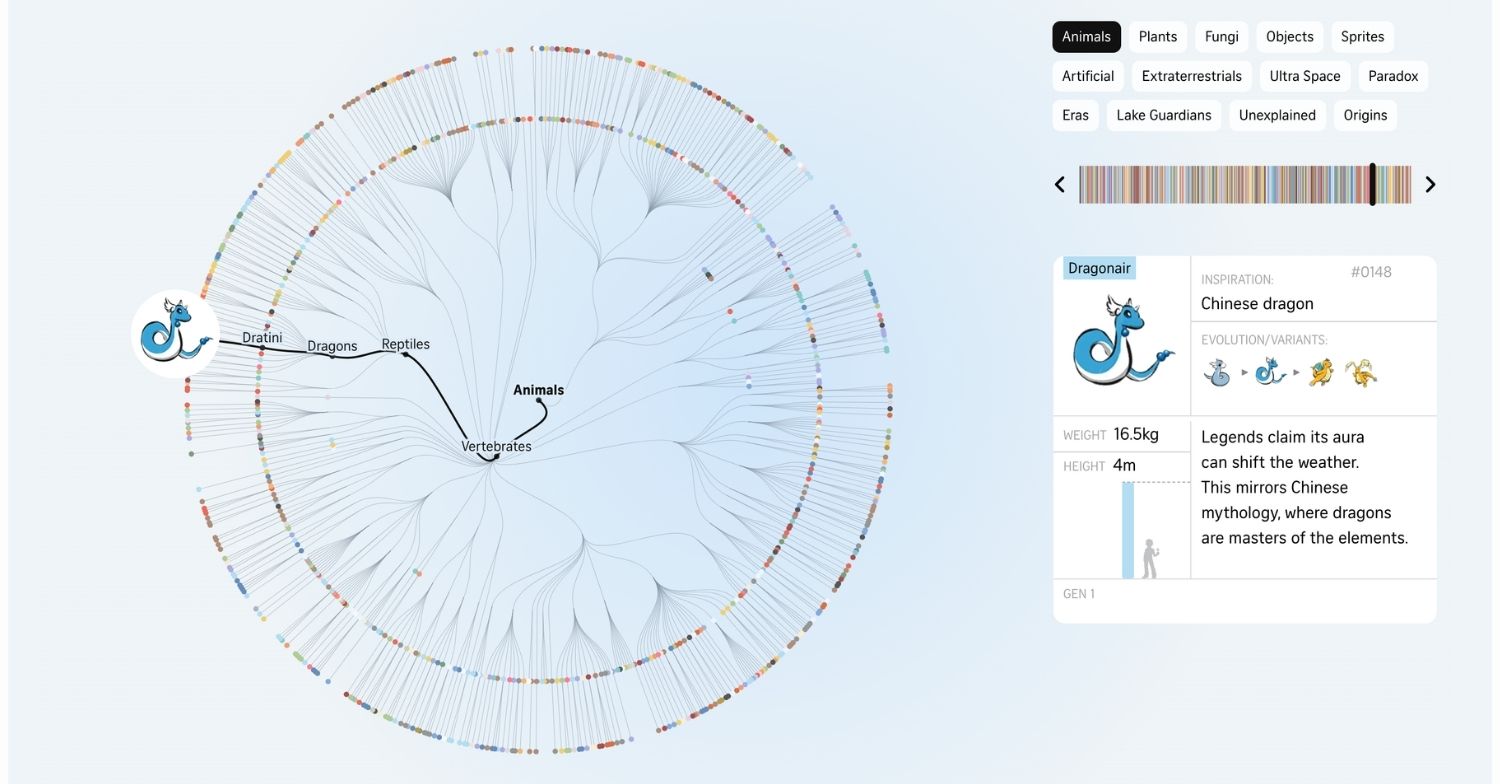
In the beginning, there were 151 Pokémon. Then there were 100 more. Now, three decades later, there’s 1100+ (depending on how you count ’em all).
In celebration of Pokémon’s 30th anniversary, a team from the Straits Times in Singapore put together a stunning graph visualization of every known species and variant of Pokémon and how they’re related to real-world animals, plants, fungi, objects, and more.
Whether you grew up playing with the games or cards of the Pokémon franchise or if you’re just wondering what all this hub-bub has been about over the years, here’s a fun and whimsical way to explore ’em all.
P.S. A new release of gdotv is here! Check out Amir’s snappy release notes vid or dive into the full announcement blog post. ✨
P.P.S. Evaluating your codebase using an LLM? Amp up your codebase RAG with a knowledge graph for accuracy and context. Here’s how: Part 1 and Part 2 (of 2). 🧠
P.P.P.S. Got an item to nominate for the next edition of the Weekly Edge? Hit me up at weeklyedge@gdotv.com. ✍🏽

![gdotv Adds Multi-Graph Connections & Automatic Data Models [v3.74.142 Release Notes]](https://gdotv.com/wp-content/uploads/2026/08/multi-graph-connections-automatic-data-models-gdotv-v3-74-142-release-notes-banner.webp "gdotv Adds Multi-Graph Connections & Automatic Data Models [v3.74.142 Release Notes]")