The Weekly Edge: 2 Graph DB Releases, an Apache AGE Manager, Graph Versioning, & More [12 December 2025]

As winter’s wreathing barren days grow late, it’s time for the last regular edition of the Weekly Edge of 2025. Next week will be a special edition, and then I’ll be taking a break until 2026!
What is the Weekly Edge, you ask? This regular blog series is your graph tech tl;dr that gives you all the releases, reads, and repos that you missed in the past 7 days or so – all curated by the gdotv team.
Here are this week’s graph tech headlines in brief:
- Beefing Up: GraphDB 11.2 releases some strapping semantic search performance
- Getting Jacked: ArcadeDB buffs up its vector search capabilities
- Git a Move On: The TuringDB team tackles graph versioning whys and hows
- Graphs on Postgres: A new web app for managing Apache AGE graph databases
- Gremlins in Your .NET: An object-graph-mapper for Apache TinkerPop databases
- To Infinity & Beyond: A mind-stretching read on graph theory, set theory, and computer science
Now for the details.
[Release:] GraphDB 11.2 Beefs Up Its Indexes
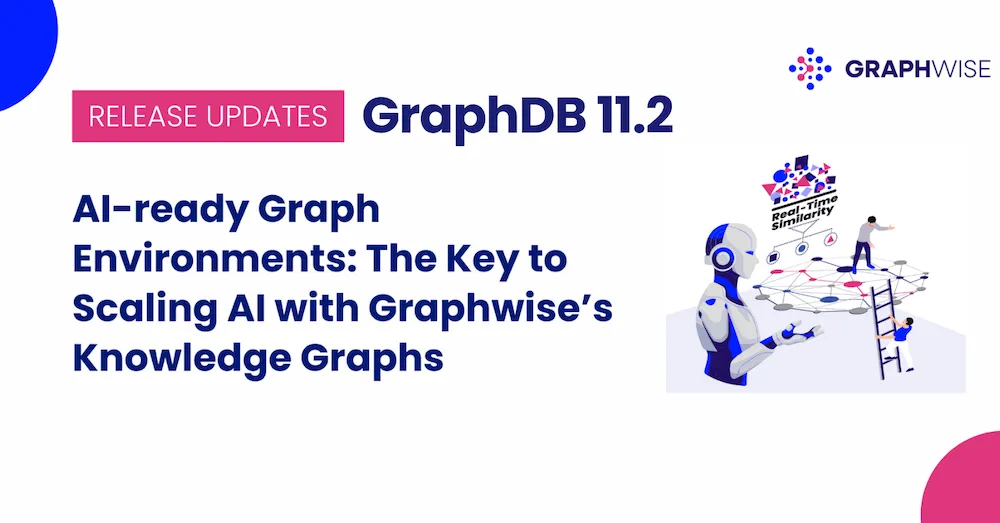
In the graph space, it’s hard to go wrong with a name like GraphDB, now maintained by GraphWise (the mind-merge of Ontotext and the Semantic Web Company back in October 2024). This past week saw the release of GraphDB 11.2 with lots of new goodies on offer, most notably upgrades around semantic search performance.
The new release of this RDF triplestore introduces automatically updated similarity indexes that are fully integrated with both Elasticsearch and OpenSearch connectors. With always in-sync indexes, searches across your knowledge graph always reflect the most recent state of your data – a key component to effective GraphRAG. The release also expands support for Vertex AI and Amazon Bedrock.
[Release:] ArcadeDB v25.11.1 Upgrades Its Vector Search & More
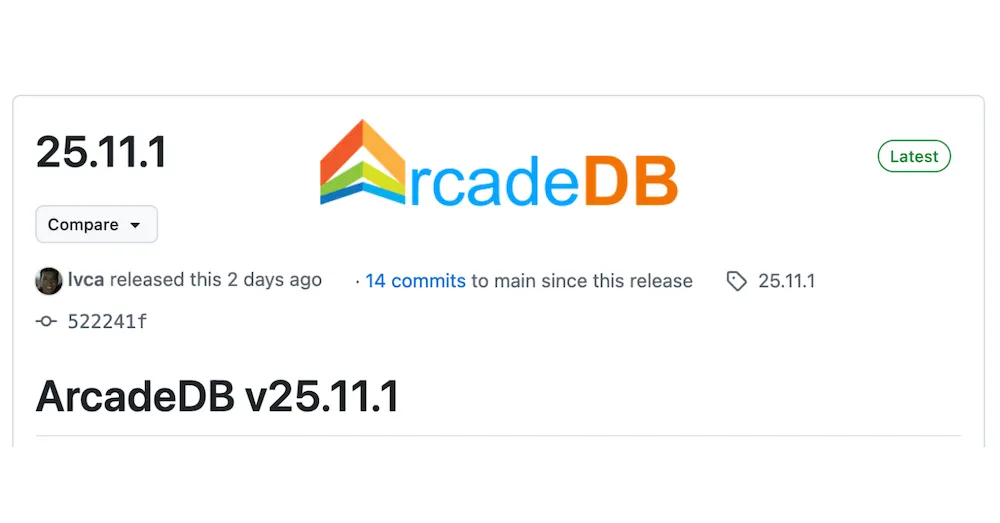
ArcadeDB has been on a roll this year in terms of releases, and I’m glad to see them sneak in one more before the year’s end. This week’s release of the multi-model database was a big upgrade of ArcadeDB’s vector search capabilities.
According to the official release notes, ArcadeDB v25.11.1 implements a new LSMVector index using the JVector open source engine. The release also includes enhanced SQL indexing (for embedded lists and with enhanced query optimization), gRPC protocol handling, and bug fixes for filtering and merging.
[Watch:] Why Versioning Matters for Graph Databases
This week’s watch features a whiteboard discussion between TuringDB co-founders Adam Amara and Rémy Boutonnet on a critical and often underrated element of modern graph database systems: versioning.
In this half-hour video, they make their case for why graphs need versioning, who benefits most from proper graph version control (spoilers: it’s developers), and how versioning enables safer data modeling, faster debugging, and more explainable AI systems. And of course they explain why TuringDB made Git-like versioning a core aspect of its architecture. A solid watch on an underappreciated aspect of graph database development.
[Repo:] Flask Apache AGE Graph Database Manager
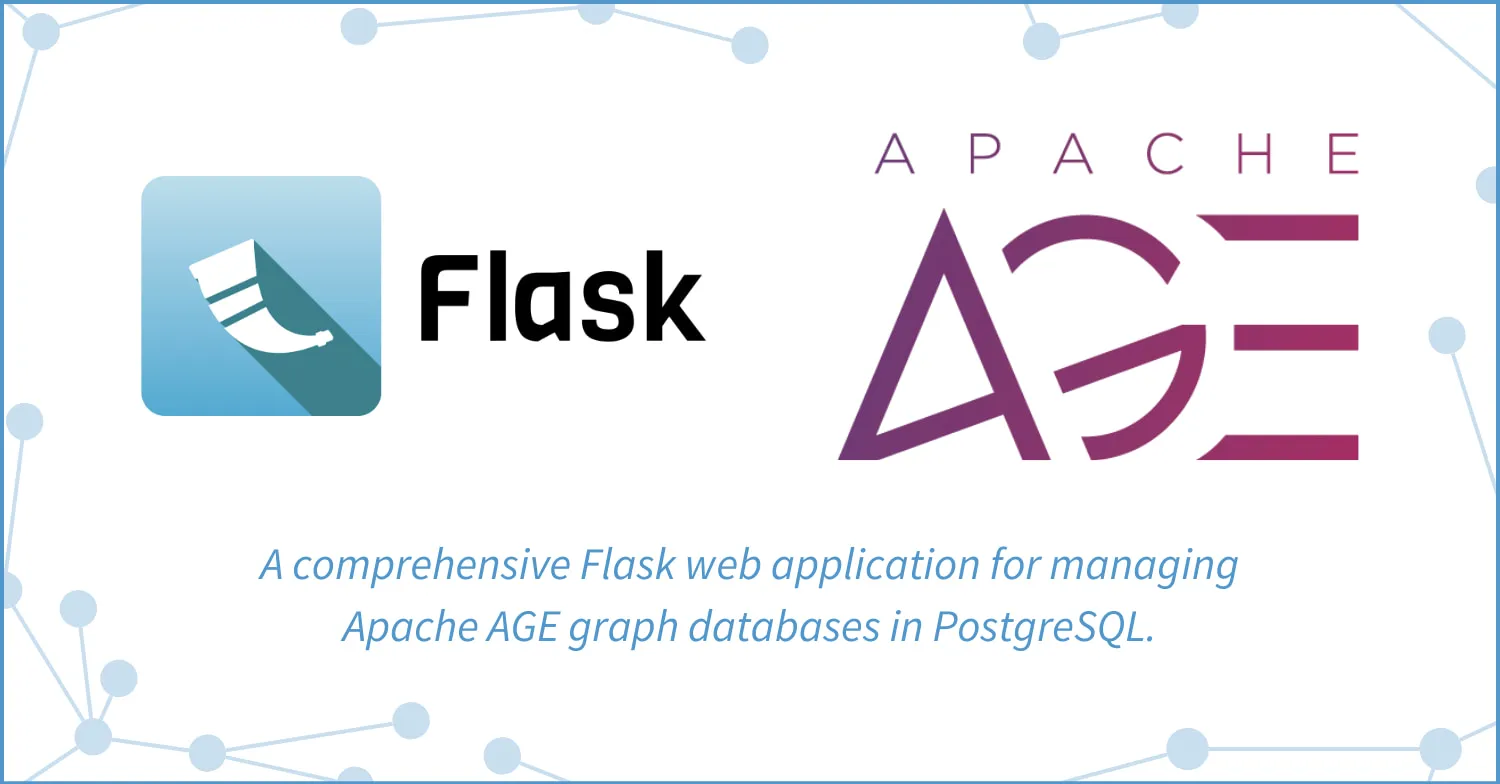
If you’re like me, you might not be familiar with Apache AGE™, but maybe you’ve heard of a niche DBMS known as Postgres? Apache AGE (A Graph Extension) is a PostgreSQL graph database compatible with Postgres’s distributed assets that leverages graph data structures to analyze and use relationships and patterns in data. It’s graphs for Postgres.
This week’s first repo-of-note is a Flask Apache AGE Graph Database Manager. It’s a comprehensive Flask web app for managing Apache AGE graph databases in Postgres. This app provides a user-friendly interface to create, manage, and visualize graph data with AI-powered natural language query capabilities…and a whole lot more.
And if you’re using Apache AGE, check out this recent dev preview of Apache AGE support for gdotv that lets you query, edit, explore, and visualize your graph data with ease.
[Repo:] ExRam.Gremlinq Links Your .NET App & Gremlin Database
Building in .NET? Also using an Apache TinkerPop™ graph database? ExRam.Gremlinq links boths worlds together.
This .NET object-graph-mapper bridges the gap between your .NET application and your Gremlin-enabled graph database, functioning as the graph database equivalent of a traditional ORM. ExRam.Gremlinq translates strongly-typed C# queries into valid Gremlin queries and automatically handles serialization and deserialization while preserving type information. It’s database agnostic and works with popular TinkerPop graph databases like Amazon Neptune and Azure Cosmos DB.
ExRam.Gremlinq was created by Daniel C. Weber and is maintained by the ExRam team.
[Read:] A New Bridge Links the Strange Math of Infinity to Computer Science (Spoilers: It’s Graphs)
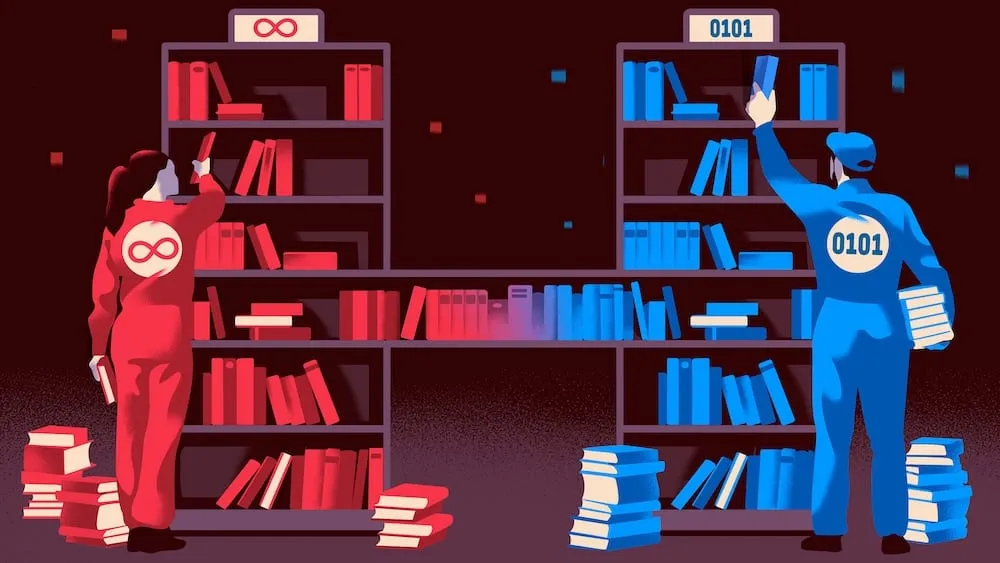
If you love maths as much as gdotv Supreme Leader Arthur Bigeard hates them, then this article from Quanta Magazine is perfect for you.
This week’s read dives deep (like deep) into the bridge that links the remote mathematical frontier of descriptive set theory and modern computer science – enabling all sorts of important discoveries in both fields. Of course you guessed it, the bridge is graph theory. Plot twist: it’s infinite graphs.
If you want a brain-stretcher that takes you to infinity and beyond, this article makes for a long, slow weekend read. (Graph stuff starts in earnest at around the ~999 word mark. It’s an odyssey.)
P.S. ICYMI, there’ve been some great posts by my colleagues on the gdotv blog this week covering fraud detection with Aerospike Graph and the top 5 hidden-gem talks from NODES 2025. Check them out!
Got something you want to nominate for inclusion in a future edition of the Weekly Edge? Ping us on X | Bluesky | LinkedIn or email weeklyedge@gdotv.com.
About the author

Bryce Merkl Sasaki
Former Head of Marketing
Bryce Merkl Sasaki is a writer and editor based in Silicon Valley. A digital nomad and total nerd, he’s wandered the worlds of database and graph tech for more than a decade, covering big moments, interviewing interesting minds, and bringing abstract graph concepts back down to earth. Outside of work, he enjoys hikes with his wife in Northern California and writes on his science fiction novel.