
Databases
Apache AGE IDE and graph visualization tool
Connect gdotv to Apache AGE, then query, visualise and debug your graph in one workspace. Free three-week trial on Windows, macOS and Linux.
Get started
Easy installation and setup
Effortlessly integrate gdotv with your Apache AGE graph database with a simplified plug-and-play database connector. The gdotv database client provides straightforward database connection and configuration instructions to get you started in less than a minute.
This Apache AGE IDE is available to download for Windows, macOS and Linux, with a one-click installer to get you started instantly.
State-of-the-Art Cypher and SQL Editor
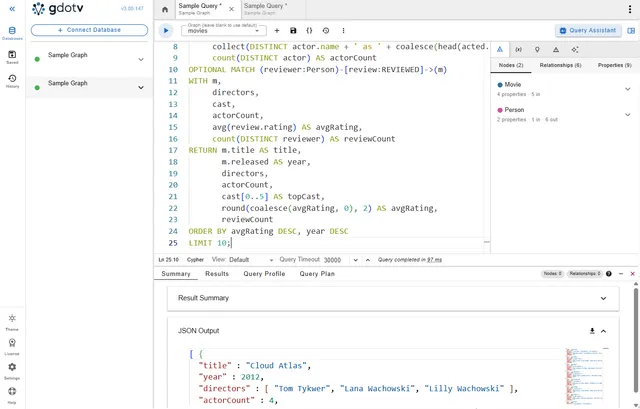
gdotv’s comprehensive Cypher and SQL query editor comes with syntax highlighting, autocomplete suggestions and built-in documentation.
Explore, Manage and Modify your Graph
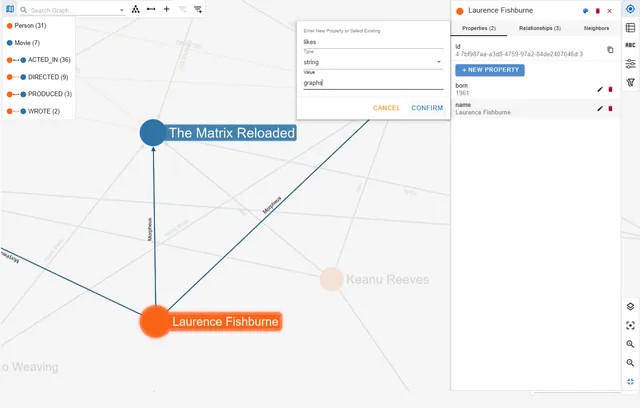
Effortlessly traverse your graph with the no-code Data Explorer, the data model view, interactive layouts, and customization panels to manage and even edit your graph on the fly.
Dashboards, Profiles and Visualization
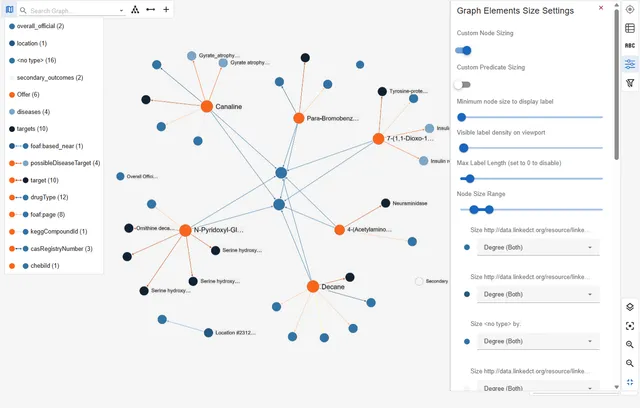
Communicate the most important elements of your graph using gdotv’s visualization and analytics tools, which are designed to convey key insights to both technical and non-technical audiences.
Try gdotv with Apache AGE
Query, visualise and model your Apache AGE data on your laptop, in your own cloud or across the whole team.
gdotv Desktop
The ultimate graph database IDE.
Install and connect your first graph database in 2 minutes.
gdotv Enterprise
The universal graph intelligence platform.
For organization-wide deployments. Bring graph data directly to your analysts.
About Apache AGE
Apache AGE is a PostgreSQL extension developed by the Apache Software Foundation that brings graph database functionality to relational databases. It supports both Cypher and SQL, allowing users to query graph and relational data simultaneously from a single system.
You can use gdotv to easily connect to your Apache AGE database, then perform essential day-to-day graph database development and management tasks such as querying, data analysis, data management, debugging, testing and visualization.
Learn more about Apache AGE in the Apache AGE documentation.
Frequently asked questions
How can I get started with Apache AGE and gdotv?
Getting started with Apache AGE and gdotv is easy. It’s just one simple installation, available on Windows, macOS and Linux. No prerequisites, additional configuration or installation required. You can get started in seconds.
gdotv automatically detects your connection setting requirements based on your database hostname and prompts you for the required information for an easy onboarding experience.
Want a step-by-step walkthrough? Make sure to check out our demo, Get Started with Apache AGE + gdotv on YouTube.
Why use Cypher?
Apache AGE supports the Cypher query language – the most widely adopted, fully-specified, and open query language for property graph databases. It provides an intuitive way to work with property graphs.
Cypher is a declarative query language specifically designed to handle querying graph data efficiently. With Cypher, you express what to retrieve but not how to retrieve it. This allows you to focus on the problem domain instead of worrying about the syntax.
Cypher was designed to be easy to learn but very powerful when it comes to graph analytics. This means that you can use Cypher to write complex queries relatively easily.
What features does gdotv provide for Cypher?
gdotv’s Cypher query editor provides syntax highlighting, autocomplete suggestions and built-in Cypher documentation to help you optimize your queries.
What’s the advantage of using LPGs over RDF?
Graph databases typically fall into two models: Labeled Property Graph (LPG) and Resource Description Framework (RDF).
The LPG model covers a broad class of databases, including Apache AGE, that use nodes, edges, properties and labels to represent graphs. They are optimised for real-time use and excel in applications like fraud detection, social network analysis and recommendation algorithms. There are also a wide range of methods to enforce schema compliance, with flexible conventions and definitions.
The RDF model refers to a highly standardized form of data management using global identifiers. Information is stored as a series of directed “triple” statements connecting a subject, predicate and object together. In addition, various languages built on RDF (such as RDFS and OWL) allow the construction of sophisticated ontologies and semantic reasoning. The high level of standardization also simplifies data integration from disparate sources. This makes RDF ideal for applications in large knowledge graph construction and research.
LPGs excel when performance and ease-of-use are a priority. Users typically find LPGs more intuitive, and they can be tailored to specific use-cases quickly and easily without the semantic complexity or steep learning curve of RDF.
What graph data visualization scenarios do our customers implement?
Organizing data derived via powerful data visualization tools have several real-life applications. Graph visualization and analysis resources allow users to make informed decisions based on actual data. Here are a few examples of the type of companies or clients that can leverage Apache AGE along with the robust data visualization aspect offered by gdotv:
- Data scientists and managers: Visual data analysis allows users to uncover and understand emerging patterns and relationships between data points, discover valuable insights to make informed decisions on ways to transform business processes.
- Cyber security groups: Build security graphs to represent protected assets, infrastructure, code dependencies or networks and visualize the connected relationships throughout the organization.
- Business intelligence analysts: Create customized reports and visualizations that can be easily executed for analysts to investigate and communicate on interaction between business data points.
- Fraud detection: Detect fraud patterns by modeling relationships between transactions and financial actors, then interactively visualize graph data to uncover and present potentially suspicious behavior.
How does gdotv secure my data?
gdotv Desktop runs locally on your device – no deployment needed and no handing over your data to a third-party system. Everything happens within your organisation’s network, and we have no access to your data.
Our Team and Enterprise versions run within your own environment, providing the same security benefits.
It’s easy to install and configure too: our setup wizard gets you connected to your graph database in seconds.
Can I connect more than one database at a time?
Yes! Whether you’d like to access multiple Apache AGE instances, or interact with other graph vendors at the same time, gdotv doesn’t limit you to a single database. You can establish as many connections as you like from within our intuitive UI, and seamlessly switch between them.
Connecting is easy, and there’s no need to manage multiple vendor specific user interfaces. With gdotv, query and compare results from all your RDF and Labeled Property Graph databases under one umbrella.
Related posts
All blog posts
How does gdotv compare to Apache AGE Viewer?
How does gdotv compare against Apache AGE Viewer? Follow along with this deep-dive as we explore the various features of each framework.
Loading Data into Apache AGE: A Practical Guide with the Air Routes Dataset
Load data into Apache AGE with agload or Postgres staging tables and Cypher UNWIND. Walks through the air routes dataset with focus on property types.
Visualizing Apache AGE: Connecting gdotv and Exploring the Air Routes Graph
Connect gdotv to Apache AGE and explore your graph visually: schema view, Cypher and SQL editor, graph visualization, no-code explorer, WYSIWYG editing.
Apache AGE Explained: how does it work and how does it fit in the Graph Database Landscape?
What Apache AGE is, how it stores graphs as Postgres tables, how AgType works (with casting cookbook), and how AGE compares to Neo4j, JanusGraph, and SQL/PGQ.