Our Favorite Talks & Memories from the Knowledge Graph Conference 2026

I was sitting next to Dean Allemang stuffing my face with vegetable curry and fried tofu on the third day of the Knowledge Graph Conference when it hit me: Damn, this is one of the most authentic industry conferences I’ve ever been to.
Maybe you’ve been to a great conference too – this isn’t the only one – but if you’ve been to enough industry events, you know that events where folks are genuinely connecting and exchanging ideas are rare. You appreciate them when they happen.
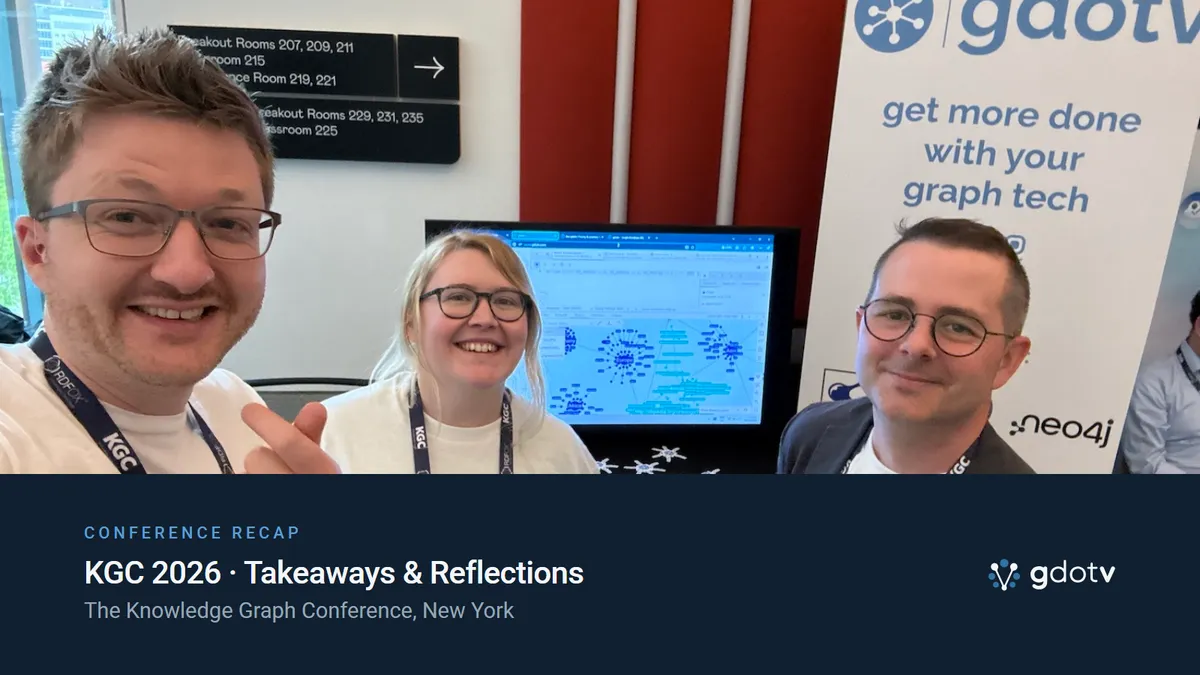
Me and my colleagues from gdotv just got back from the Knowledge Graph Conference 2026 that happened from May 4-8, 2026 on the campus of Cornell Tech in New York City. It was a blast.
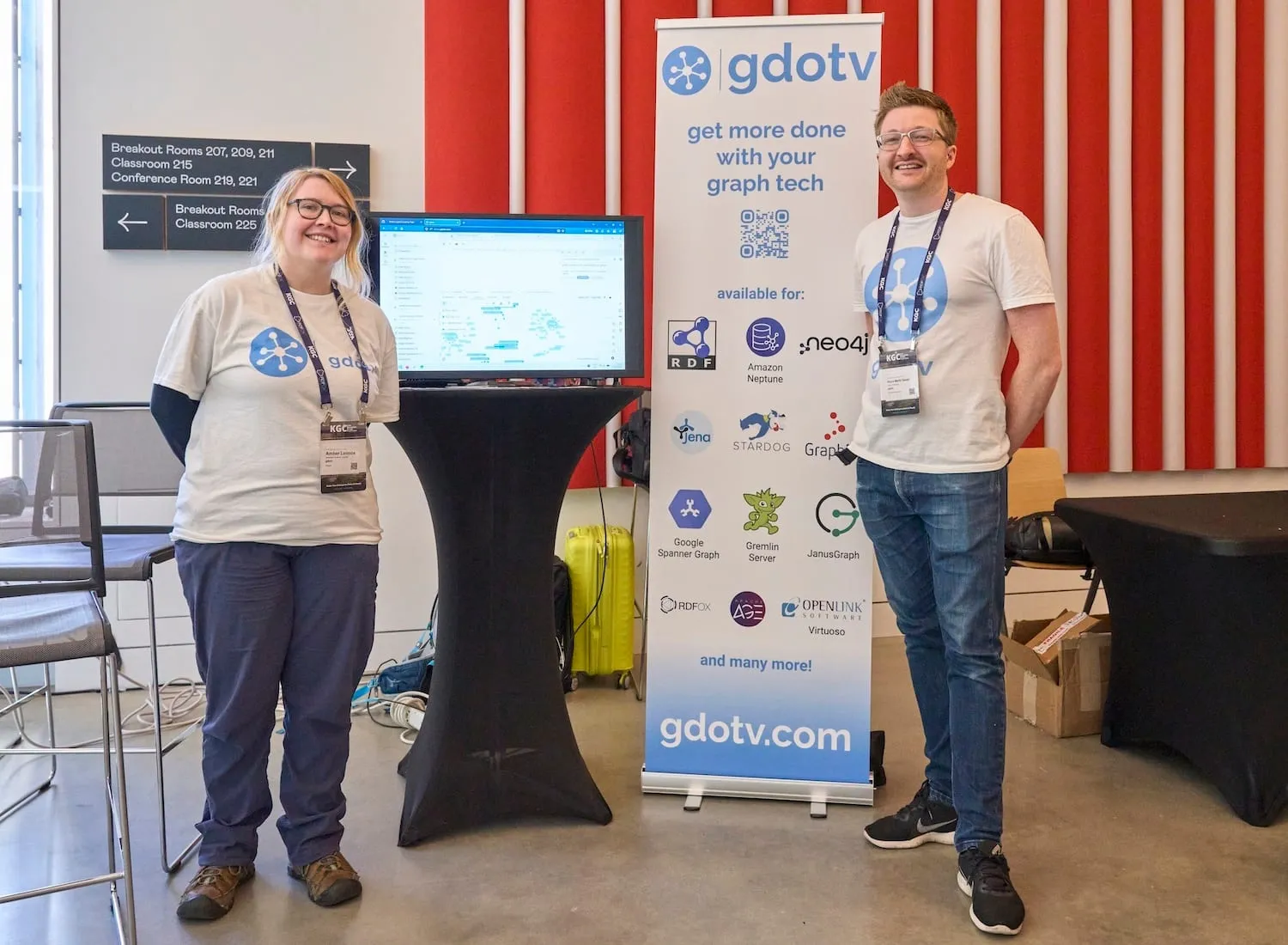
This year was the 8th edition of the conference, and the largest KGC to date. As a conference sponsor, we had a booth where so many friendly folks stopped by to catch up, converse, learn more about gdotv, and connect about the endless worlds of knowledge graphs and connected data.
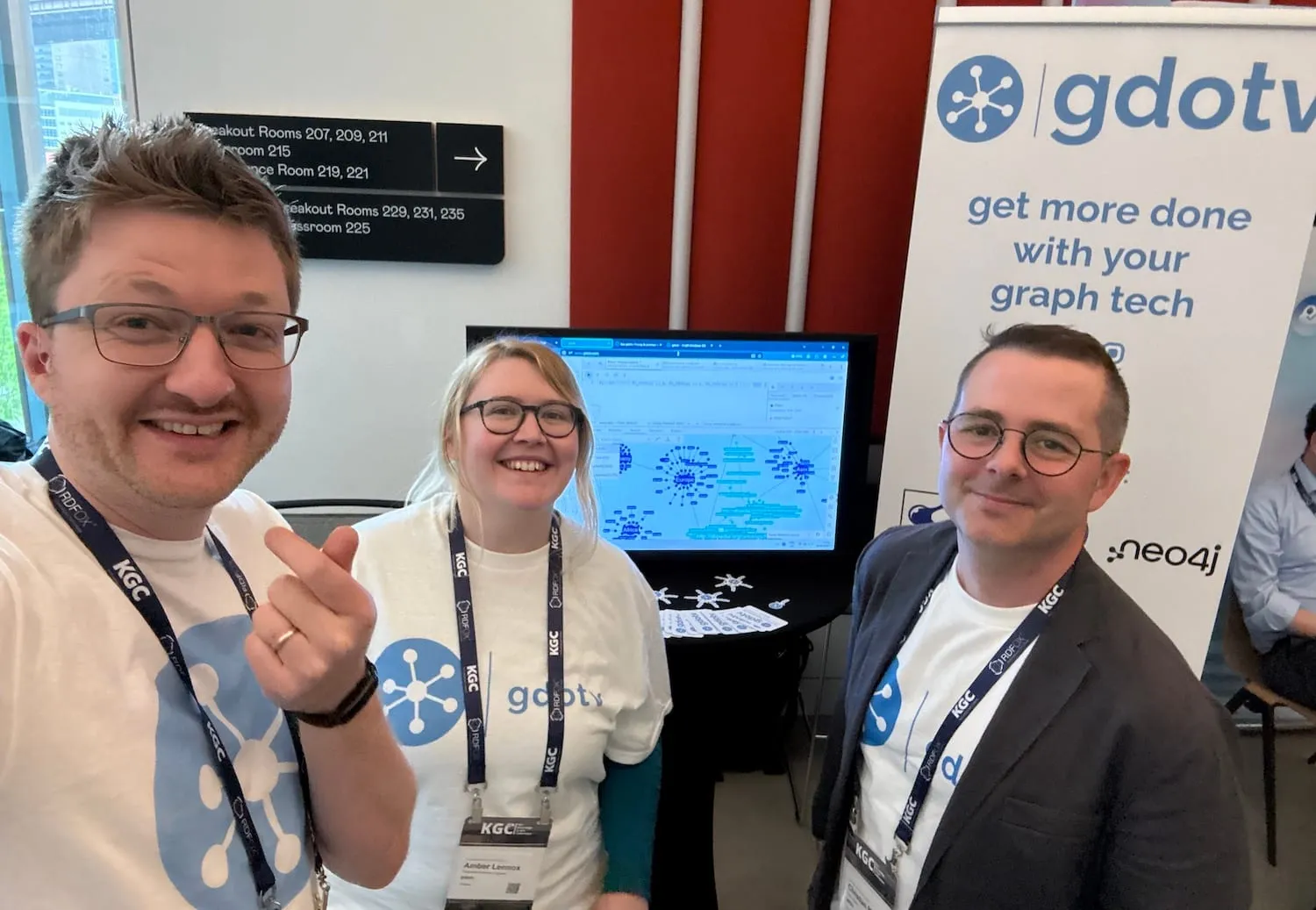
We were already pretty stoked to attend KGC 2026, but this year’s Knowledge Graph Conference exceeded our high expectations. Here were our biggest takeaways and reflections.
KGC Workshops Worth Re-Watching
One of the best parts of the Knowledge Graph Conference year after year is the in-depth technical workshops that kick off the five-day bonanza. Of course, every workshop is worth attending – and it’s worth noting that ticket holders can re-watch all talks and workshops for up to 60 days via the Whova mobile or web app – but these were a few of our favorites.
RDF & SPARQL: Master the Necessary Tools for Truly Semantic Applications
This workshop, delivered by Nikolaos Karalis of Tentris, was one I kept hearing about through the rest of the day.
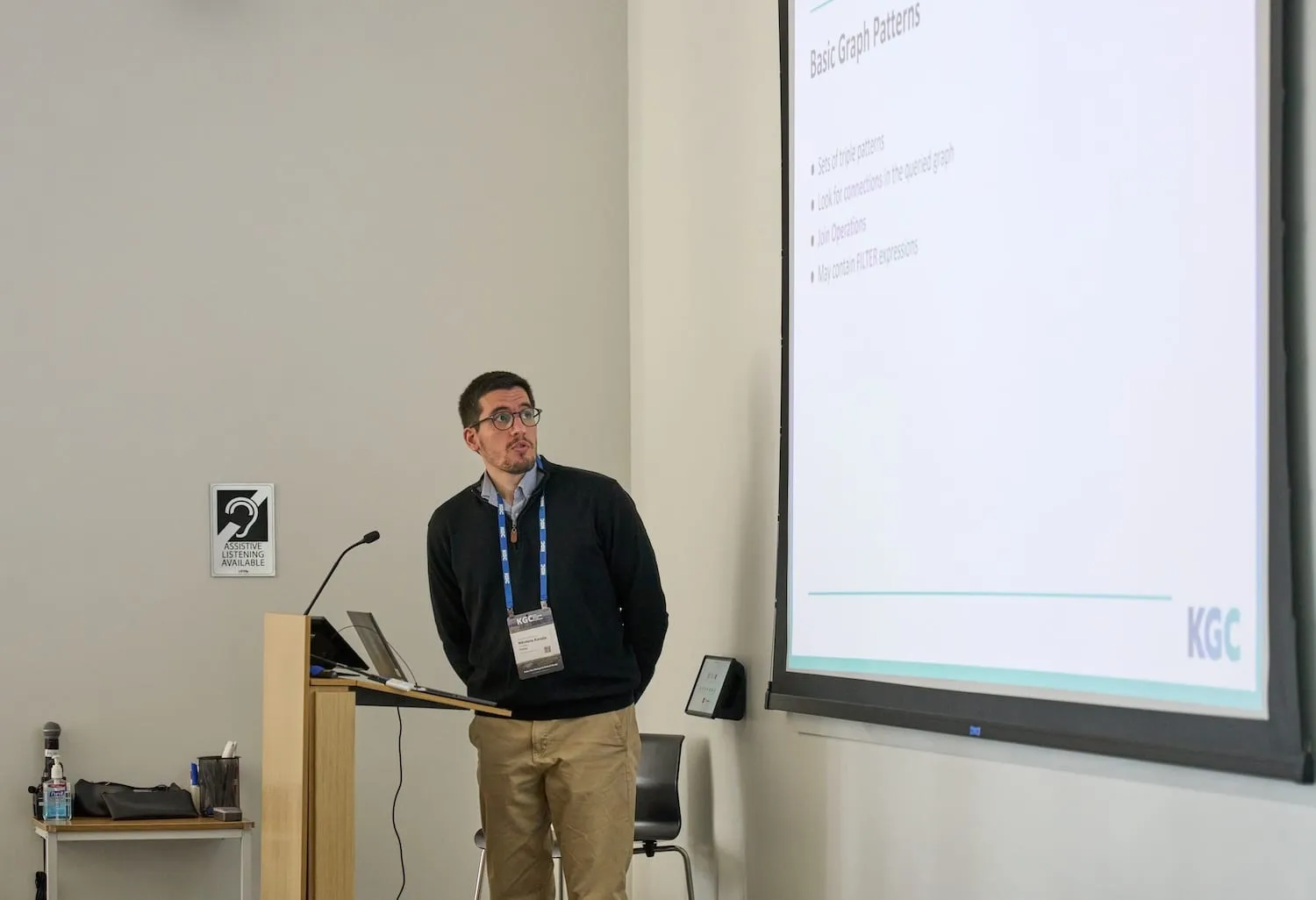
Not only was the talk a stellar introduction to the world of using Resource Description Framework (RDF) triple stores and the SPARQL query language for managing knowledge graphs, but Nikolaos even used gdotv as part of his presentation! (My friend Deb texted me instantly about it – it was that big of a hit!).
How to Get Started in Money Laundering
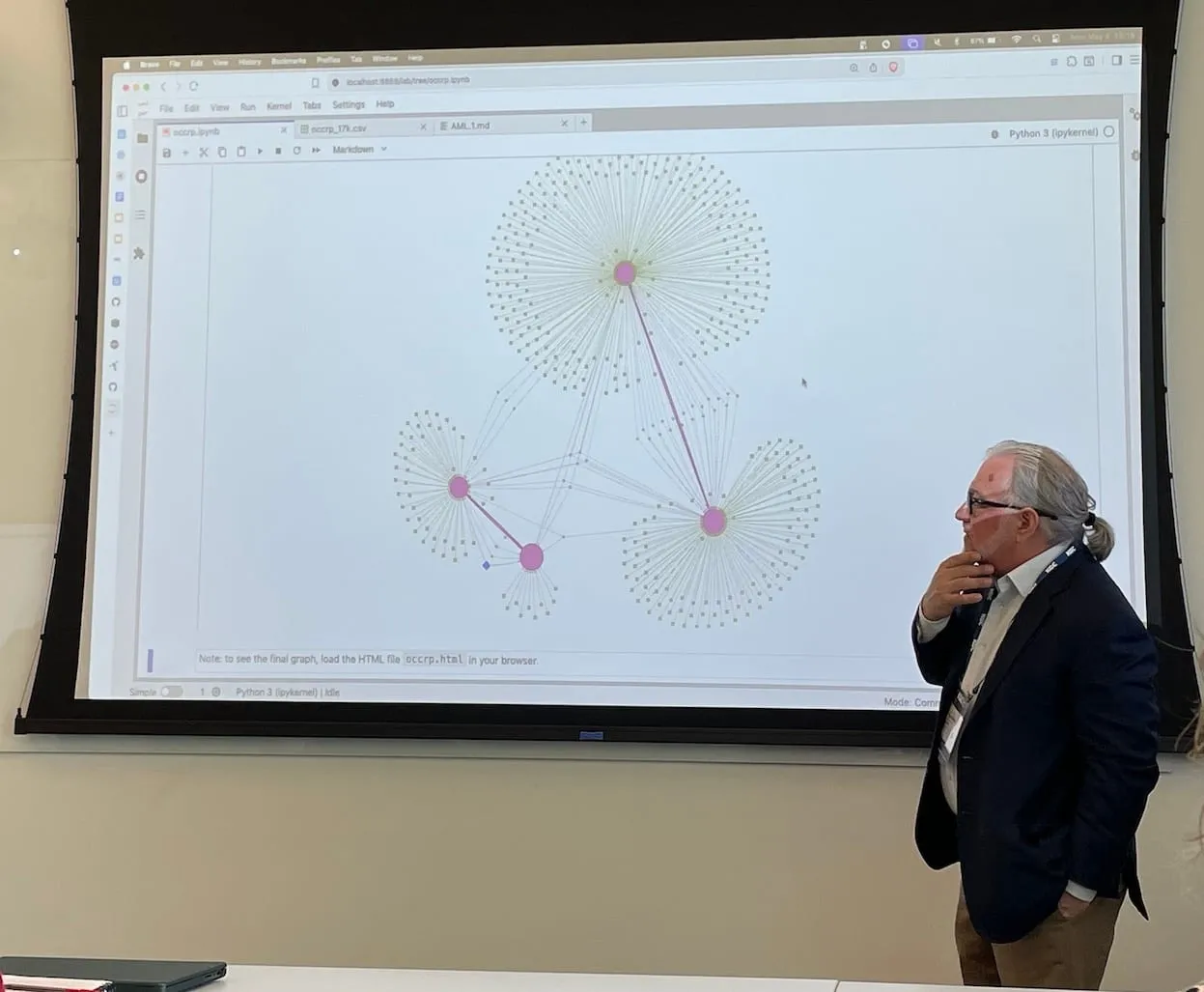
I’m so glad I snagged a front-of-the-room seat for this workshop taught by the Gandalf of Graph Tech, Paco Nathan from Senzing. Paco walked us through how to get started in (anti-)money laundering, and how and why graph visualization is one of the essential tools in catching patterns of money launderers and other financial criminals. In the pic below, you can easily spot which nodes in the network are central to the operation in both sending and receiving funds – and there’s nothing like a great graph viz to make it clear.
For Beginners: How to Build Your First Knowledge Graph Using Hydra, for RDF & LPGs
Of course, our hands-down favorite workshop of the entire conference was the one presented by our colleague Amber Lennox and co-created by our colleague Amir Hosseini. While the Knowledge Graph Conference is full of KG experts and long-time practitioners, we wanted to make sure that the absolute beginner knew how to get started with the wonderful world of knowledge graphs no matter if they were from an RDF or a labeled property graph (LPG) background.
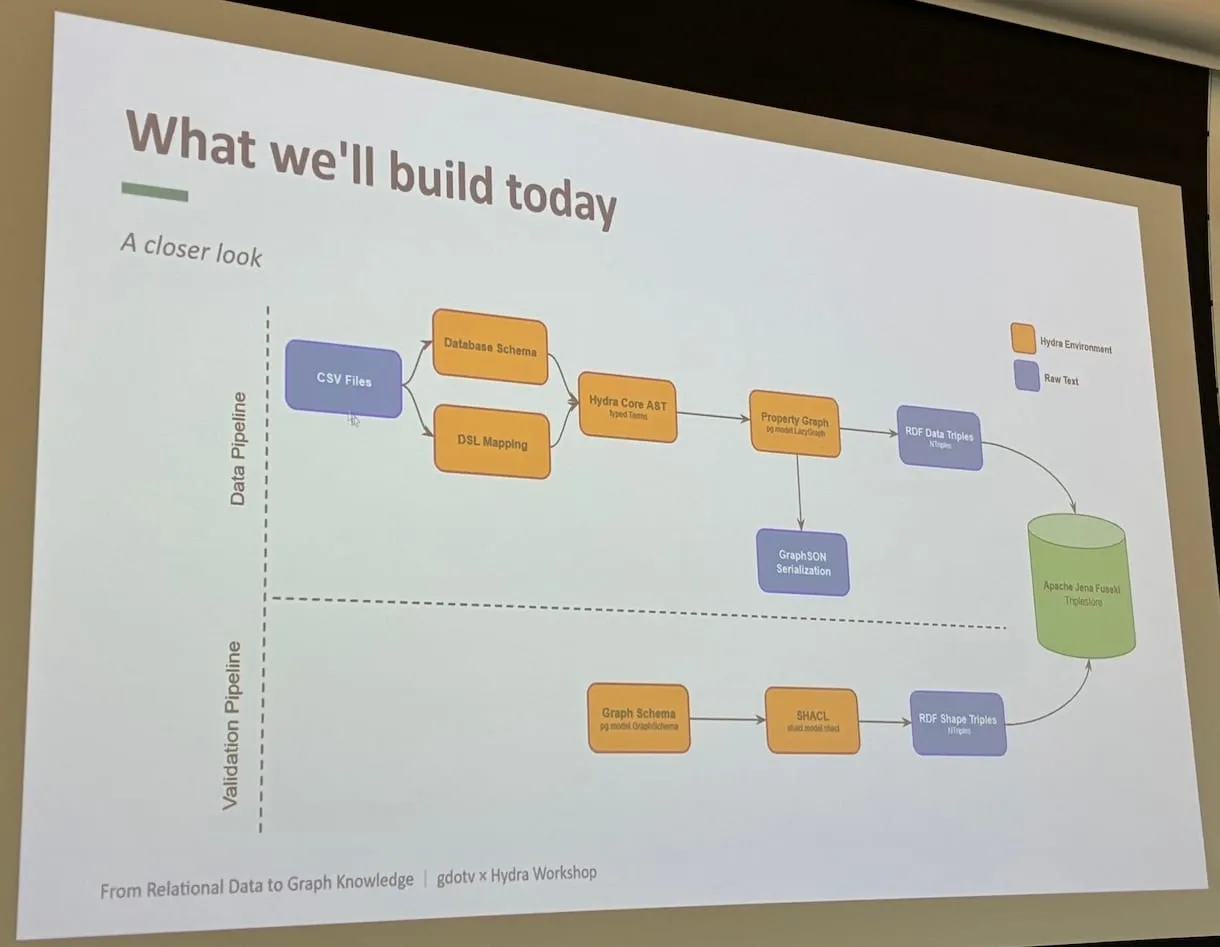
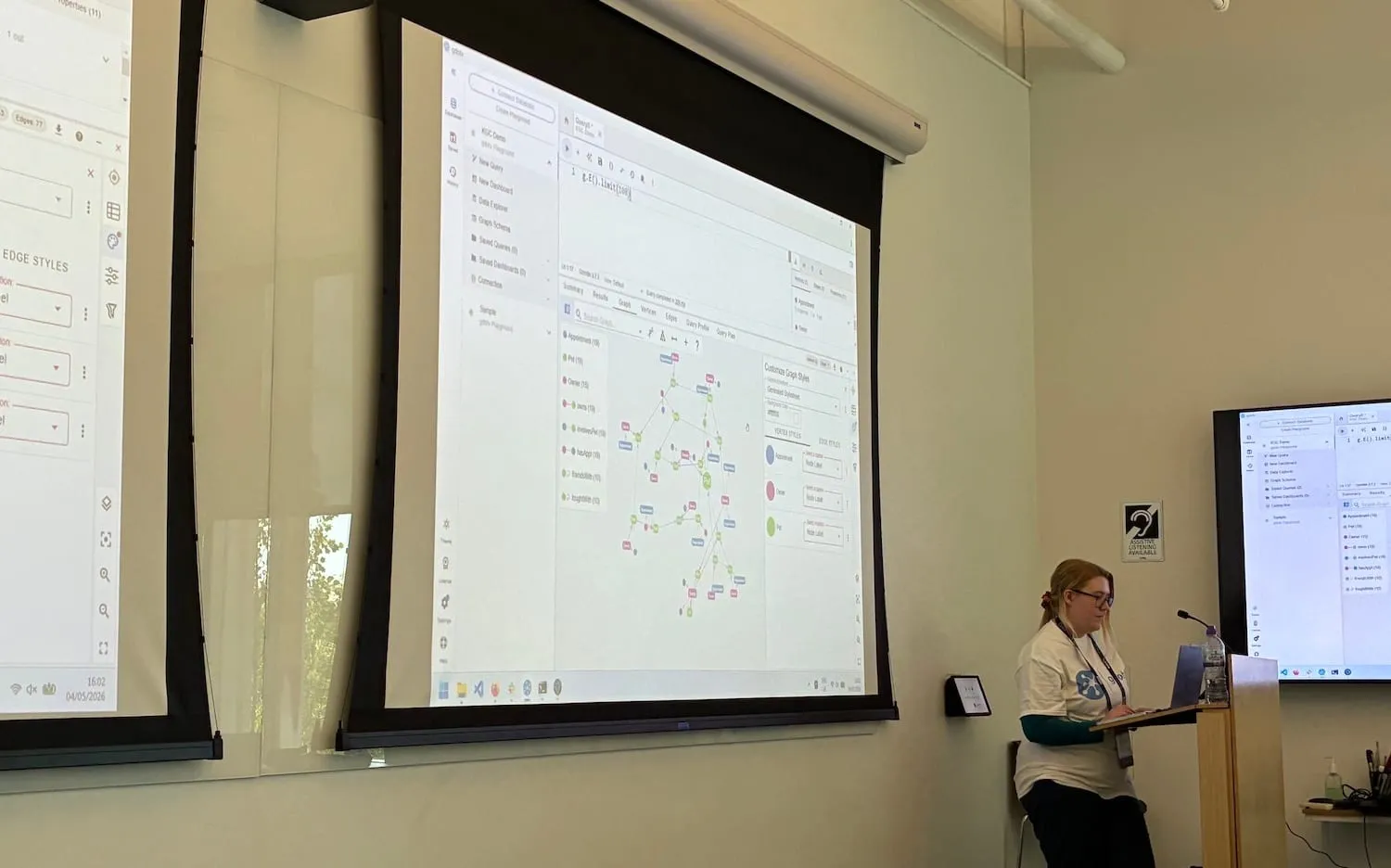
Amber showed the workshop attendees how to use the Hydra graph programming language to get started with building their very first knowledge graph and of course how to visualize the resulting graph using gdotv. It was a hit!
Talks & Presentations from KGC 2026 We Couldn’t Stop Talking about
On Wednesday and Thursday, the Knowledge Graph Conference kicked into high gear with full days of talks and presentations by graph experts from around the world. In no particular order, here were some of the gdotv team’s favorite talks.
Stop Betting, Start Building: AI Futures, No One’s Doing the Work
I had to give this one a rewatch. After Jessica Talisman’s presentation, the entire room was in a hubbub, murmuring things like, “Did she just question the value of AI for society?” or “Did she really say that AI is far from delivering everything we keep promising that it will?” The line to talk to her afterwards was ridiculously long (I know because I was at the very end of said line).
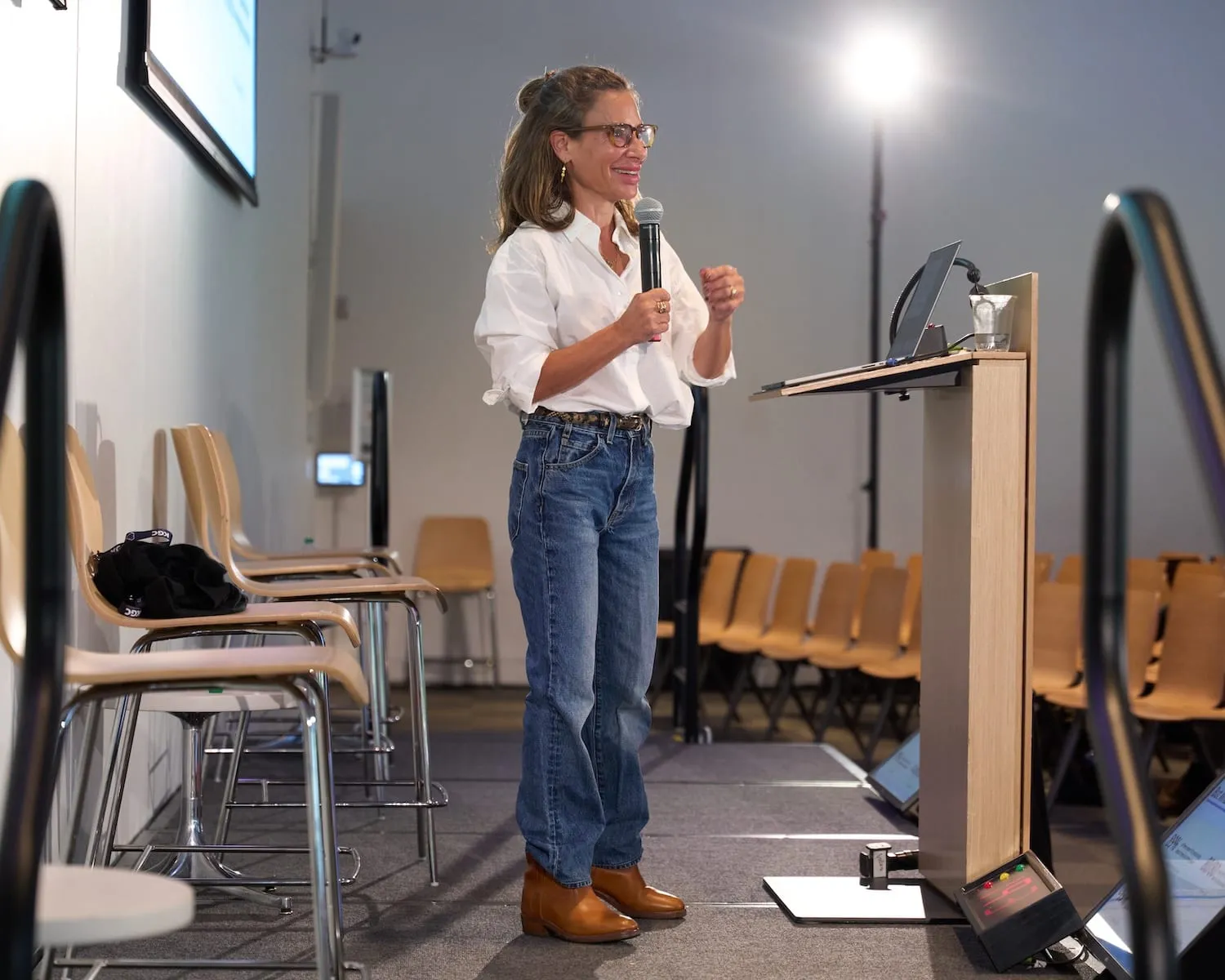
Jessica’s gist: AI is fundamentally a knowledge tool – not a data tool – and that distinction matters for every AI initiative. Also, library science and knowledge management hold the methodologies the tech industry keeps trying to reinvent, so you’d better pay attention or else you’d have to literally reinvent library science all over again (and on your own).
Multi-Modal Knowledge Graphs for Agents: Unifying Vectors, Graphs, & Media Bytes with Lance, the Multimodal Lakehouse Format
It’s no surprise that multiple colleagues picked this one to highlight: Graph wizard David Hughes (from Enterprise Knowledge) and graph sage/AI engineer Prashanth Rao put together a helluva presentation on multi-modal knowledge graphs using LanceDB, including Lance Context and Lance Graph.
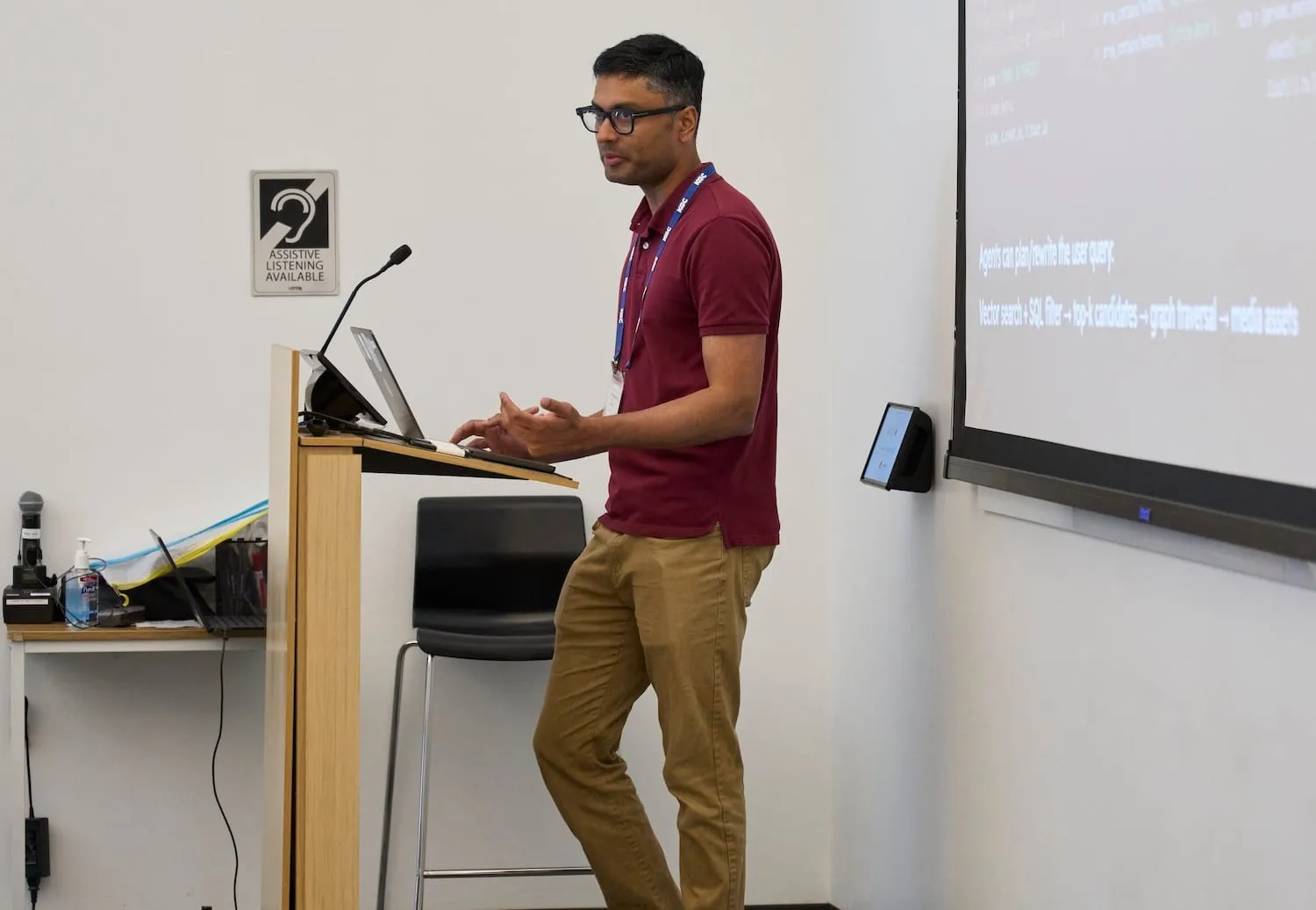
Their premise: Most multimodal RAG stacks have a “split-brain” design: embeddings in a vector DB, relationships in a graph DB, and images/video/audio in blob storage. For an agent, that becomes a slow three-hop loop. Instead, Rao and Hughes proposed a Lance-native Multi-Modal Knowledge Graph (MMKG) unifying media bytes, embeddings, and graph topology in one columnar dataset. It’s a banger of a talk.
RDF 1.2 Status Report
No Knowledge Graph Conference is complete without an update on the status of the RDF and SPARQL standards. This year, Ora Lassila and Adrian Gschwend delivered the goods, updating the (very large) crowd on the status of RDF 1.2 – the culmination of years of work, particularly on the sticky issue of reification.
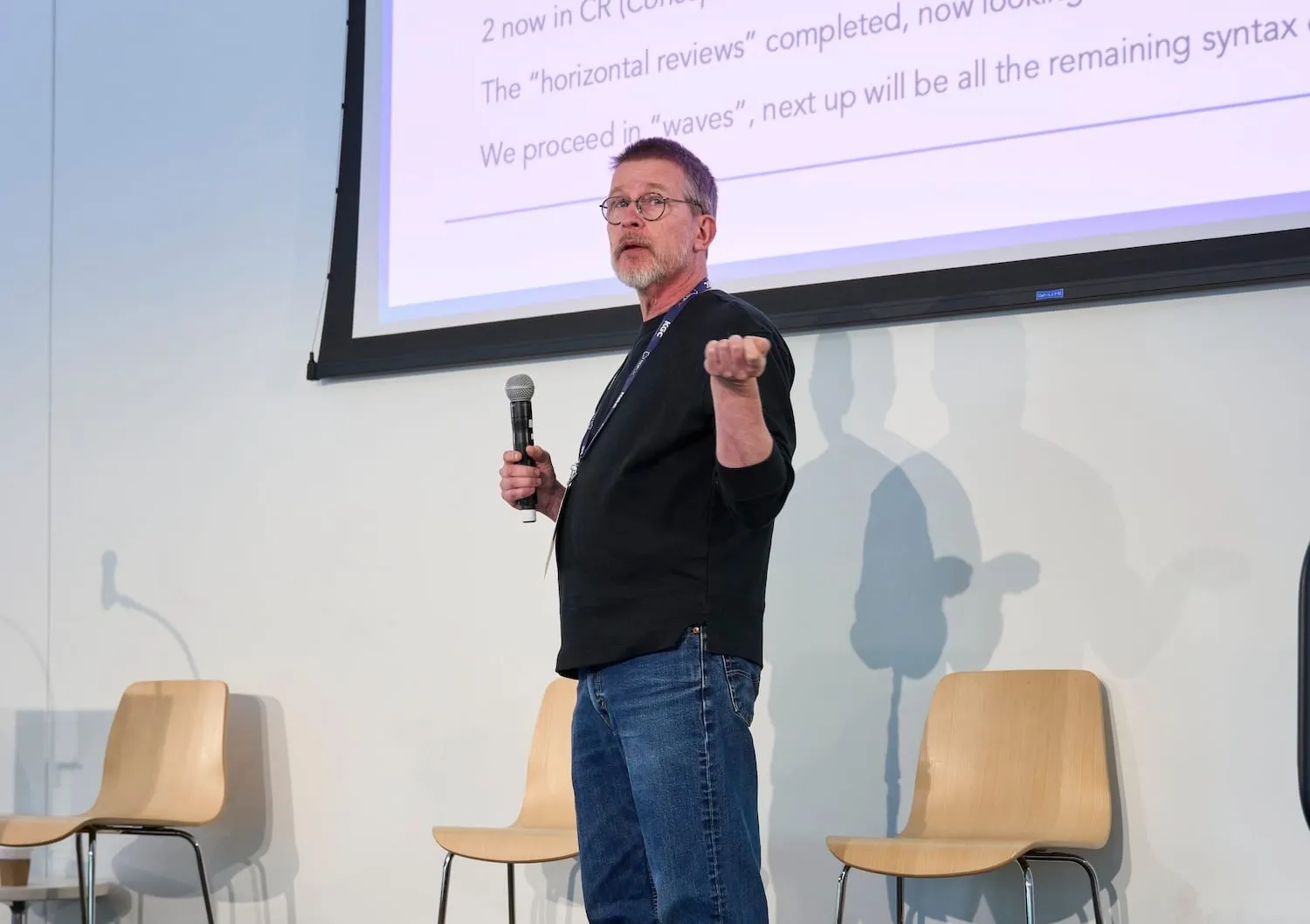
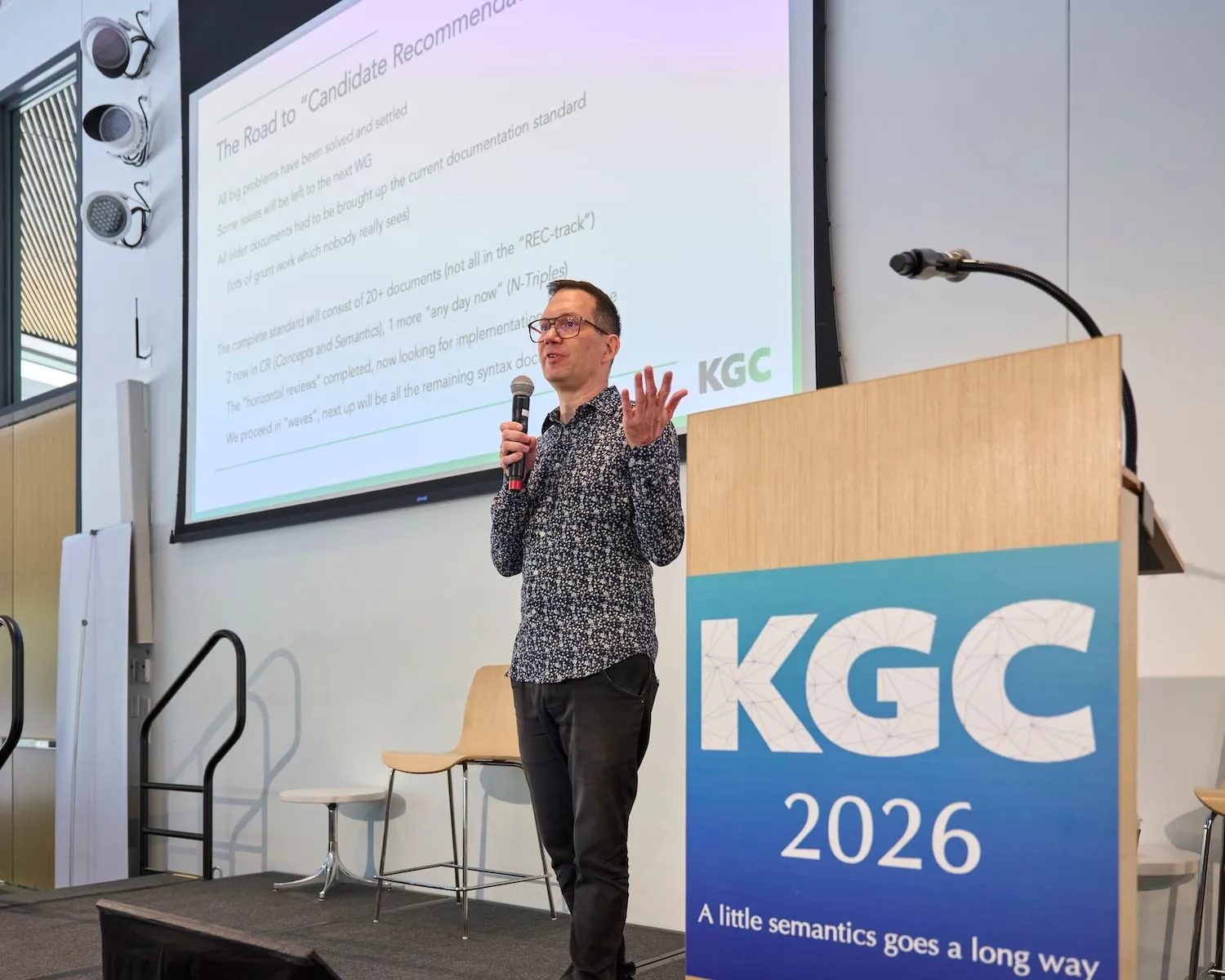
Their presentation gave an overview of the new RDF standard (still in the works, but almost there) and offered the audience an opportunity to ask questions about it. In addition to reification updates, they also reviewed a number of other details in RDF 1.1 that have been fixed, improved, or updated.
Navigating the Firmographics Web
In this talk, Mike Xu introduced Moody’s proprietary data collection methods for businesses, locations, and notable people. He also walked through techniques, tooling, and systems that the Moody’s team uses on their ongoing journey in constructing a knowledge graph representation of their ever-growing data.
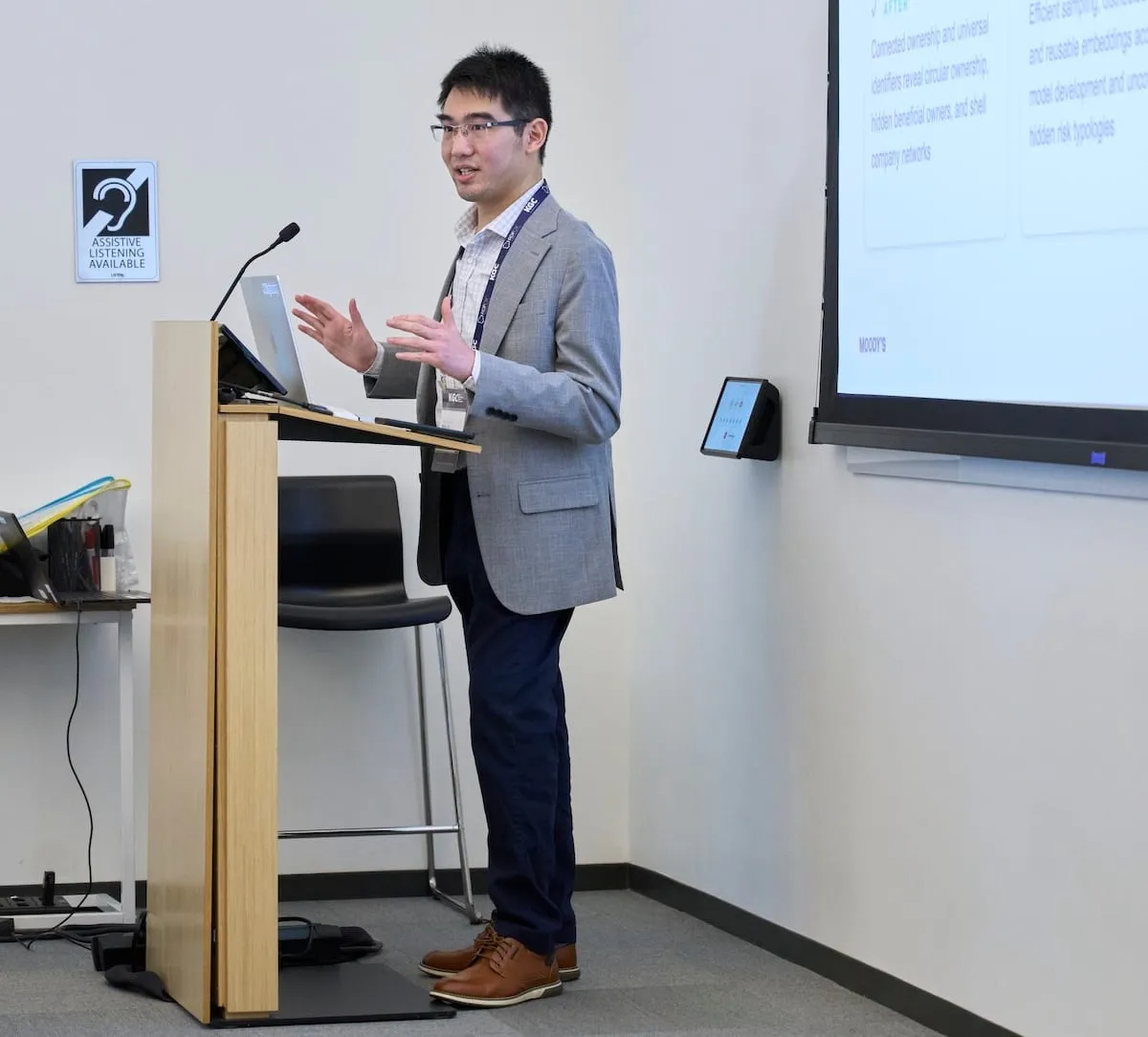
Finally, he shared some interesting and unique outcomes enabled by Moody’s constructionist approach in creating a knowledge graph network around business entities. The summary doesn’t do this one justice – which is why we picked it out to highlight – so definitely don’t skip this one in your rewatch.
From a Little Semantics to Just Enough Ontology
I know it’s normie to pick a keynote in a list of featured presentations, but I stand by it. If you’re too young (or too young in the knowledge graph space) to know who Jim Hendler or Deborah McGuinness are, then this talk is for you. Among others in the semantics space, these are the shoulders of giants that everyone else has been standing on.
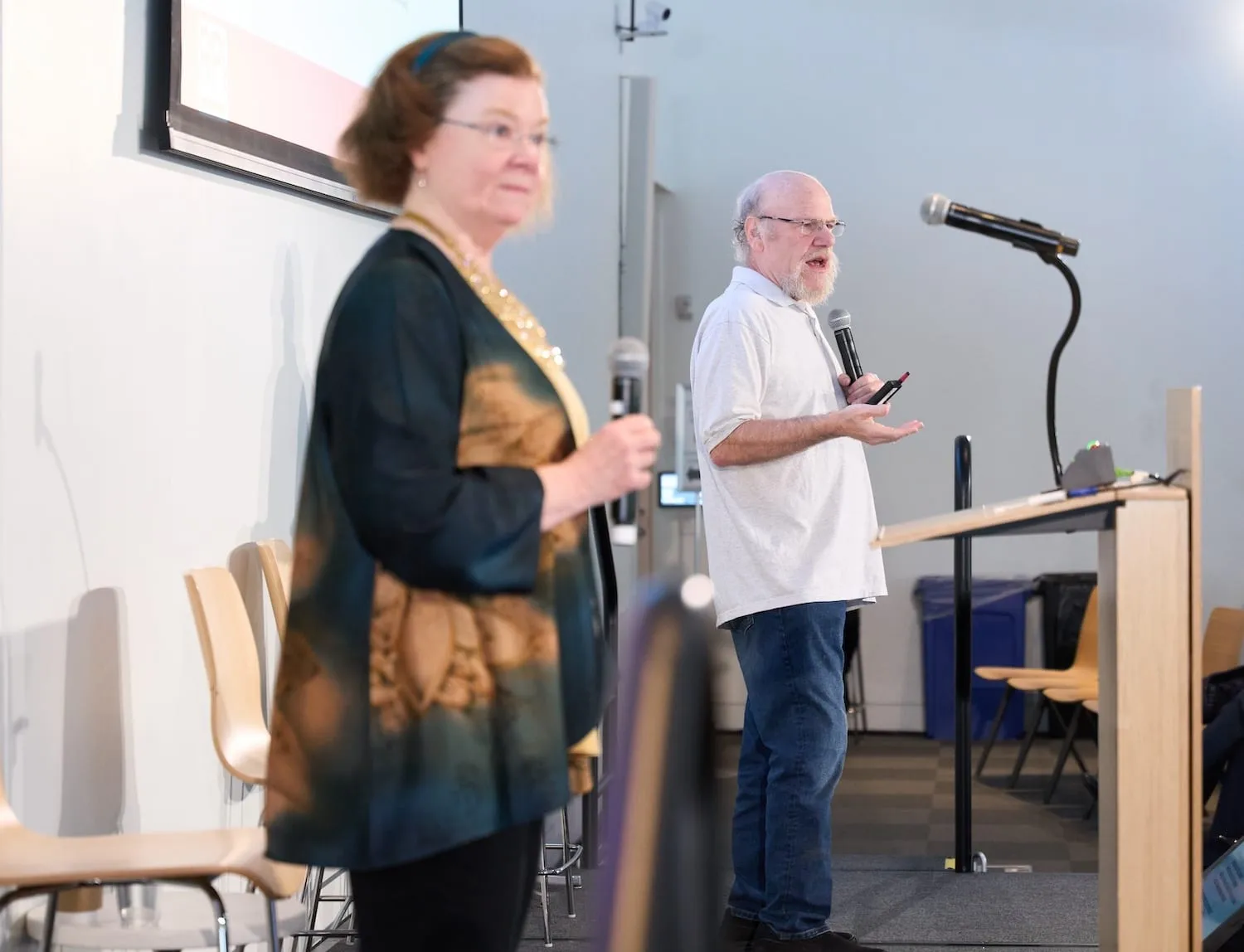
Hendler is basically a godfather of the Semantic Web (more below), having coined the phrase, “a little semantics goes a long way,” and McGuinness in turn coined the slogan, “just enough ontology.” Both of these aphorisms have been guiding the development of AI and knowledge graphs long before LLMs arrived on the scene, and this keynote gave the audience the long-term perspective to keep developing with these principles in mind for many decades to come.
OpenControls GRC Agentic Ecosystem
I’m sorry to report that most folks think of GRC (Governance, Risk, and Compliance) work is boring, but it’s hard to argue that it’s not important. In this presentation, Radu Marian of Capco walked the audience through a GRC agentic solution powered by a standards-based enterprise GRC knowledge graph that continuously evaluates, recommends, and adapts enterprise controls and defenses.
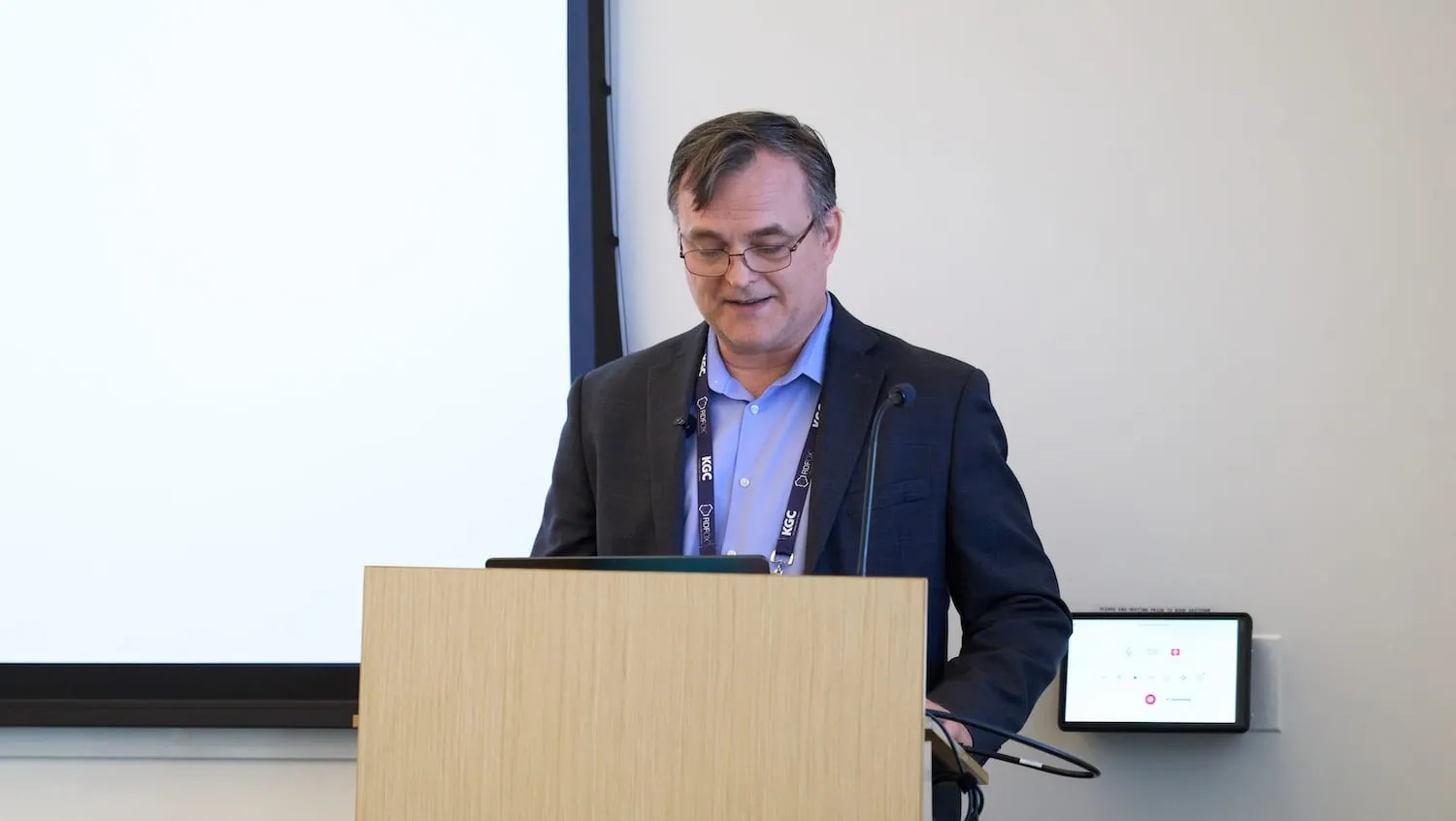
Until recently, this sort of GRC agentic solution wasn’t possible, but now, says Radu, GRC agents can perform critical work at 2:00 a.m. when most of the GRC team is asleep. Boring? No. Important? Hell, yes.
Borrowing from the Neighbors: Network Science & Data Visualization Techniques for Knowledge Graph Practitioners
Last but not least, we can’t overlook the stellar lightning talk delivered by gdotv Head of Sales Christian Miles. His talk covered what graph theory and network science practitioners can borrow from the neighbors, including lessons learned across network science, graph drawing, social network analysis, and general purpose data visualization techniques.
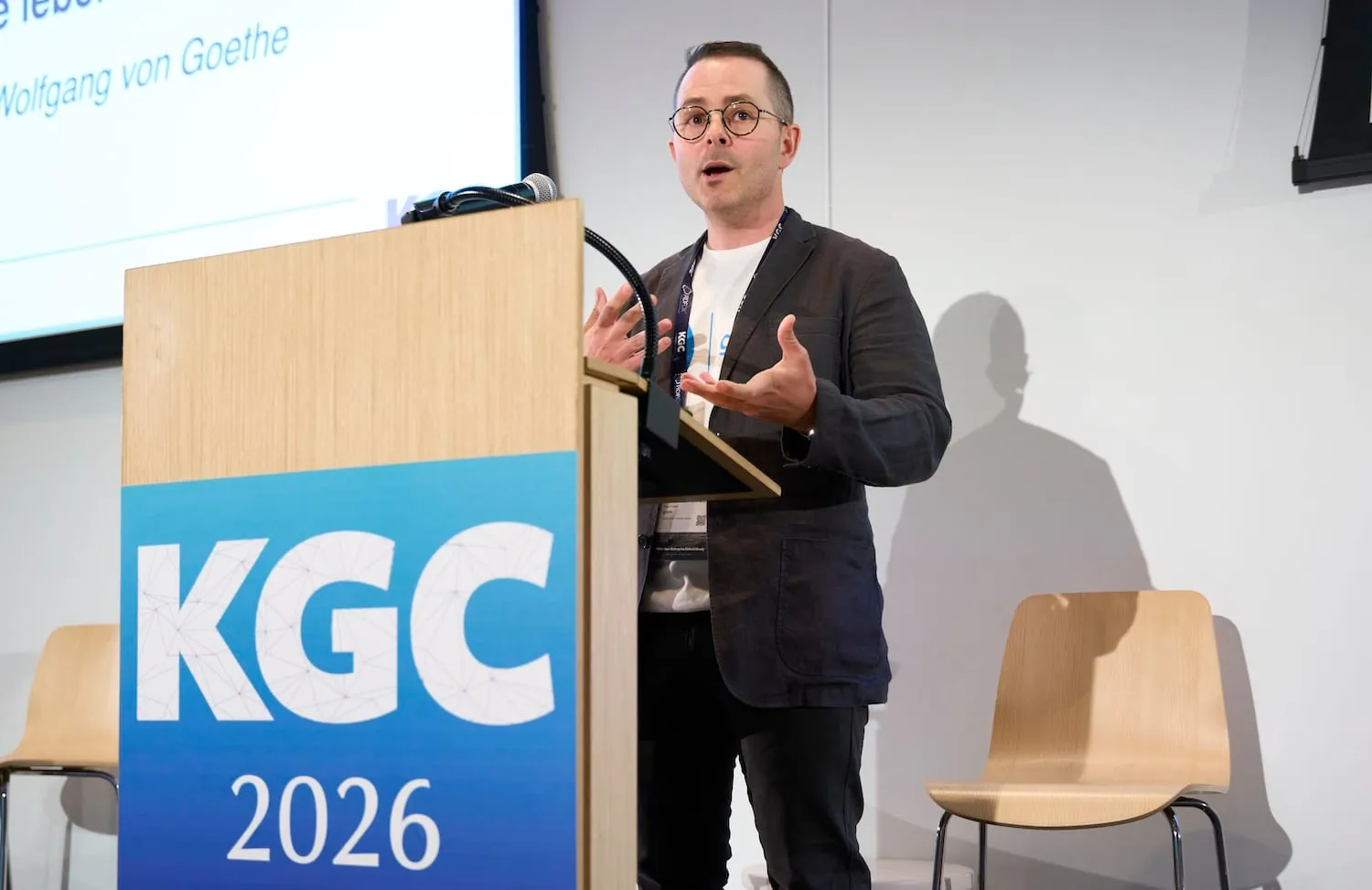
Christian is a huge graph visualization nerd, so this was him getting to have fun while also teaching you a bit about how two close-but-not-overlapping disciplines can learn from each other. Check it out.
And the KGC Lifetime Achievement Award Goes to…
During the Wednesday morning keynote, the Knowledge Graph Conference co-founders Thomas Deely and François Scharffe presented the much-coveted KGC Lifetime Achievement Award to its first triple winners: Tim Burners-Lee, Ora Lassila and Jim Hendler, the three co-authors of the original Semantic Web paper now celebrating its 25th anniversary.
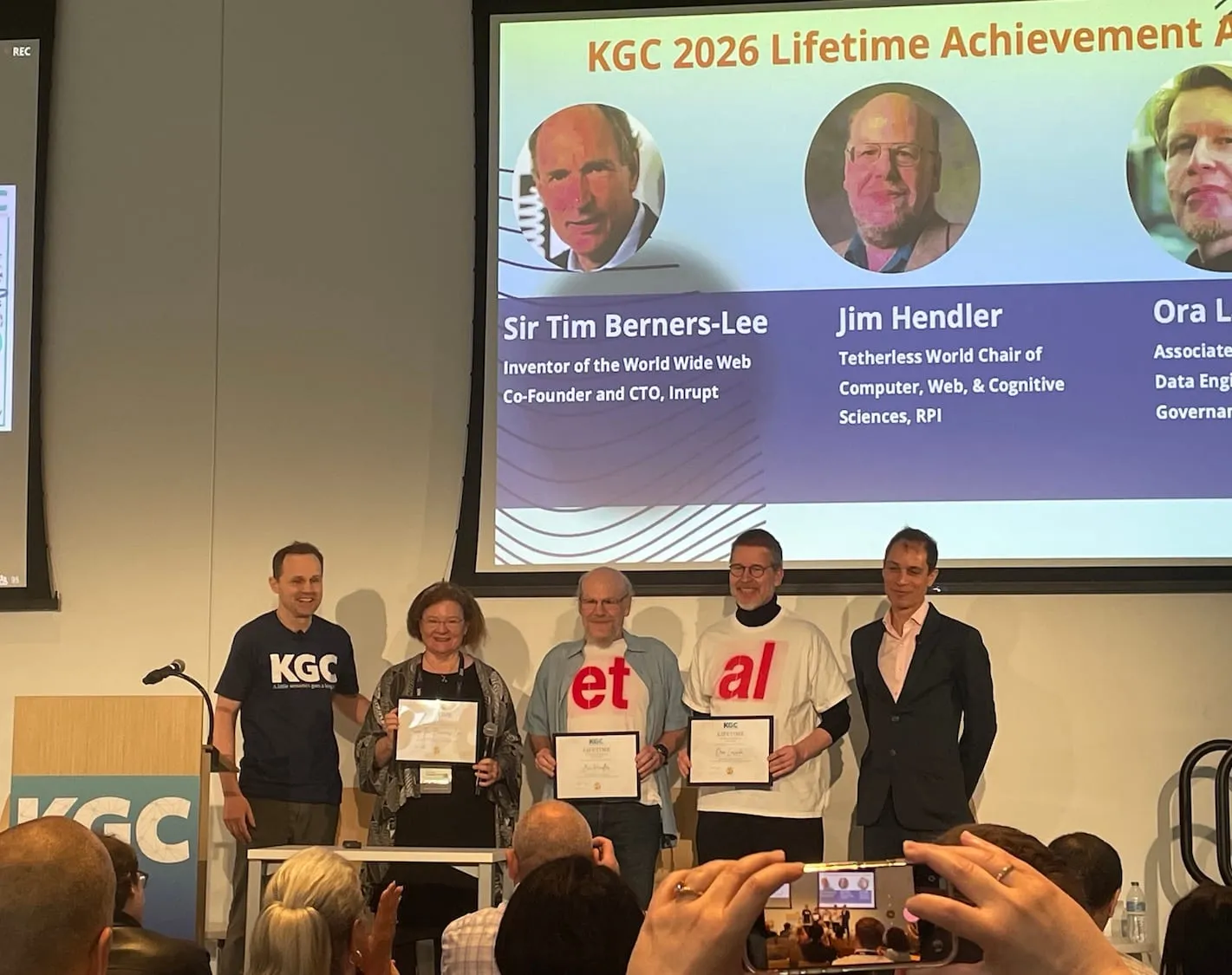
Their paper, originally published in Scientific American on May 1, 2001, laid out their vision for the Semantic Web – a new form of Worldwide Web content that would be meaningful to computers and would unleash a tech revolution of new possibilities. Essentially, it was a vision for AI agents long before such ideas were a possibility. But because they had published the idea, it has since become possible.
While Ora and Jim were at KGC to receive the honor in person, Sir Tim Berners-Lee had to accept his award via Zoom with a pre-recorded speech. While no one was surprised at who the award winners would be, everyone agreed the recognition was 25 years overdue.
Conclusion
While the Knowledge Graph Conference 2026 might be over for now, the conversations and connections it sparked are only just getting started.
If you’d like to catch up with the conference talks, virtual and in-person ticket holders should be able to access slides and talk recordings via the Whova web and mobile apps (check your email). And for those looking for knowledge graph jobs, the KGC organizers recently published all listed knowledge graph job opportunities posted during the conference.
A big thanks to the KGC organizing team: Thomas, François, Poya, Hazel, Deb, Chase, Min, Catalina, Maru, and many others. You’ve created a special community, and on behalf of the gdotv team – and the graph tech community as a whole – we really appreciate it.
About the author

Bryce Merkl Sasaki
Former Head of Marketing
Bryce Merkl Sasaki is a writer and editor based in Silicon Valley. A digital nomad and total nerd, he’s wandered the worlds of database and graph tech for more than a decade, covering big moments, interviewing interesting minds, and bringing abstract graph concepts back down to earth. Outside of work, he enjoys hikes with his wife in Northern California and writes on his science fiction novel.