
The Weekly Edge: Neo4j Virtual Graphs, Graphing Snowflake, LegalGraphRAG & more
Discover what’s new in graph tech this week, including a whole host of graph-on-relational technologies relating to Neo4j, Snowflake, Apache AGE, and Postgres.

Discover what’s new in graph tech this week, including a whole host of graph-on-relational technologies relating to Neo4j, Snowflake, Apache AGE, and Postgres.
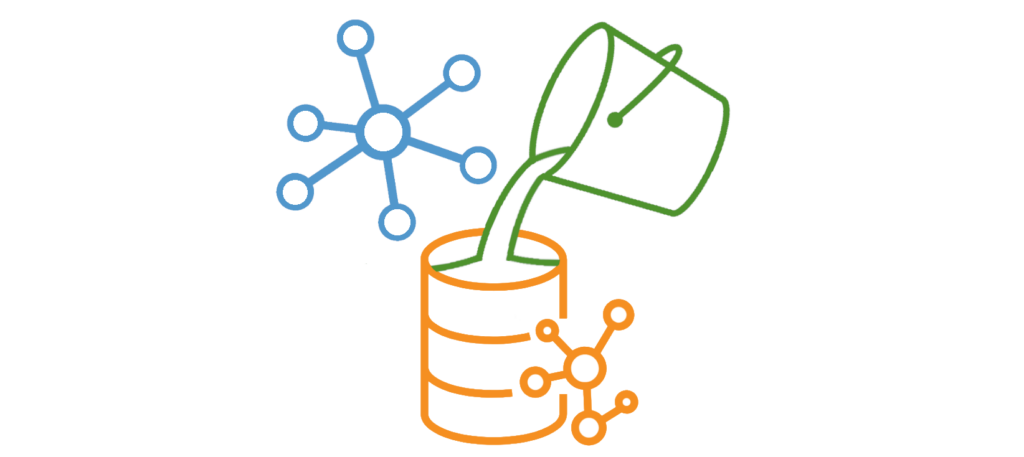
Follow this walk-through to see how you can import data from your S3 bucket into your AWS Neptune cluster, and see the results in gdotv!

Learn how to build and construct recommendation systems using graphs by following this Google BigQuery demo with gdotv.
![Announcing Apache AGE Support, RDF Expansion, a Brand-New Interface, Updated Labels & More [v3.48.105 Release Notes]](https://gdotv.com/wp-content/uploads/2025/12/apache-age-graph-extension-support-rdf-expansion-gdotv-release-1024x535.png "Announcing Apache AGE Support, RDF Expansion, a Brand-New Interface, Updated Labels & More [v3.48.105 Release Notes]")
Discover what’s new in the latest release of G.V() with support for Apache AGE on Postgres, expanded support for RDF triplestores, a brand-new UI, and more.
Discover how to detect fraudulent financial transactions with speed and accuracy using G.V() and Aerospike Graph Database in this developer walkthrough.
We’re excited to welcome yet another new graph database system to the G.V() suite! As of our latest release, we are now fully compatible with Ultipa Graph, Ultipa provides a number of tools for graph database management systems. The newest version of Ultipa Graph, known as Ultipa Powerhouse, is based upon a hybrid structure across multiple server types, with the goal of maintaining both data locality and computational efficiency. Ultipa offers full support for the Graph Query Language or GQL, the first ISO/IEC standardized language for graph databases.
Discover what’s possible with Nodestream: a declarative framework for building, maintaining, and analyzing graph data, compatible with Neo4j & Amazon Neptune.
Cognee has developed a framework geared towards constructing AI memory. This means they turn your documents into a persistent memory layer, one that can be carried forward and queried across all language model queries.
Memgraph+G.V() is a classic combination that turns your computer into a formidable tool for analysis and visualization, which is exactly what we’d like to show you today. We’ll first explore how to get started with Memgraph itself and use some of Memgraph’s own built-in visualization options, then we’ll show how G.V() can unlock even more of Memgraph’s potential.
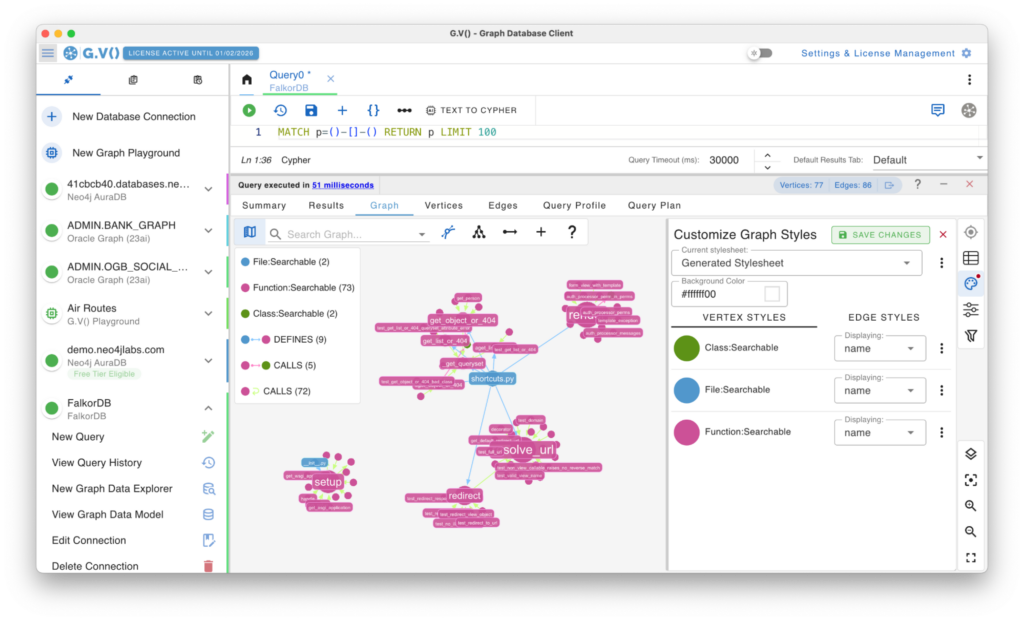
G.V() 3.38.90 is out now! This newest version includes a number of exciting updates – most notably we have added full FalkorDB support. We’ve also added several new quality-of-life features and fixes, including an improved stylesheet interface that makes customizing your graph visualization easier than ever!