gdotv Adds Multi-Graph Connections & Automatic Data Models [v3.74.142 Release Notes]
Discover multi-graph connections in gdotv v3.74.142: move between graphs, datasets and repositories on one connection, with data models that load themselves.
![gdotv Adds Multi-Graph Connections & Automatic Data Models [v3.74.142 Release Notes]](https://gdotv.com/wp-content/uploads/2026/08/multi-graph-connections-automatic-data-models-gdotv-v3-74-142-release-notes-banner-1024x768.webp "gdotv Adds Multi-Graph Connections & Automatic Data Models [v3.74.142 Release Notes]")
Discover multi-graph connections in gdotv v3.74.142: move between graphs, datasets and repositories on one connection, with data models that load themselves.
Learn how to engineer a graph ontology that keeps its meaning across RDF and property graph systems, with practical modelling best practices and tooling.
Explore pgGraph support in gdotv: connect to your PostgreSQL tables, write GQL graph queries, and visualize traversals and shortest paths with no migration.
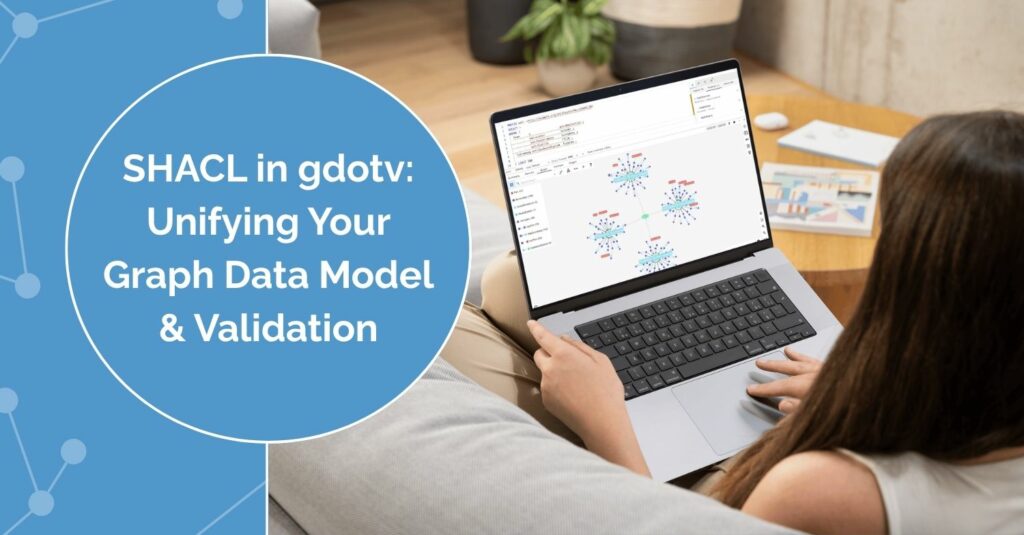
Discover how gdotv transforms SHACL validation shapes into a unified RDF data model by integrating ontology and instance data into one explorable view.
![Who Needs a Chart When You Can Just Chat? [feat. Data Day Texas 2026]](https://gdotv.com/wp-content/uploads/2026/04/graph-visualization-christian-miles-video-speaker-notes-1024x535.png "Who Needs a Chart When You Can Just Chat? [feat. Data Day Texas 2026]")
Watch (or read) this presentation by Christian Miles on the future of graph data visualization in the world of LLMs – inspired by his talk at Data Day Texas.
![Announcing Ontology Support, Improved Data Model Visualization, Entra ID auth Support & More [v3.51.108 Release Notes]](https://gdotv.com/wp-content/uploads/2026/01/apache-age-entraid-auth-support-ontology-data-model-viz-gdotv-release-1024x535.png "Announcing Ontology Support, Improved Data Model Visualization, Entra ID auth Support & More [v3.51.108 Release Notes]")
Dive into the latest release of G.V() graph database IDE including new features for ontology support, improved data model visualization, EntraID, and more.
Discover how to detect fraudulent financial transactions with speed and accuracy using G.V() and Aerospike Graph Database in this developer walkthrough.
Hydra is a programming language that uses mathematical abstraction to model graphs within the language itself. It’s an open-source project spearheaded by Josh Shinavier, co-creator of Apache TinkerPop. In Josh’s own words: “In Hydra, programs are graphs, and graphs are programs.”

G.V() is now compatible with Oracle Graph on Oracle Database 23ai, bringing access to instant graph visualization for property graphs built atop your relational data.
![Amazon Neptune 101: Creating & Connecting to Your First Cluster [Developer Walkthrough]](https://gdotv.com/wp-content/uploads/2025/06/amazon-neptune-graph-database-developer-guide.png "Amazon Neptune 101: Creating & Connecting to Your First Cluster [Developer Walkthrough]")
Learn how to get started with Amazon Neptune graph database with this developer guide that walks you through setting up and connecting to your first cluster.