
gdotv Now Supports pgGraph, Graph Queries on PostgreSQL
Explore pgGraph support in gdotv: connect to your PostgreSQL tables, write GQL graph queries, and visualize traversals and shortest paths with no migration.

Explore pgGraph support in gdotv: connect to your PostgreSQL tables, write GQL graph queries, and visualize traversals and shortest paths with no migration.
![Introducing pgGraph Support, Node Icons & Language-Aware Terminology [gdotv v3.63.137 Release Notes]](https://gdotv.com/wp-content/uploads/2026/06/pggraph-lang-tag-grouping-node-icons-gdotv-v3-63-137-release-notes-banner-1024x535.png "Introducing pgGraph Support, Node Icons & Language-Aware Terminology [gdotv v3.63.137 Release Notes]")
Discover gdotv v3.63.137: pgGraph support brings graph queries to PostgreSQL, plus node icons, language-aware vertex & edge terminology, RDF lang-tag grouping.
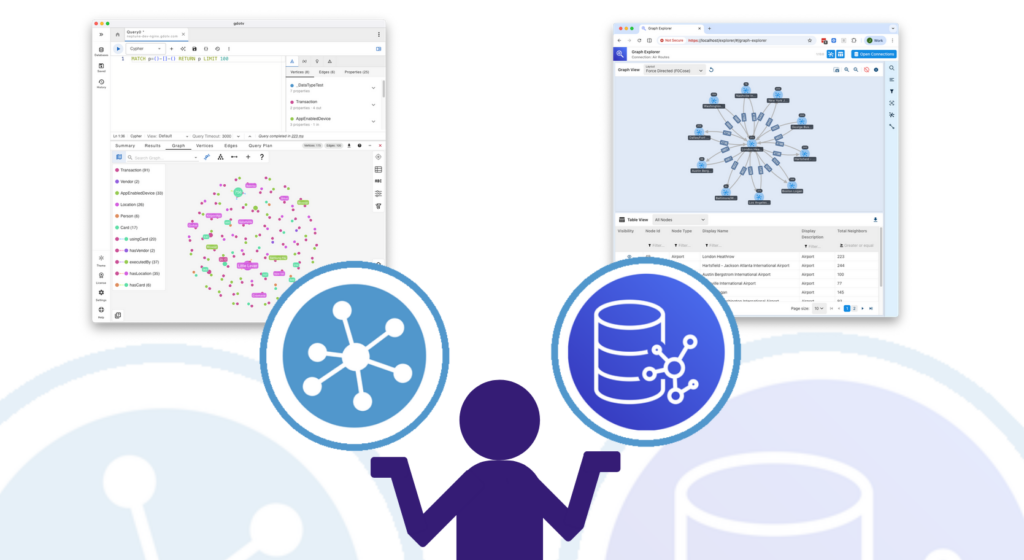
How does gdotv compare against AWS graph-explorer? Follow along with this deep-dive as we explore the various features of each framework.
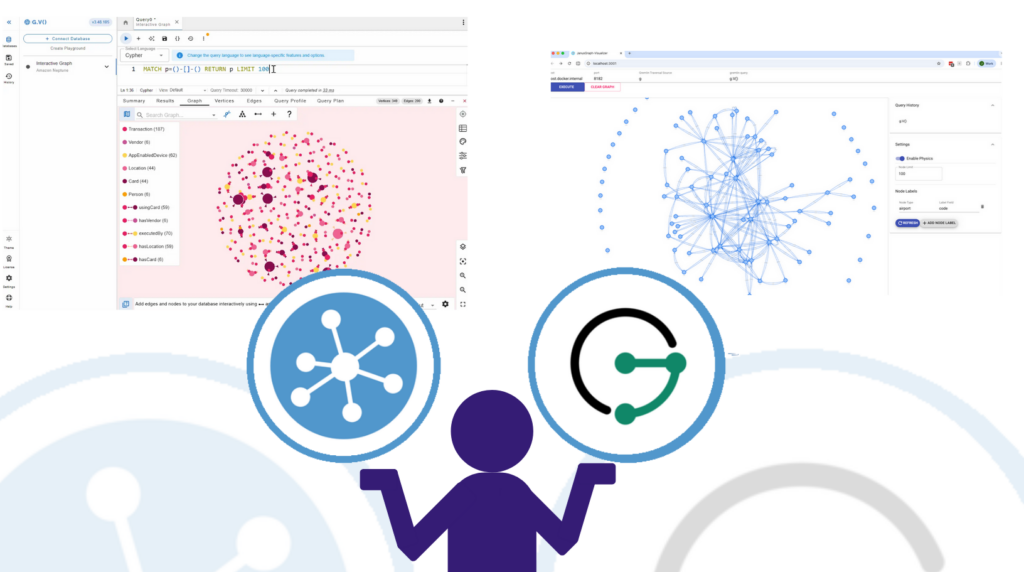
How does gdotv compare against JanusGraph Visualizer? Follow along with this deep-dive as we explore the various features of each framework.
![Introducing AI Query Generation and Cypher Dialect specific autocomplete [gdotv v3.61.129 Release Notes]](https://gdotv.com/wp-content/uploads/2026/05/gdotv-release-llm-chat-cypher-autocomplete-1024x569.png "Introducing AI Query Generation and Cypher Dialect specific autocomplete [gdotv v3.61.129 Release Notes]")
Explore the latest release of gdotv, featuring a brand new LLM chat interface, dialect aware Cypher autocomplete, and more
Dive into the world of graph databases with this dev guide using Practical Gremlin (2nd ed.) and gdotv with updated code and data visualization examples.
![Introducing Support for Apache HugeGraph, GoogleSQL, SHACL Constraints, & More [gdotv v3.59.116 Release Notes]](https://gdotv.com/wp-content/uploads/2026/04/shacl-constraints-ontology-apache-hugegraph-google-sql-gdotv-release-1024x535.jpg "Introducing Support for Apache HugeGraph, GoogleSQL, SHACL Constraints, & More [gdotv v3.59.116 Release Notes]")
Discover what’s new in this release of gdotv with support for Apache HugeGraph, GoogleSQL autocomplete, SHACL ontology constraints, graph viz updates & more!
![What Went Down at Connected Data London 2025 [Recap & Reflections]](https://gdotv.com/wp-content/uploads/2025/12/gdotv-recap-connected-data-london-conference-2025.png "What Went Down at Connected Data London 2025 [Recap & Reflections]")
Experience Connected Data London through the eyes of software developer Joe Stainke including his favourite talks and key takeaways from the conference.
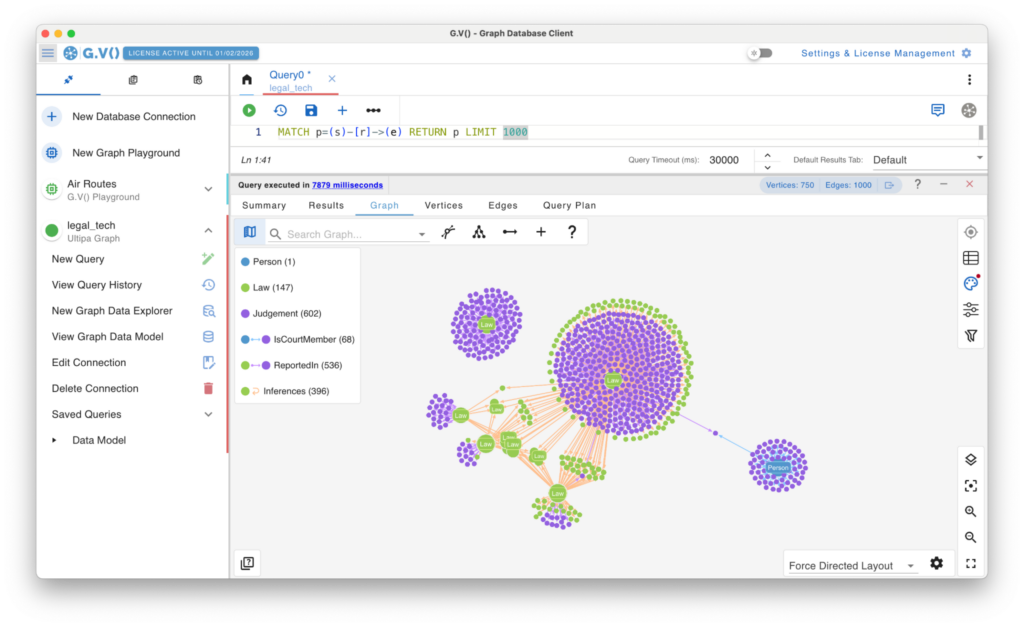
Today marks the release of G.V() 3.40.94. Some significant additions this time around – we now support ISO GQL (Graph Query Language), starting with Ultipa Graph Database!
We’ve also extended our embedded documentation feature, previously only available for the Gremlin query language, to work with Cypher and its many database-specific variants.
And finally, we’ve introduced further user experience improvements, most notably to the settings menu.
Descended from RedisGraph technology, FalkorDB is a versatile graph database that excels in multiple use cases. Its powerful GenAI-focused approach is ideal for applications such as GraphRAG, agentic memory, chatbots, fraud detection and cyber security – all of this while boasting multi-tenancy support, ultra-low latency, flexible horizontal scaling, vector search and highly efficient memory usage.